- Type
- Lesson plan
- Ages
- Ages 11-18
- Skills
- CommunicationCreativity
How do narrative perspectives and observational methods change the impact of our writing?
Overview
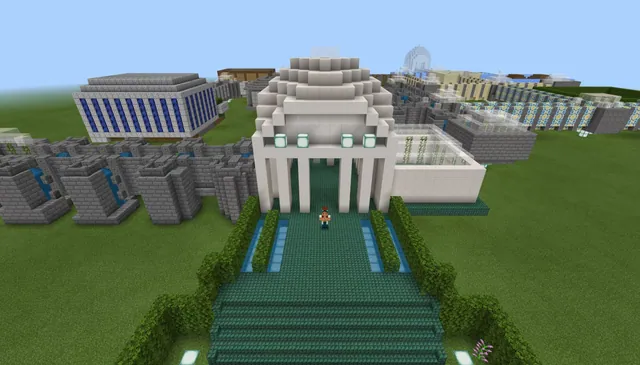
Narrative perspective shapes how readers experience information, tone, and action. By examining events through first, second, and third person points of view, writers learn how choosing a specific lens changes the relationship between the author, the subject, and the audience.
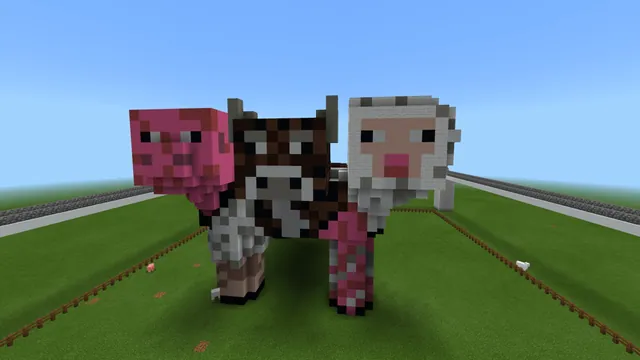
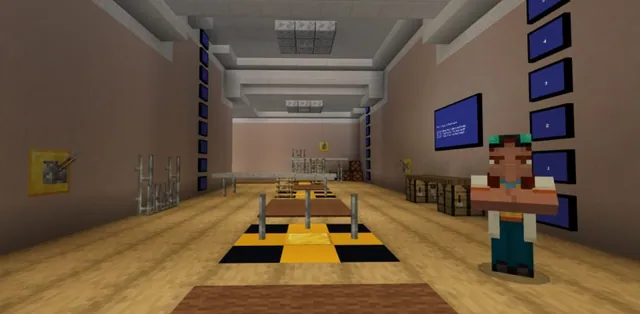
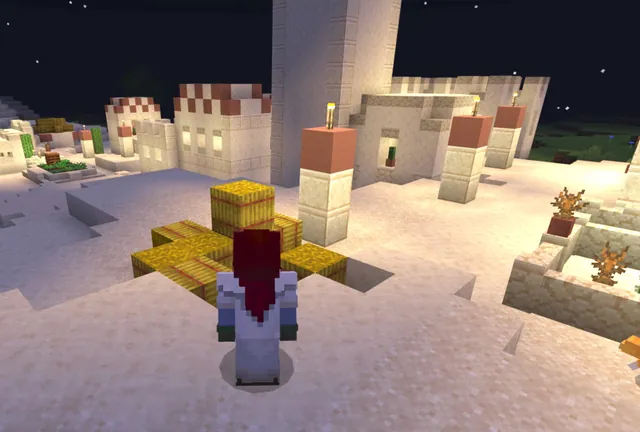
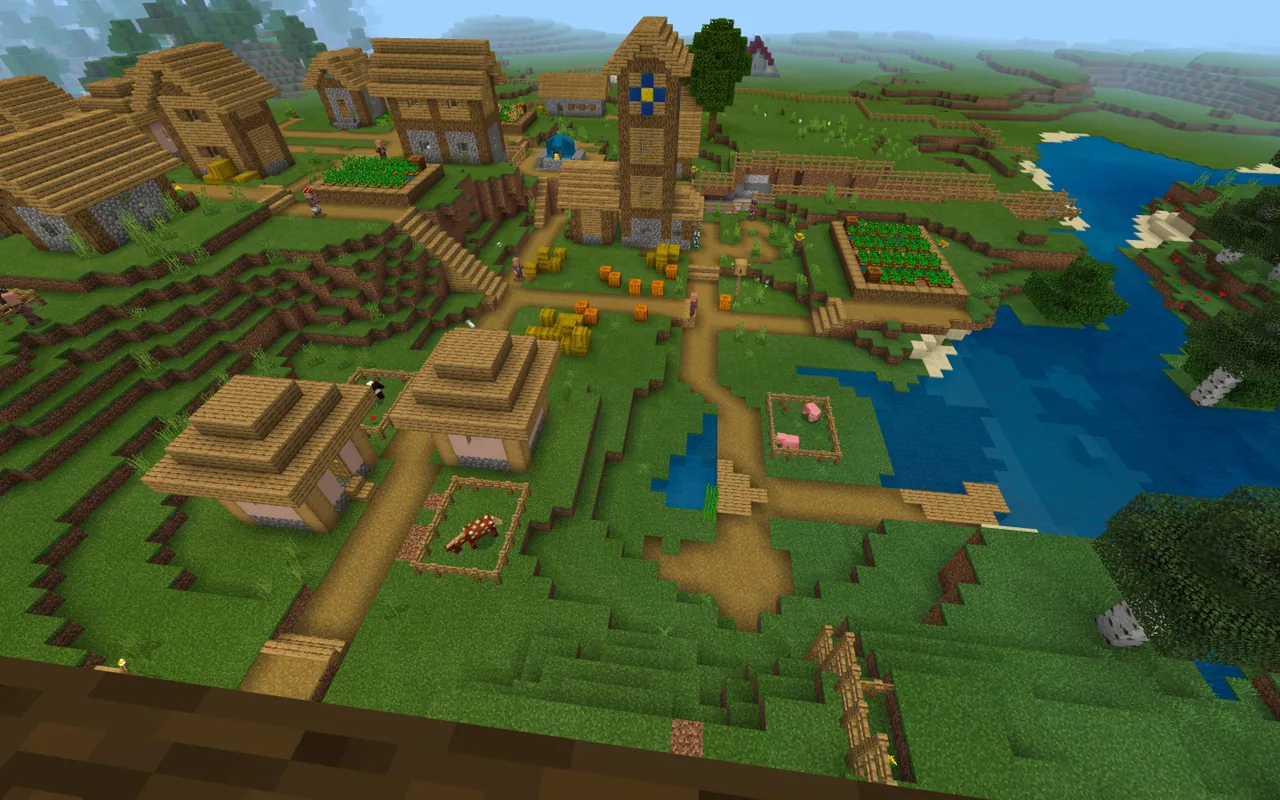
In this Minecraft world, students accept an expedition assignment from a non-player character to investigate unfamiliar wildlife. Using in-game books, students record notes on mob behavior from a distance using third person, document direct interactions, and translate their findings into a functional visitor's guide authored in second person.
Learning objectives
By the end of this lesson students will be able to:
- Differentiate between first, second, and third person narrative perspectives.
- Record passive observational notes on in-game mobs using third person perspective.
- Document active interactions with mobs to inform technical writing.
- Write an informational visitor's guide addressing the reader in the second person.
Blocks and items used in this lesson


Key vocabulary
- First Person
- A narrative perspective where the writer shares personal experiences using pronouns like I, me, and we.
- Second Person
- A perspective that addresses the reader directly using pronouns like you and your.
- Third Person
- A perspective where the narrator describes outside subjects and events using pronouns like he, she, it, and they.
- Mob
- Any living in-game entity or creature found within Minecraft.
- Technical Text
- Writing designed to inform or instruct readers clearly on how to do or understand something, such as a guide.
Before class
Lesson sequence
- Perspective Review
Introduce the guiding concepts of narrative perspective. Discuss the distinct purposes of first, second, and third person narration, highlighting how technical texts like how-to manuals or guides often speak directly to the reader.
- Expedition Briefing
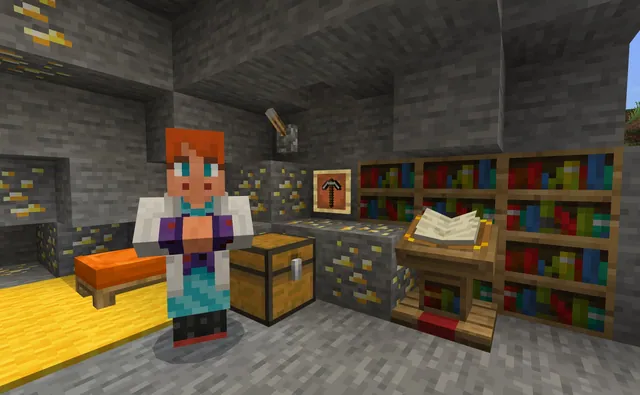
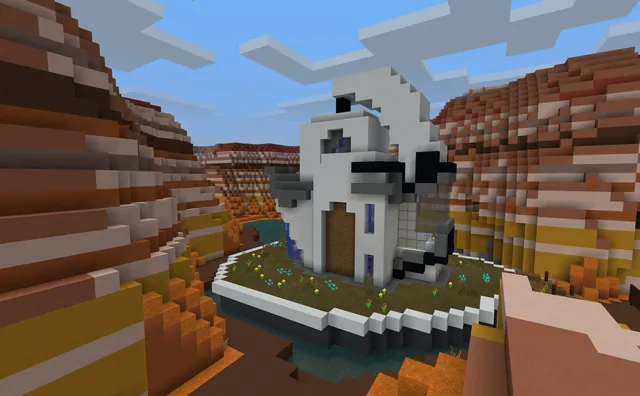
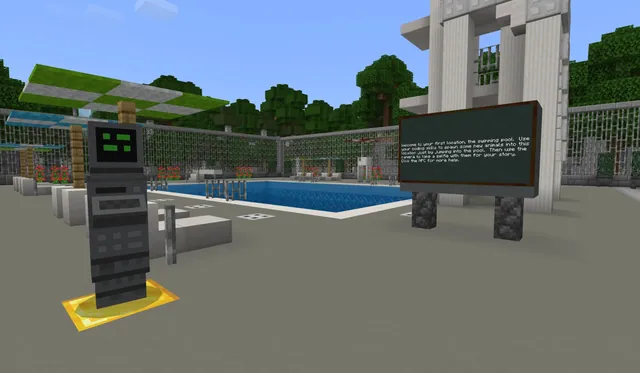
Students launch the world and interact with a non-player character who tasks them with exploring an uncharted land. Students locate in-game books containing guiding questions for their field investigation.
- Field Observation
Learners conduct their field study of local mobs in two phases:
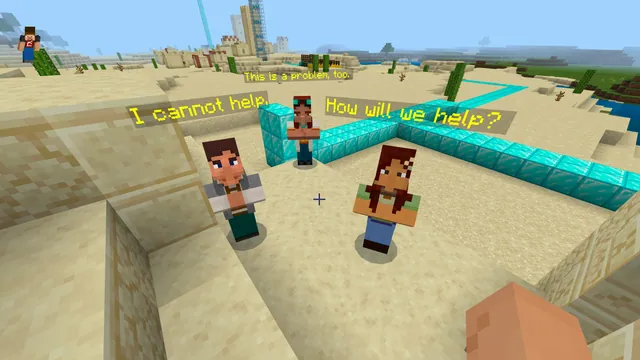
- Passive observation: Students watch mobs from a safe distance and log third-person notes in their books.
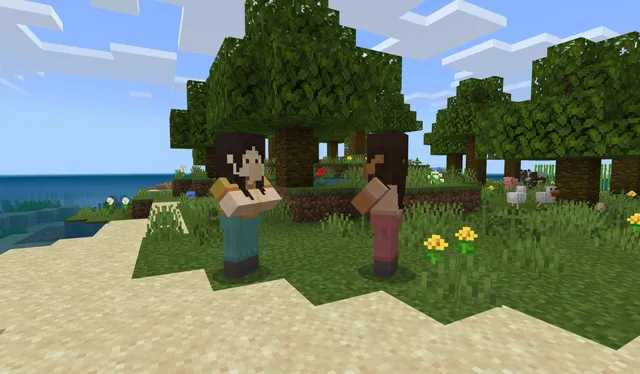
- Active observation: Students interact directly with the mobs and record notes detailing the results of those encounters.
- Guide Writing
Using their gathered notes and answers to the in-book questions, students draft a visitor's guide for the uncharted land, ensuring the entire guide is composed from the second person perspective.
- Reflection
Students discuss the guiding questions, evaluating how their notes shifted between passive and active observation and how point of view influences technical and informational texts.
Assessment: success criteria
- Field notes taken from a distance consistently use third person pronouns.
- Interactive observational notes accurately describe mob encounters.
- The completed visitor's guide successfully addresses the reader using second person perspective.
- Reflective responses address the impact of narrative point of view on technical writing.
Differentiation
Provide a pronoun reference sheet showing which words belong to first, second, and third person writing.
Ask learners to rewrite one section of their visitor's guide into first person to compare how the tone changes.
Knowledge check
5 questions to check understanding after the lesson. Tap an answer to see if it is right; the score appears at the end.
1Which point of view addresses the reader directly using the pronoun 'you'?
Answer: B. Second person narrative perspective speaks directly to the reader using pronouns such as you and your.
2Who commissions the students to investigate the uncharted territory?
Answer: A. Students encounter a non-player character who assigns them the task of exploring the uncharted land.
3Which perspective are students instructed to use when observing mobs from a distance?
Answer: C. Students are instructed to observe mobs from a distance and make their initial notes in the third person.
4Where do students find the questions that guide their investigation?
Answer: B. The source states that students find books to write in with a set of questions inside the book.
5What final document do students write using their observational notes?
Answer: D. Students compile their active and passive notes into a second-person visitor's guide for the uncharted land.
Resources
Part of the Creative Writing curriculum
This is lesson 6 of 10 in Creative Writing.
- 6 Room Poem Maze
- Characters All Around
- Conflict in Stories
- Diving for Dialogue
- Exquisite Corpse
- Narrative in Perspective
- Setting in Narrative Writing
- Settings for Stories
- This I Believe
- Where I’m From
Frequently Asked Questions
Why is a visitor's guide suited for teaching second person writing?
Guides typically instruct and advise travelers directly, making second person the natural perspective for technical instructions and directions.
What is the difference between passive and active observation in this lesson?
Passive observation involves recording creature behaviors from a distance without interfering, while active observation requires students to interact with the mobs and record what happens during the encounter.
Adapted from Narrative in Perspective by NWP Network on Minecraft Education, last updated Oct 22, 2021. This classroom version, the timings and the quiz were written by 9Minecraft Education.