- Type
- Lesson plan
- Ages
- Ages 8-13
- Skills
- CommunicationCreativity
How can writers use dialogue, actions, and character thoughts to bring a story scene to life?
Overview
Writing effective dialogue requires balancing spoken words, character motivations, and narrative action. In this lesson, students study mentor advice from professional authors to understand how conversational exchanges reveal inner thoughts, show character reactions, and advance a plot.
Students begin on a mountaintop reading curated writing advice before teleporting to an island full of competing non-player characters facing a shared problem. After weighing character perspectives and attempting to solve the dilemma, learners translate their experience into a polished narrative scene featuring dialogue tags and action details.
Learning objectives
By the end of this lesson students will be able to:
- Record dialogue advice and mentor examples provided by professional writers in the opening game area.
- Evaluate competing non-player character requests on the island to determine a path toward solving their dilemma.
- Draft a narrative scene that features dialogue tags, character actions, context, and plot advancement.
Blocks and items used in this lesson


Key vocabulary
- Dialogue
- The spoken conversation exchanged between characters in a story.
- Dialogue Tag
- A brief phrase indicating who is speaking and how they say it, such as 'she whispered' or 'he shouted'.
- Non-Player Character (NPC)
- A character in the game controlled by the computer rather than a human player.
- Context
- The surrounding circumstances, background details, and setting that help a reader understand a scene.
Before class
Lesson sequence
- Mentor Text Discussion
Prompt students to examine dialogue examples found in library or home reading selections. Create class anchor charts detailing the punctuation rules of direct speech as well as the descriptive actions authors weave into conversations.
- Mountaintop Research
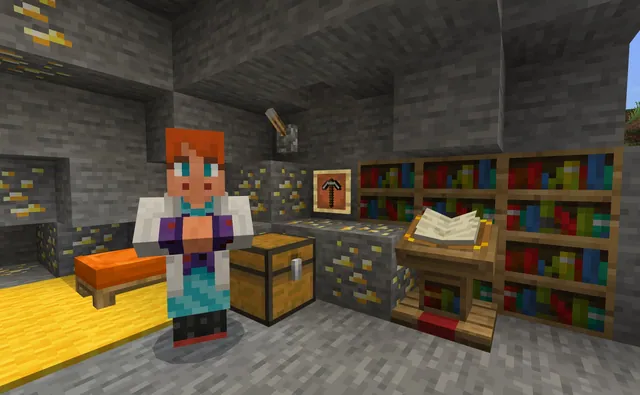
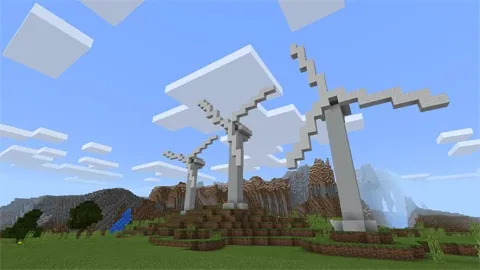
Students launch the world on a mountaintop. They read writing tips and model examples provided by National Novel Writing Month (NaNoWriMo) authors, noting down recommended techniques and common pitfalls to avoid.
- Island Exploration and Problem Solving
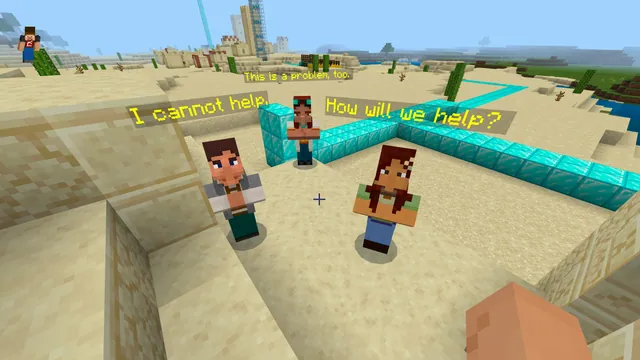
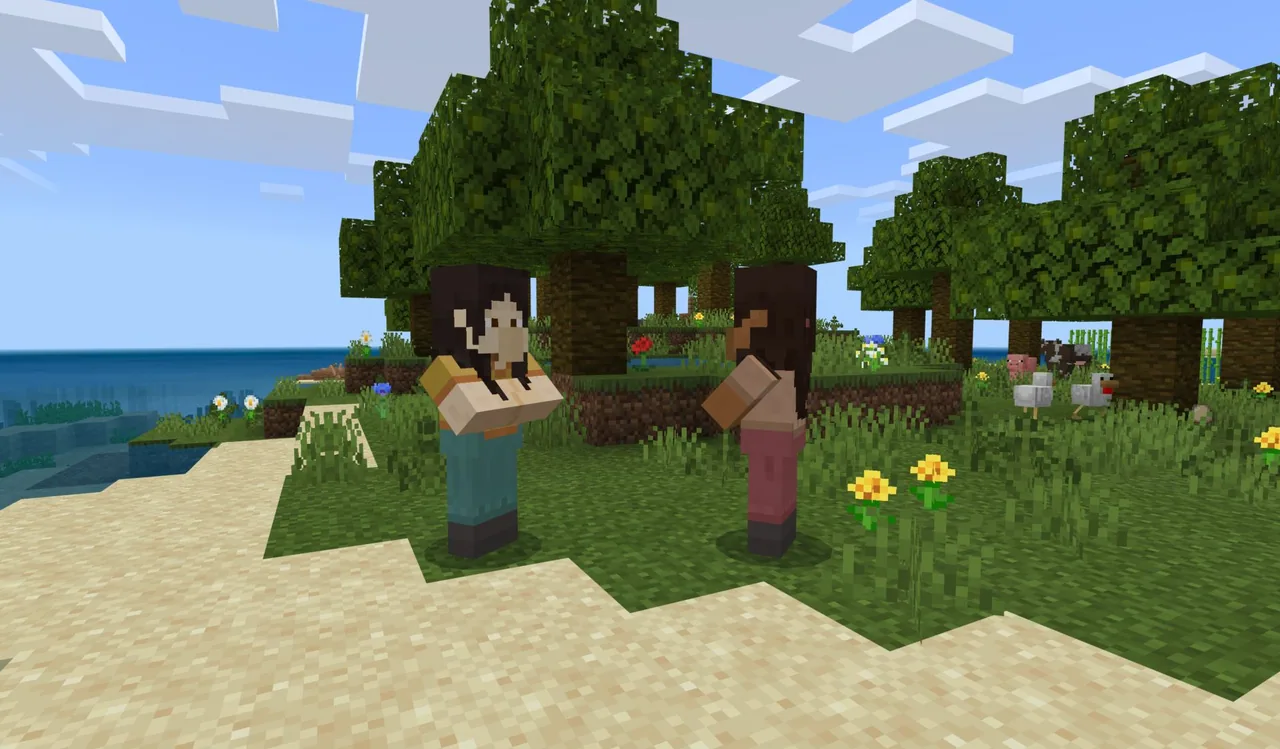
Players teleport to an island populated by non-player characters. Each NPC explains an overarching problem while demanding that their own personal needs be prioritized first. Students interact with each figure, decide how to respond, and work toward a solution.
- Scene Drafting and In-Game Building
Learners choose one specific character interaction from their island experience and draft it as a written scene that integrates their notes on dialogue craft. Interested students can also build custom NPCs directly in the game to stage their written lines.
Assessment: success criteria
- Scene clearly establishes the background context and setting of the interaction.
- Writing includes character thoughts, physical movements, or sensory reactions alongside spoken lines.
- Dialogue tags are included and punctuated correctly to clarify who is speaking.
- The conversation directly advances the narrative conflict or resolution.
Differentiation
Provide a reference checklist containing sample dialogue tags and prompt frames for character actions.
Have students extend their written scene into a full narrative or record their gameplay to produce a narrated video soundtrack complete with captions.
Knowledge check
5 questions to check understanding after the lesson. Tap an answer to see if it is right; the score appears at the end.
1Where do players first read dialogue tips from professional writers in the Minecraft world?
Answer: C. The student activities state that players begin on a mountaintop where they read tips and see mentor examples.
2What situation confronts the player upon teleporting to the island?
Answer: A. On the island, non-player characters all describe a problem that needs solving, with each wanting their needs met first.
3Which organization provided the professional author advice featured in the lesson?
Answer: B. The learning objectives specify taking notes on dialogue tips from professional writers via National Novel Writing Month.
4According to the performance expectations, what must the written scene include?
Answer: C. The assessment criteria require context, speaker thoughts/actions, dialogue tags, and narrative advancement.
5What optional in-game task can students pursue if they want to build further?
Answer: A. The source notes that students have the ability to create their own NPCs and add dialogue directly into the game if interested.
Resources
Part of the Creative Writing curriculum
This is lesson 4 of 10 in Creative Writing.
- 6 Room Poem Maze
- Characters All Around
- Conflict in Stories
- Diving for Dialogue
- Exquisite Corpse
- Narrative in Perspective
- Setting in Narrative Writing
- Settings for Stories
- This I Believe
- Where I’m From
Frequently Asked Questions
Do students need to achieve a programmed 'win' state on the island?
No. The island scenario provides narrative conflict and character motivation so students have rich, experiential context to draw upon when writing their dialogue scenes.
How can teachers support students who finish drafting early?
Early finishers can either expand their written scene into a longer narrative or capture gameplay video to construct a narrated multimedia presentation with captions and dialogue.
Adapted from Diving for Dialogue by NWP Network on Minecraft Education, last updated Jun 6, 2022. This classroom version, the timings and the quiz were written by 9Minecraft Education.