- Type
- Lesson plan
- Ages
- Ages 14+
What does the character of Macbeth reveal about human nature?
Overview
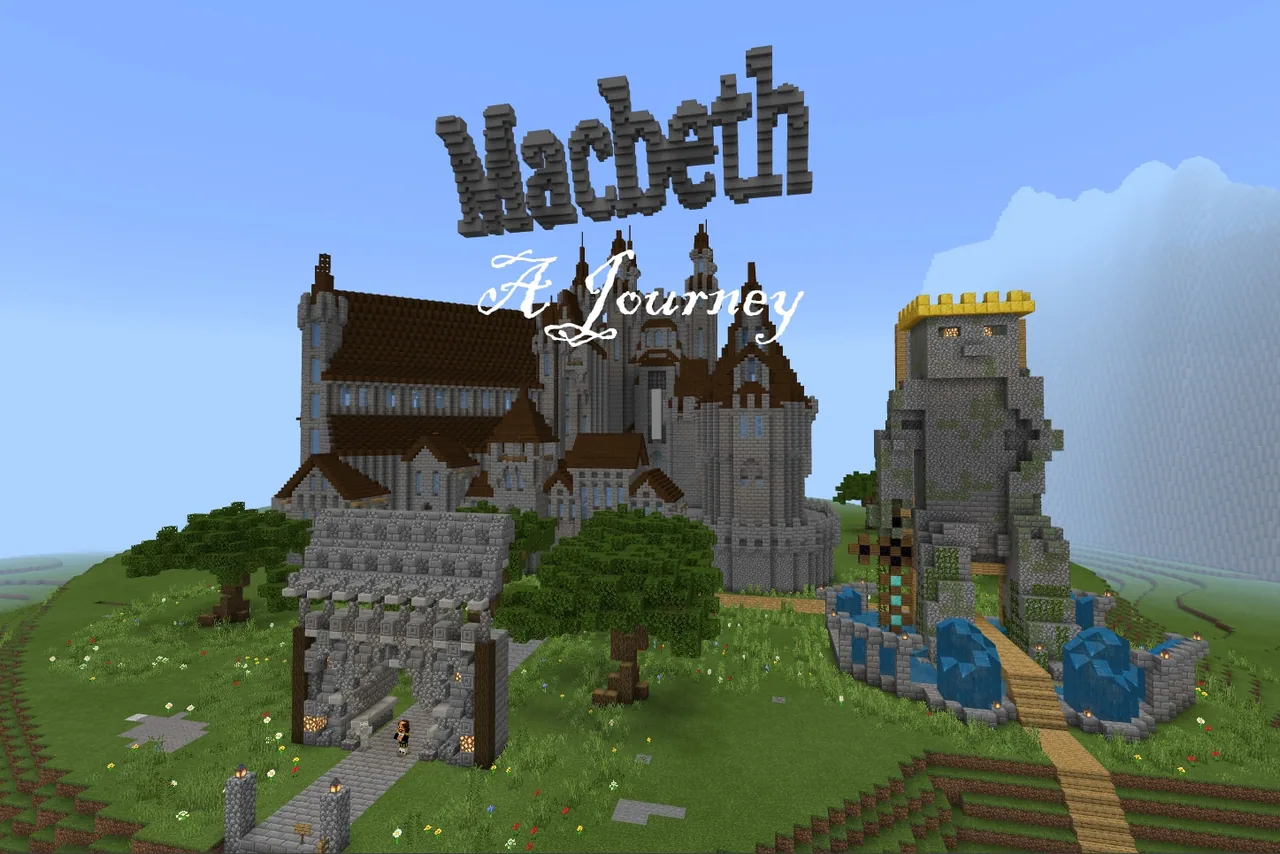
Designed as a post-reading experience for William Shakespeare's Macbeth, this lesson guides students through an abbreviated retelling of the classic tragedy. Students examine Macbeth's fall into violence and madness by interacting directly with characters from the play to gather pivotal textual quotes and review the dramatic narrative.
Students spawn outside Macbeth's castle, where William Shakespeare and the Ghost of Banquo introduce their core writing assignment. Using an in-game camera and portfolio, students travel through iconic settings—including Birnam Wood, Malcolm's castle, and a crumbling representation of Macbeth's unraveling mind—to interview dozens of characters and collect evidence on human nature.
Learning objectives
By the end of this lesson students will be able to:
- Explain what the character of Macbeth reveals about human nature in a structured analytical essay.
- Identify literary devices including dramatic irony, soliloquy, and metaphor through interactions with the Ghost of Banquo.
- Record character quotations and scene observations using the in-game camera and portfolio.
- Navigate an abbreviated sequence of Macbeth to trace the protagonist's descent into violence and madness.
Blocks and items used in this lesson


Key vocabulary
- Soliloquy
- A dramatic speech in which a character voices their inner thoughts aloud while alone on stage.
- Dramatic Irony
- A situation where the audience or reader knows crucial information that characters do not.
- Tragedy
- A serious drama chronicling the downfall of a protagonist caused by personal flaws or external forces.
- Allusion
- An indirect reference within a text to another person, place, event, or literary work.
- Personification
- Attributing human qualities or actions to non-human entities, objects, or abstract concepts.
- Metaphor
- A direct comparison stating that one thing is another to suggest a shared quality.
Before class
Lesson sequence
- Orientation and Castle Exploration
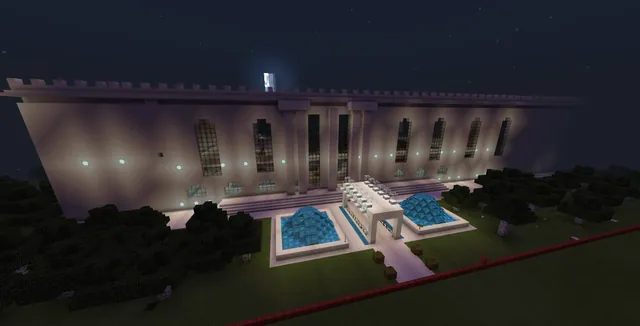
Students spawn outside Macbeth's Castle (484, 84, -351), meeting Shakespeare, who acts as the narrator, and the Ghost of Banquo. Students receive their assignment on human nature, access the grading rubric, and obtain a camera and portfolio.
Students explore the castle grounds, which correspond to Acts 1 and 2, documenting interactions with 17 characters who supply textual quotes and context.
- Journey to Birnam Wood and the Witches
Students travel the road To Birnam Woods (300, 72, -182, Act 2, 8 characters) and enter the Birnam Wood Settlement (170, 66, -182, Act 3, 10 characters). Along the route, the Ghost of Banquo reappears to teach literary devices with text examples.
Outside the settlement, Hecate intercepts students and teleports them to the three witches (1047, 248, -141). Once finished, Shakespeare teleports them outside Birnam Woods (28, 72, -3).
- Malcolm's Castle and The End
Students navigate Malcolm's Castle (28, 72, -3), which covers Acts 4 and 5 with 10 characters. On the highest tower, students find Malcolm and Shakespeare, who teleports them to the final zone.
At The End (895, 190, -701), students explore Macbeth's crumbling castle, which visually represents his descent into madness. This Act 5 zone features several versions of Macbeth and provides final quotes.
- Portfolio Export and Essay Drafting
Students monitor their on-screen counter, which tracks conversations across the world's 59 characters. They export their completed portfolios containing character photos and notes to use as evidence.
Guided by the teacher, students draft a well-structured essay responding to the central prompt: Describe what can be learned about human nature through the character of Macbeth.
Assessment: success criteria
- Compose a structured essay explaining what Macbeth's character reveals about human nature.
- Incorporate specific quotes gathered from world characters to support analytical claims.
- Demonstrate understanding of highlighted literary terms such as soliloquy, dramatic irony, and tragedy.
- Document character encounters and notes within the exported portfolio.
Differentiation
Supply students with the provided character checklist and location coordinates to keep their journey structured as they collect key quotes.
Challenge students to interact with all 59 characters across the map and weave examples of multiple literary devices taught by Banquo's Ghost into their essays.
Knowledge check
5 questions to check understanding after the lesson. Tap an answer to see if it is right; the score appears at the end.
1Which character serves as the narrator of the world and assigns the essay task?
Answer: B. Shakespeare acts as the narrator at the world spawn and introduces the writing prompt and rubric.
2What specific educational role does the Ghost of Banquo serve throughout the journey?
Answer: C. The Ghost of Banquo highlights literary terms such as allusion, dramatic irony, soliloquy, and metaphor using examples from Macbeth.
3Where does Hecate teleport students when they meet her outside Birnam Wood Settlement?
Answer: C. Hecate stops students on their way to Malcolm's castle and teleports them directly to the three witches.
4What does the crumbling castle in the area named 'The End' symbolize?
Answer: A. The End section uses a crumbling castle to visually represent Macbeth's downfall and descent into madness.
5How many total characters are available for students to encounter across the journey?
Answer: D. The on-screen counter tracks interactions with a total of 59 characters distributed across the world.
Resources
- Lesson package (.zip)Everything the author attached to this lesson in one download.
- Essay Grading RubricMicrosoft Word document of the rubric for the essay topic.
- Character ChecklistA checklist students can use to mark who they interacted with in the world.
- Lesson worldOpens the world page in Minecraft Education (sign-in with a school account may be needed).
Part of the Stories and Literature curriculum
This is lesson 4 of 8 in Stories and Literature.
- A Christmas Carol
- Character Study
- Fantastic Mr. Fox
- Macbeth: A Journey
- Minecraft Book Covers
- Reed Smart: AI Detective
- Story Setting
- Verona Adventure
Frequently Asked Questions
When in our unit should this world be introduced?
This experience is intended as a post-reading activity. Students should complete reading the play first so they can recognize the plot points, character quotes, and literary devices encountered in the world.
Can teachers modify the essay prompt or assessment rubric?
Yes. Teachers can alter the prompt and link their own custom rubrics by editing the initial Shakespeare non-player character at spawn and the final Macbeth non-player character at the end of the journey.
How do students track which characters they have met?
An on-screen counter on the right side of the display logs the number of individuals spoken to and how many times they have been consulted, while the camera and portfolio let students record photos and written notes.
Adapted from Macbeth: A Journey by Ben Spieldenner on Minecraft Education, last updated Jun 5, 2025. This classroom version, the timings and the quiz were written by 9Minecraft Education.