- Type
- Lesson plan
- Ages
- Ages 8-18
- Duration
- 45 min
- Level
- Beginner
How have civil rights and social justice movements around the world influenced positive changes in society or in a community?
Overview
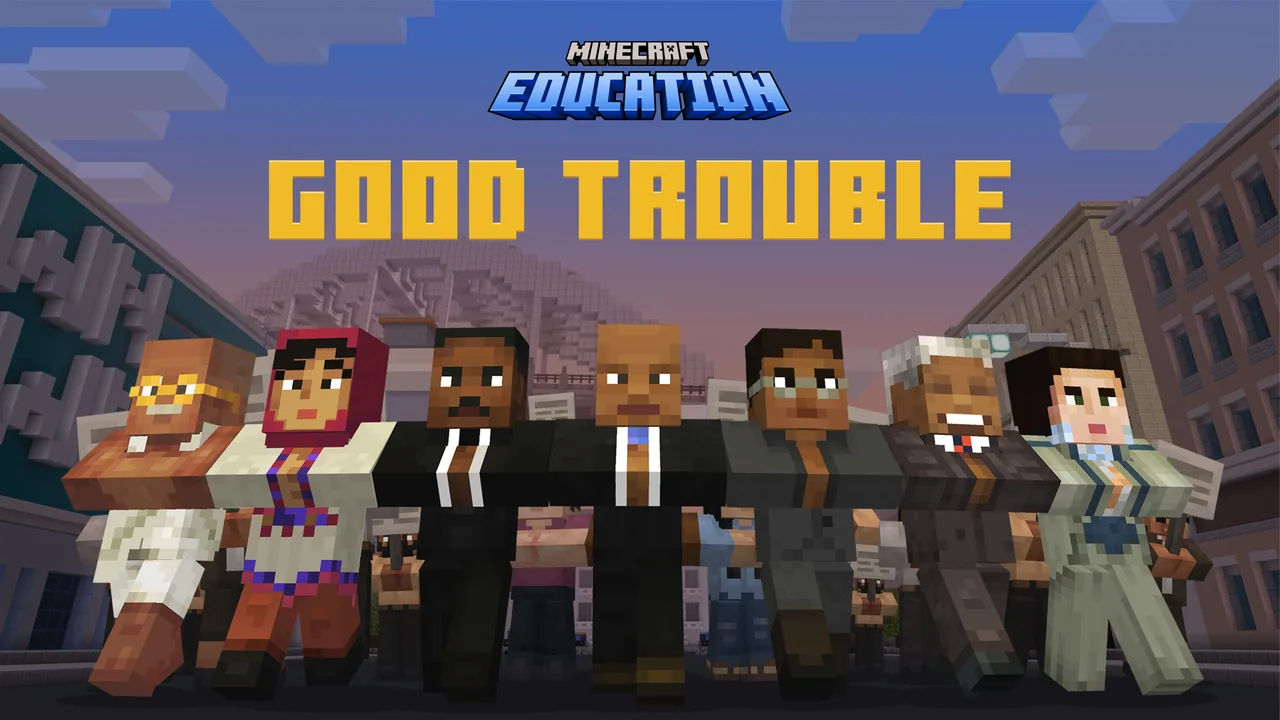
This lesson centers on the principle of moral leadership and what Congressman John Lewis termed good trouble. Students examine how nonviolent protest, civic participation, and collective determination have historically challenged unjust laws and produced meaningful societal reforms across the globe.
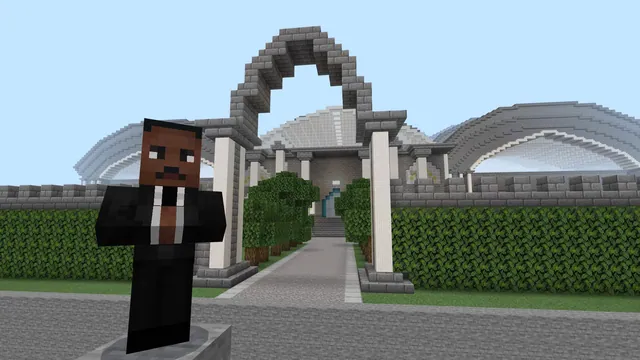
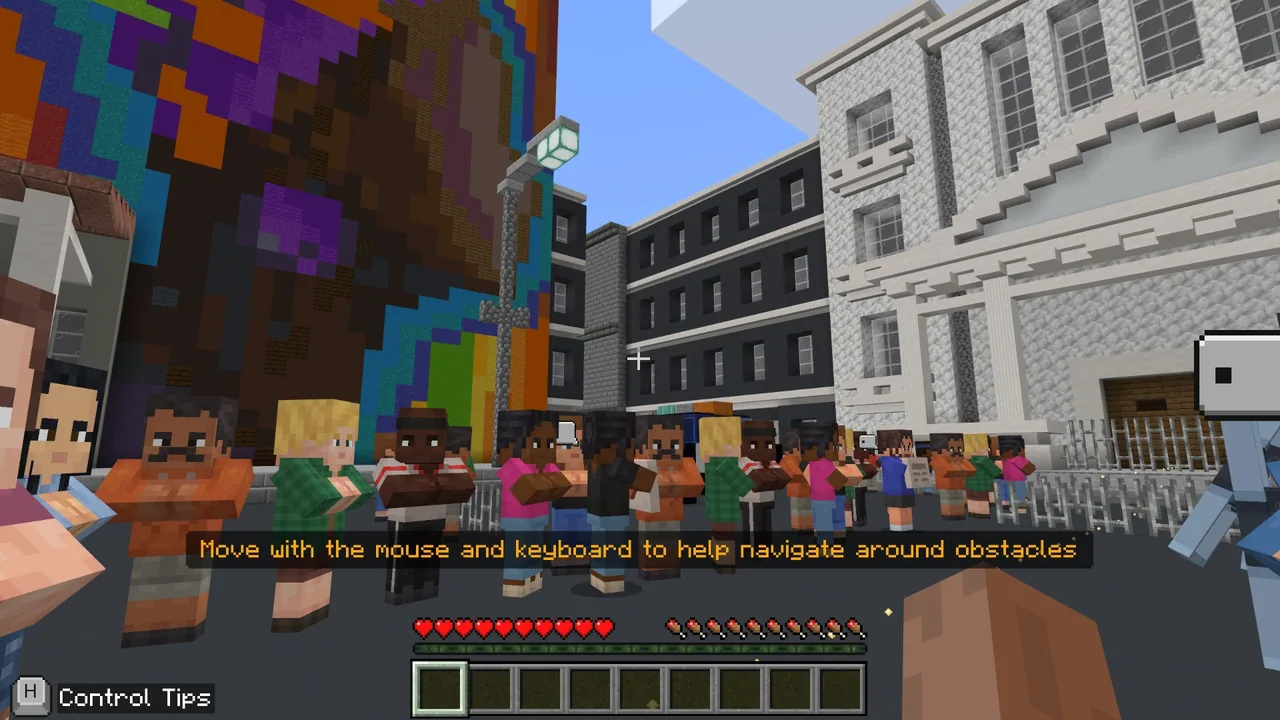
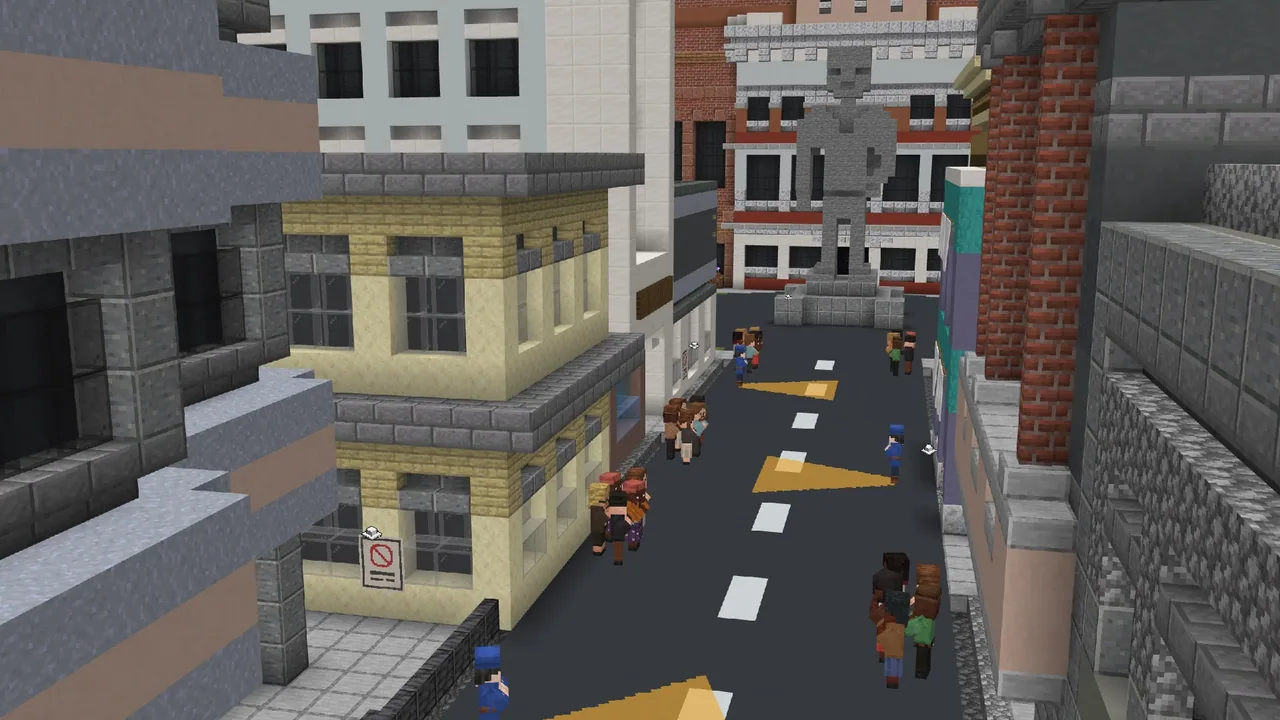
Using a dedicated Minecraft environment, learners enter a Library Hub hosted by the Librarian NPC Maia. They walk through historical recreations of the Selma to Montgomery marches and study global civil rights champions at dedicated stations, documenting their reflections and research using an in-game Book and Quill.
Learning objectives
By the end of this lesson students will be able to:
- Define the concept of good trouble and explain how it relates to active citizenship.
- Trace key events of the Selma to Montgomery voting rights campaign across four historical chapters.
- Identify key global social justice leaders and contrast their methods, catalysts, and outcomes.
- Record personal reflections on how civic courage and peaceful assembly address injustice.
Blocks and items used in this lesson


Key vocabulary
- Activism
- Action taken to promote, direct, or achieve political or social change.
- Catalyst
- An event, person, or condition that provokes or accelerates a major transition.
- Civil Disobedience
- The peaceful refusal to comply with specific laws judged to be unjust.
- Civic Duty
- The shared responsibility of people to engage in and improve their community and government.
- Nonviolence
- The practice of achieving social or political goals without using physical force.
- Social Justice
- The fair distribution of opportunities, privileges, and rights within a society.
Before class
Lesson sequence
Suggested timing: about 45 minutes in total.
- Warm-up and Video Discussion10 min
Begin by asking students what comes to mind when they hear the word trouble, followed by what it might mean to get into good trouble. Show the video of Congressman John Lewis explaining this philosophy.
Lead a brief conversation about the role of public demonstration in a democracy, the challenge of encountering opposing perspectives, and the expectations for exploring sensitive historical events with respect.
- Library Hub and the Selma Marches15 min
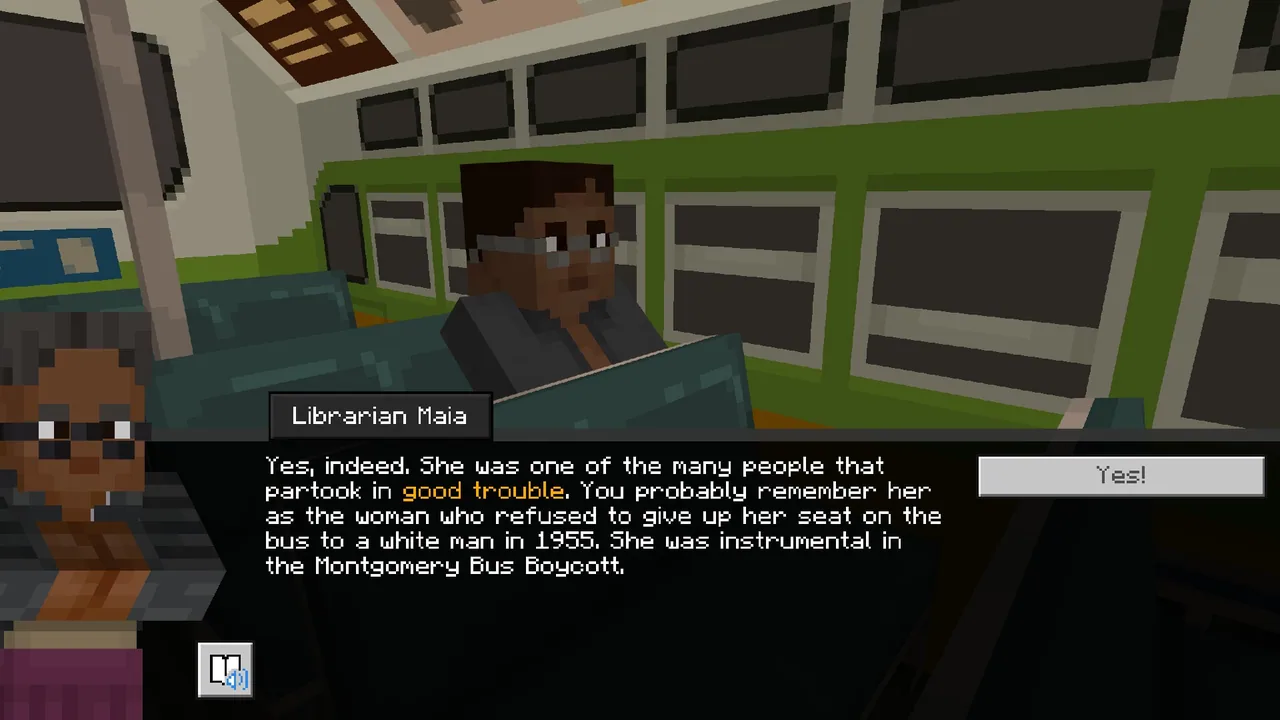
Have students load into the virtual world and speak with Maia, the Librarian NPC in the central hub. Students equip a Book and Quill before advancing into the four-part Selma to Montgomery march progression.
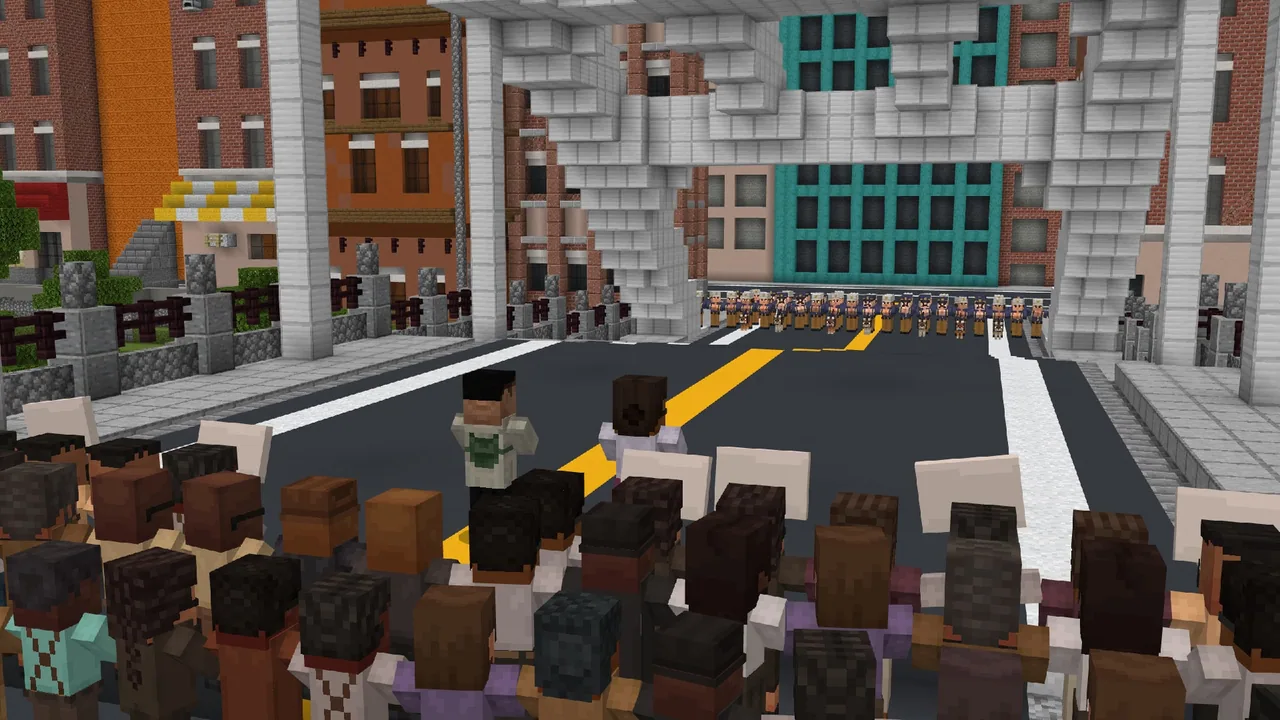
- Chapter 1 (Bloody Sunday): Observe the confrontation at Edmund Pettus Bridge and reflect on assembly rights.
- Chapter 2 (Turnaround Tuesday): Examine Dr. Martin Luther King Jr.'s choice to pause and pray rather than force direct conflict.
- Chapter 3 (Successful March): Reach the Alabama State Capitol and review the connection to the Voting Rights Act of 1965.
- Chapter 4 (Lewis's Final Crossing): Witness John Lewis's commemorative final crossing and consider what lifelong service means.
- Global Leaders Investigation12 min
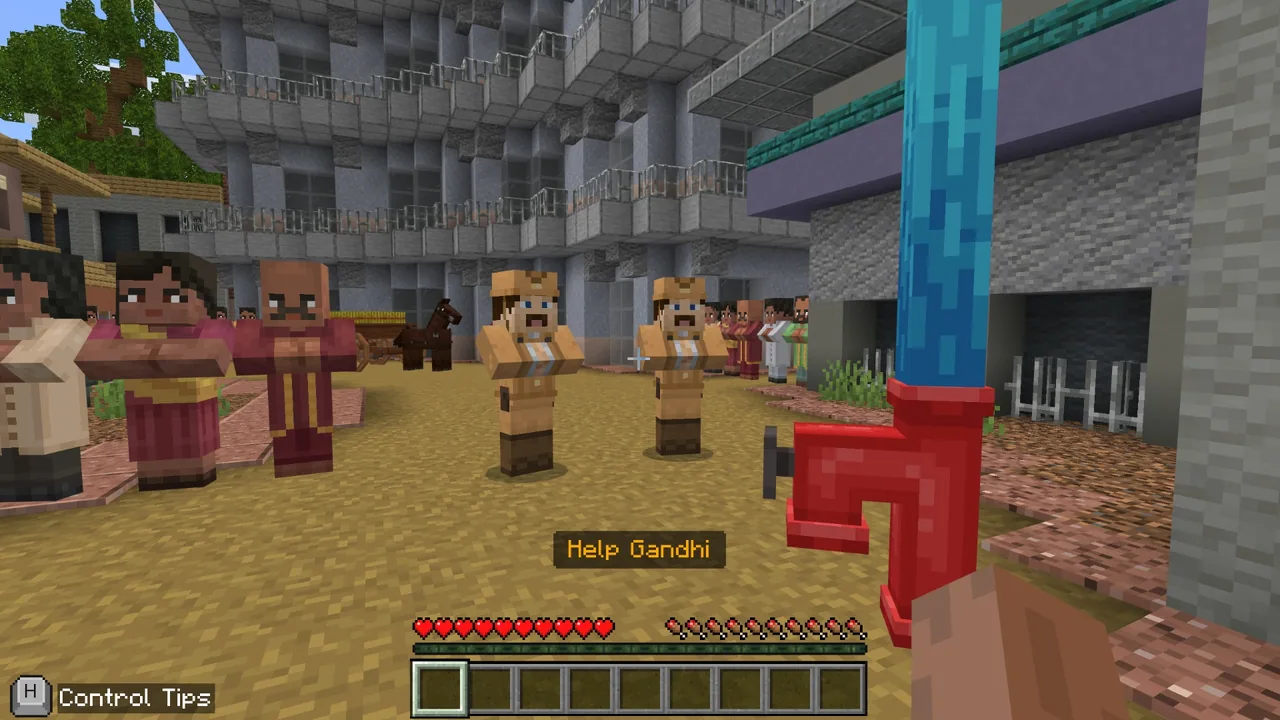
Students return to the Library Hub and visit interactive exhibits highlighting other worldwide struggles for justice. Learners choose between stations focused on Nelson Mandela (Anti-Apartheid), Mahatma Gandhi (India's Independence), Emmeline Pankhurst (Women's Suffrage), and Malala Yousafzai (Equal Education for Girls).
Using their Book and Quill, students log each activist's movement, strategies, core goals, and notable achievements, drawing direct comparisons with the tactics used by John Lewis and Dr. King.
- Debrief and Personal Journaling8 min
Gather the class for a closing discussion around common threads: what strategies and moral principles unite activists across eras and borders? Conclude by having students complete a brief journal prompt in their Book and Quill explaining how they can apply these lessons to champion fairness in their own schools or neighborhoods.
Inside the lesson world
Assessment: success criteria
- Clearly explain John Lewis's concept of good trouble in the context of civic responsibility.
- Identify at least one international reformer from the hub and describe their movement and method of protest.
- Complete journal notes in the Book and Quill documenting causes, protest strategies, and outcomes of key events.
- Explain how sustained nonviolent demonstrations contributed to passing the Voting Rights Act of 1965.
Differentiation
Pair students together and have them focus on only one global leader exhibit after completing the Selma chapters.
Ask advanced learners to identify and research a modern grassroots campaign and compare its strategies to those documented in the Library Hub.
Knowledge check
5 questions to check understanding after the lesson. Tap an answer to see if it is right; the score appears at the end.
1What term did Congressman John Lewis use for necessary civic action taken to confront injustice?
Answer: B. John Lewis advocated getting into 'good trouble' to challenge unfair systems through nonviolent civic action.
2Which landmark legislation was directly aided by the national awareness generated by the Selma to Montgomery marches?
Answer: A. The successful Selma marches focused national pressure on voting restrictions, leading directly to the passage of the Voting Rights Act of 1965.
3Who is the non-player character that greets learners in the central Library Hub?
Answer: C. The source identifies Maia as the Librarian NPC who introduces civic engagement in the Central Hub.
4Which historical movement is paired with Emmeline Pankhurst inside the Library Hub?
Answer: D. Emmeline Pankhurst is featured at the station dedicated to the Women's Suffrage movement.
5During Chapter 2 (Turnaround Tuesday) of the Selma progression, what decision did march leaders make at the bridge?
Answer: B. During the second march, Dr. King led participants to turn back after prayer, illustrating deliberate protest strategy.
Resources
- Lesson package (.zip)Everything the author attached to this lesson in one download.
- Lessons in Good Trouble - VocabularyVocabulary words used throughout this lesson.
- Good Trouble Educator ResourceAdditional information for educators addressing topics raised in this lesson.
- Educator GuideEducator Guide and Lesson Plan
- Lesson worldOpens the world page in Minecraft Education (sign-in with a school account may be needed).
Part of the Civics and Citizenship curriculum
This is lesson 4 of 9 in Civics and Citizenship.
- LatinExplorers 2: A Hispanic Heritage Journey
- Active Citizen
- LatinExplorers: A Hispanic Heritage Journey
- Lessons in Good Trouble
- Peace Builders
- Stranger in Crimwell Village
- The Investigators
- Village Square
- Who is Dr. MLK Jr.?
Frequently Asked Questions
Which figures can students study inside the Library Hub stations?
The hub includes stations dedicated to John Lewis, Dr. Martin Luther King Jr., Malala Yousafzai, Nelson Mandela, Emmeline Pankhurst, and Mahatma Gandhi.
How do students capture their findings and answers while playing?
Students use the in-game Book and Quill to document historical details, track movement outcomes, and write personal reflections on civic action.
Is this activity suitable for a single class period?
Yes. The core experience is designed for roughly 45 minutes, though teachers can extend the research and discussion phases into a 60-minute session if desired.
Adapted from Lessons in Good Trouble by Felisa Ford, Ken Shelton, Natasha Rachell on Minecraft Education, last updated Sep 15, 2026. This classroom version, the timings and the quiz were written by 9Minecraft Education.