- Type
- Lesson plan
- Ages
- Ages 11-18
How did Romanization transform the ancient city of Olisipo, and how can we accurately reconstruct its architectural and civic life?
Overview
During the Roman conquest of the Iberian Peninsula, ancient Lisbon—then known as Olisipo—underwent profound structural and cultural transformations through Romanization. Students investigate historical evidence and documentaries to understand why Romans settled the region, how they organized society, and what architectural innovations they left behind.
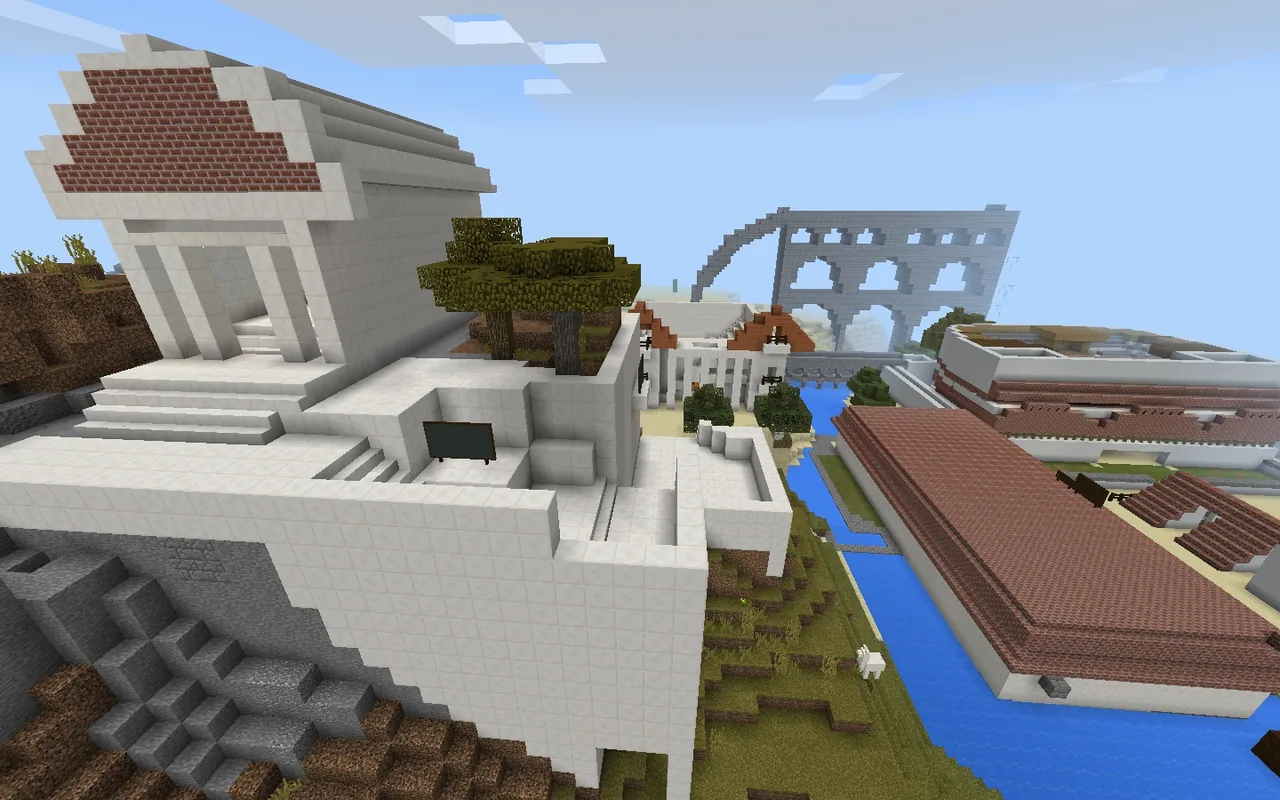
Working in pairs inside a shared Minecraft world, learners translate their historical research into a to-scale model of Olisipo. Teams divide tasks to construct vital Roman structures, configure non-player characters to reflect civic roles, and pause at photo checkpoints to document their progress in both English and Portuguese.
Learning objectives
By the end of this lesson students will be able to:
- Explain the reasons for and process of the Roman conquest of the Iberian Peninsula.
- Identify key structural changes and physical traces left in Olisipo during Romanization.
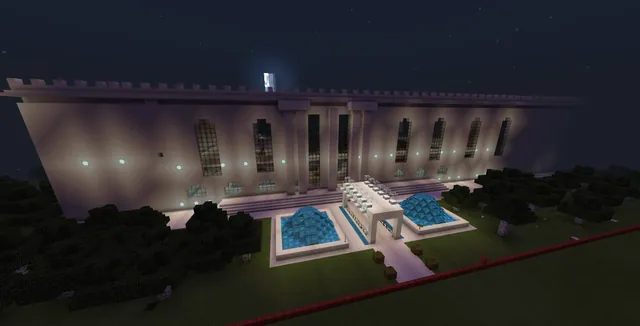
- Reconstruct Roman Lisbon features—such as aqueducts, homes, baths, and arenas—in a collaborative Minecraft world.
- Program non-player characters to represent diverse Roman societal roles including soldiers, citizens, and merchants.
- Document architectural progress using in-game photography accompanied by bilingual descriptions.
Blocks and items used in this lesson


Key vocabulary
- Olisipo
- The ancient Roman name for the settlement that developed into modern-day Lisbon.
- Romanization
- The historical process by which Roman culture, language, governance, and architecture spread through conquered lands.
- Aqueduct
- An engineered bridge and channel system built by Romans to transport fresh water over long distances into cities.
- Non-Player Character (NPC)
- An interactive digital character placed in Minecraft that can be configured to display dialogue, names, and historical roles.
Before class
Lesson sequence
- Brainstorming and Historical Research
Introduce guiding questions regarding Roman life, expansion, and everyday activities in the Iberian Peninsula. Have students review documentary evidence, identify historical artifacts, and record key findings onto their project plan sheets.
- Paper Planning and Role Assignment
Students form pairs and select their assigned construction responsibilities, such as homes, saunas, coliseums, or aqueducts. Teams sketch out their architectural plans on paper to organize scale and space before entering the game.
- Collaborative World Building
Pairs log into the teacher-hosted world, navigate to their assigned zones, and construct their Roman structures. Other learners place and program NPCs across the city to represent merchants, the Roman army, and everyday citizens.
- Photo Checkpoints and Bilingual Logging
When prompted by the teacher's call for a photo, students deploy the in-game camera to record their building progress. Each learner writes a bilingual caption in both English and Portuguese to explain what they have created.
- Presentation and Peer Evaluation
Student pairs present their completed district of Olisipo, explaining architectural elements and demonstrating NPC interactions. The teacher and classmates assess each build against historical accuracy checklists.
Assessment: success criteria
- Accurate recreation of Roman architectural elements such as aqueducts, saunas, arenas, or domestic housing.
- Correct setup and programming of NPCs representing historical roles like soldiers, merchants, and citizens.
- Completed bilingual photo logs documenting building stages in both English and Portuguese.
- Clear presentation demonstrating understanding of Romanization and its impact on the Iberian Peninsula.
Differentiation
Provide labeled architectural reference diagrams and a bilingual vocabulary bank to assist pairs with spatial planning and caption writing.
Challenge advanced students to write extended dialogue trees for their NPCs that explain specific Roman laws or historical trade goods.
Knowledge check
5 questions to check understanding after the lesson. Tap an answer to see if it is right; the score appears at the end.
1What was the ancient Roman name for the city of Lisbon?
Answer: D. Olisipo is the historical Roman name for ancient Lisbon referenced throughout the project.
2What was the primary function of NPCs programmed by students in this project?
Answer: C. Students programmed NPCs to populate Olisipo as members of the army, general populace, and marketplace merchants.
3What action were students required to take when the teacher signaled a photo checkpoint?
Answer: B. Students placed an in-game camera to take a photo of their build and documented their work in both languages.
4Which of the following historical structures was specifically assigned to student pairs to build?
Answer: A. The project plan includes authentic Roman structures such as aqueducts, saunas, houses, arenas, and coliseums.
5How did student pairs organize their build before placing blocks in the virtual world?
Answer: C. The lesson sequence begins with research, completing a project plan, and sketching layouts on paper before entering Minecraft.
Resources
- Lesson package (.zip)Everything the author attached to this lesson in one download.
- Image used as inspiration
- Project PlanSs receive their individual Project Plan to fill in with all necessary info, such as title, group work, timeline and sessions.
- Objectives checklistIn line with the curricular goals and objective of the National Ministry of Education, Ss mark their accomplished goals/objectives as they progress.
- Ss are constantly accompanied by the teacherThey are asked to explain their actions, decisions and reasons for undertaking a specific task, as well as showcase their learning process.
- PresentationSs present their work to the whole classroom and discuss their results, workflow, as well as whether specific goals and objectives have been achieved.
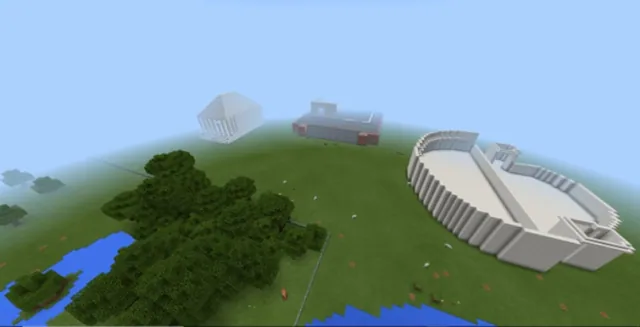
- Olisipo World | Group areasWe divided the World in this sections to each group could construct in different areas.
Frequently Asked Questions
Do students need prior fluency in Portuguese to participate in the writing tasks?
Fluency is not mandatory; teachers can adapt the bilingual writing requirement by providing language scaffolds, bilingual glossaries, or sentence frames to support non-native speakers.
Can students complete this project individually rather than in pairs?
While individual work is possible, the lesson is designed around collaborative pairs sharing dedicated zones within a single world to simulate the scale and interconnectedness of an ancient Roman city.
Adapted from Lisbon during Roman Empire by Joana De Almeida Simas on Minecraft Education, last updated Mar 2, 2018. This classroom version, the timings and the quiz were written by 9Minecraft Education.