- Type
- Lesson plan
- Ages
- Ages 11-18
- Duration
- about 43 min (suggested)
How can we design a sustainable reserve that protects endangered orangutans while balancing the needs of people, profit, and the planet?
Overview
Human activity and resource consumption have placed severe pressures on tropical ecosystems and endangered species like the orangutan. In this lesson, students explore the complex tensions between economic livelihoods, local communities, and wildlife conservation to understand how biodiversity loss affects ecosystem services.
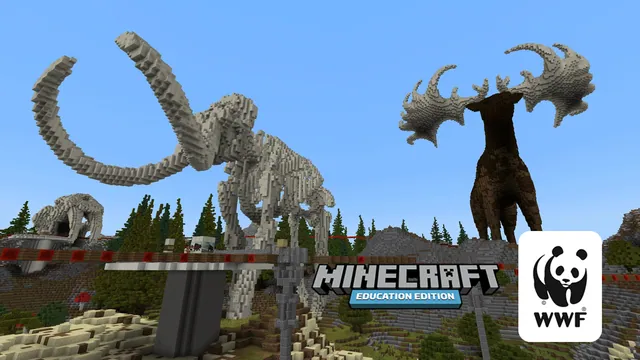
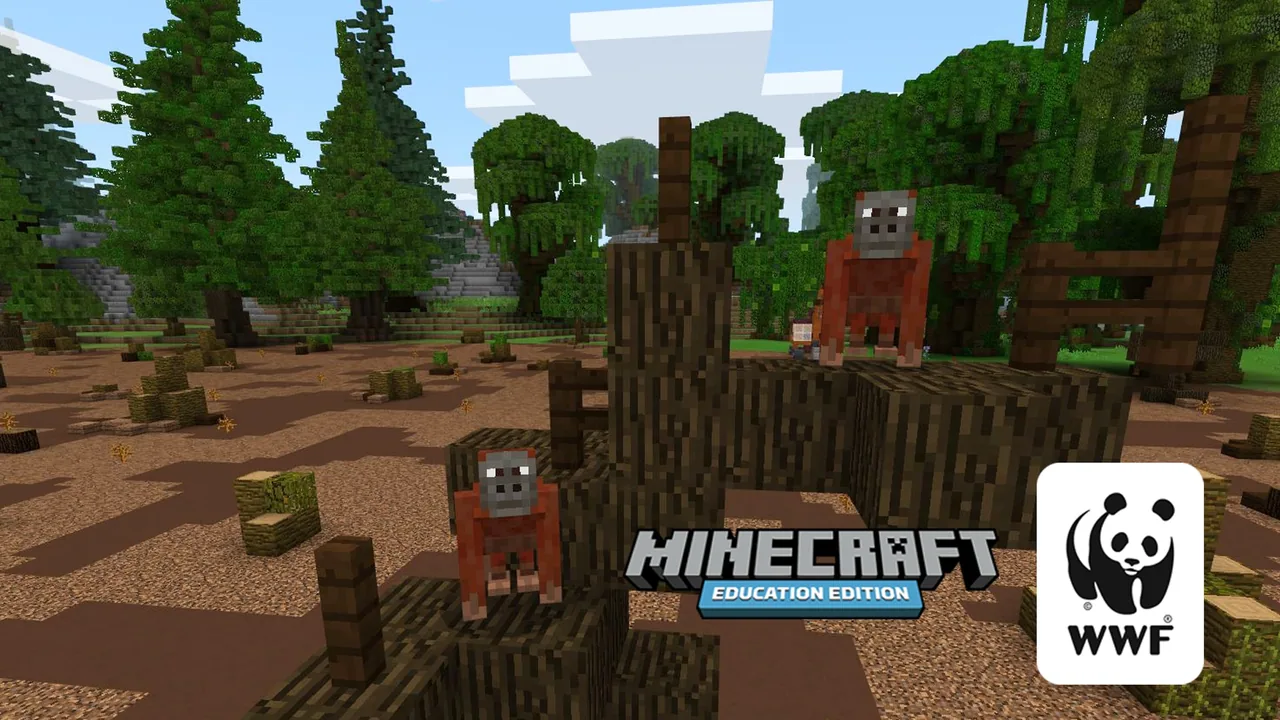
Using a Minecraft world created by Naturebytes in partnership with the World Wildlife Fund, learners tour a deforested landscape to gather evidence from non-player characters representing local farmers, researchers, and community members. Working collaboratively, students draft and build a sustainable reserve that supports both orangutan habitats and local human needs.
Learning objectives
By the end of this lesson students will be able to:
- Identify major threats to tropical biodiversity and ecosystem services from non-player character interviews.
- Formulate a collaborative reserve plan that balances environmental protection with community livelihoods.
- Construct a sustainable orangutan reserve in a deforested Minecraft area using collaborative building strategies.
- Evaluate personal lifestyle choices that contribute to global habitat loss and identify positive actions to support conservation.
Blocks and items used in this lesson
 Book and Quill
 Jungle Sapling
 Jungle Log
 Jungle Leaves
 Jungle Planks
Key vocabulary
- Biodiversity
- The variety of living organisms and natural life within a specific habitat or ecosystem.
- Ecosystem Services
- The direct and indirect benefits that humans and the environment receive from healthy natural systems.
- Sustainable Management
- Practices that meet present human and economic needs without depleting resources or harming long-term ecosystem health.
- Deforestation
- The clearing or removal of forest areas, leading to habitat loss for wildlife.
Before class
Lesson sequence
Suggested timing: about 43 minutes in total.
- Introduction3 min
Introduce the challenge by discussing the value of biodiversity and the purpose of ecosystem services. Screen Conservationist Jan's Orangutan Challenge Video to frame the mission for the class.
- Field Investigation10 min
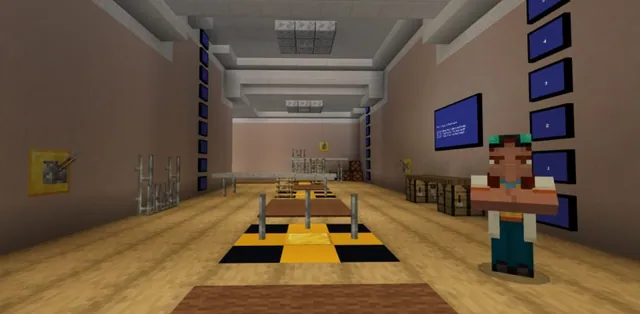
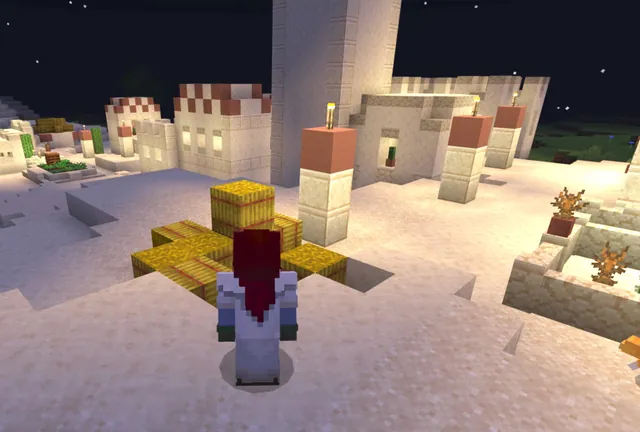
Direct students to enter the Minecraft world individually, locate the deforested region, and speak with non-player characters including farmers, scientists, and local community members. Students record notes detailing the key drivers of deforestation and the perspectives of each group.
- Reserve Planning10 min
In small groups, students draft a sustainable reserve concept using paper, whiteboards, or digital tools, consulting the Thirty Hills WWF website for ideas. Bring the class together to compare proposals and identify the strongest strategies that balance people, profit, and planet.
- Minecraft Construction and Reflection20 min
Teams work together inside the deforested area in Minecraft to build their planned reserve using available in-game resources. Conclude with a discussion on what steps could make such a reserve realistic and what personal lifestyle changes students can adopt to protect biodiversity.
Assessment: success criteria
- Notes reflect multiple viewpoints on biodiversity threats collected from farmers, scientists, and community NPCs.
- The reserve plan explicitly addresses the triple balance of people, planet, and profit.
- The in-game build reflects collaborative design decisions to restore habitat and provide sustainable community resources.
- Students explain at least one individual lifestyle habit that impacts global biodiversity.
Differentiation
Provide a graphic organizer that lists the three pillars (people, profit, planet) with prompt questions to structure NPC interview notes.
Challenge students to incorporate specific sustainable alternative livelihood facilities within their reserve to completely replace lost farming income.
Knowledge check
5 questions to check understanding after the lesson. Tap an answer to see if it is right; the score appears at the end.
1What three factors must students balance when planning their sustainable orangutan reserve?
Answer: B. The lesson specifically directs students to design a reserve that provides for people, profit, and the planet.
2Which video introduces the mission to the students at the start of the lesson?
Answer: A. The source specifies watching Conservationist Jan's Orangutan Challenge Video during the introductory phase.
3Which non-player characters do students interview in the deforested area?
Answer: C. Students are instructed to interact with farmers, scientists, and local community NPCs to investigate what happened.
4What external reference resource is suggested to assist students in planning their reserve?
Answer: B. The source identifies the Thirty Hills WWF website as a resource students can use to help plan their reserve.
5Where in the Minecraft world are student teams expected to build their sustainable reserve?
Answer: D. The instructions direct students to transform and build their reserve designs directly within the deforested area.
Part of the Biodiversity curriculum
This is lesson 2 of 3 in Biodiversity.
Frequently Asked Questions
What external organizations helped create this lesson material?
This project was developed in partnership with the World Wildlife Fund (WWF), featuring a Minecraft world built by Naturebytes.
What medium should students use to plan their reserve designs before building?
Students can draft their reserve concepts using paper, whiteboards, computers, or any equivalent planning format available in the classroom.
Adapted from Extinction! Orangutans future by Minecraft Education on Minecraft Education, last updated Dec 15, 2022. This classroom version, the timings and the quiz were written by 9Minecraft Education.