- Type
- Lesson plan
- Subject
- Science
- Topics
- Science
- Ages
- Ages 11-18
- Duration
- about 1.8 hours (suggested)
- Skills
- Project Based Learning
- Includes
- Quiz: 5 questionsLesson files
How can scientific models help us understand ocean pollution, equilibrium systems, and our ethical duty toward sustainable development?
Overview
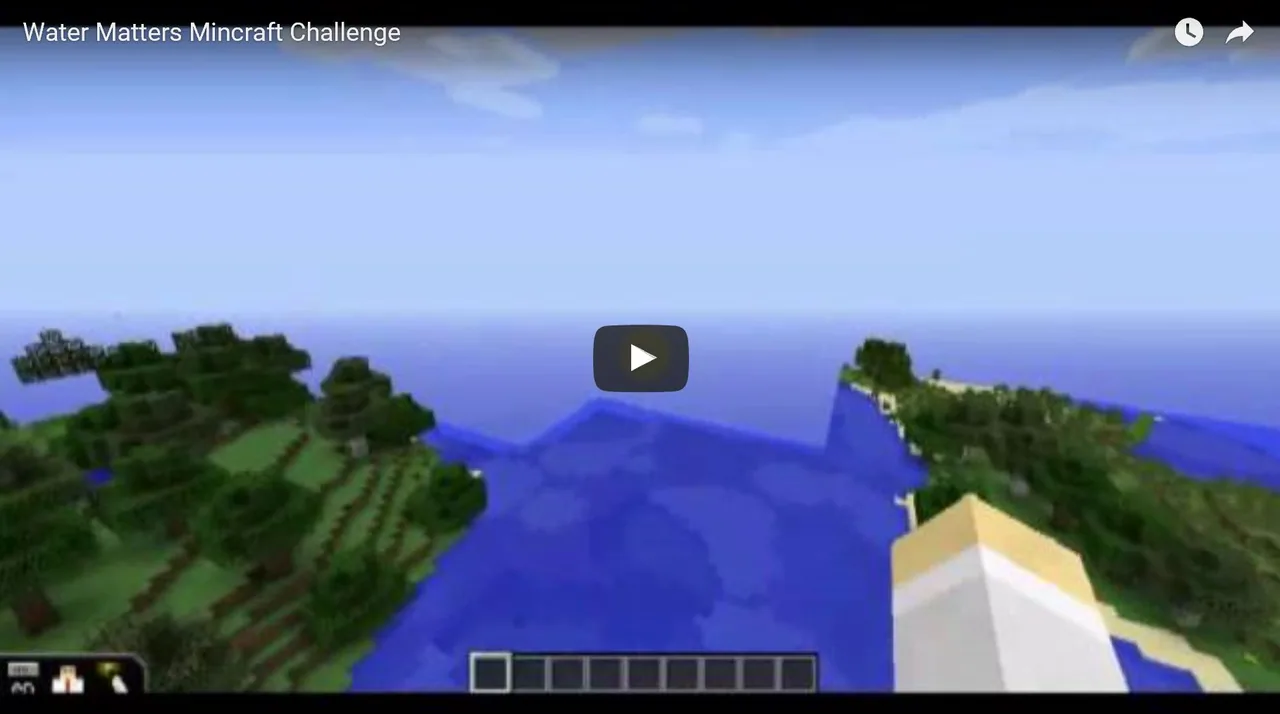
Inspired by the Smithsonian Institution citizen science initiative Water Matters, this project-based science lesson guides students to examine global ocean pollution and social responsibility. Learners explore how human actions disrupt marine balance and evaluate how sustainable development practices can protect shared water resources.
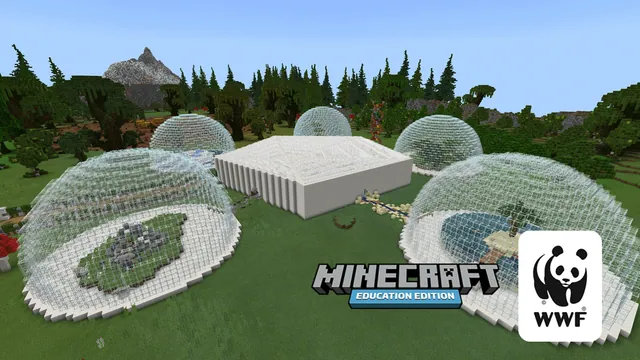
Working in Minecraft Education, students construct a visual world map that models global environmental change and ocean contamination. Through their build, students analyze ocean equilibrium systems and critically evaluate how scientific models simplify complex real-world conditions.
Learning objectives
By the end of this lesson students will be able to:
- Construct a Minecraft world map representing ocean pollution and global environmental change.
- Explain how ocean equilibrium systems respond to environmental contamination.
- Identify systematic and random sources of error when collecting scientific data and sampling water systems.
- Evaluate the validity and limitations of using simplified digital models to represent natural reality.
Blocks and items used in this lesson


Key vocabulary
- Equilibrium System
- A balanced state where opposing forces or chemical processes occur at equal rates.
- Systematic Error
- A predictable, consistent error in measurement caused by flawed equipment or experiment design.
- Random Error
- Unpredictable fluctuations in measurements caused by unknown or uncontrollable environmental factors.
- Scientific Model
- A simplified physical, digital, or conceptual representation of an object, system, or phenomenon.
- Sustainable Development
- Resource use that meets current human needs without compromising the ability of future generations to meet theirs.
Before class
Lesson sequence
Suggested timing: about 110 minutes in total.
- Introduction and Citizen Science Context15 min
Introduce the Smithsonian Water Matters theme and engage students in a discussion on social responsibility, water ethics, and sustainable development. Review the role of ocean equilibrium and why scientific measurement requires careful sampling and error analysis.
- Planning the Ocean Pollution Model15 min
Have students outline their environmental model before building. Groups determine which pollutants to depict, how ocean equilibrium will be visualized, and identify potential simplifications or limitations in their planned representation.
- Minecraft World Map Construction45 min
Students generate a creative world in Minecraft and build their large-scale ocean model. They place visual representations of environmental change, waste distribution, and marine system disruptions.
- Model Analysis and Evaluation20 min
Students inspect their models to reason through sampling techniques, level of detection, accuracy, and sources of systematic or random error. They document the ways their build simplifies natural systems.
- Reflection and Rubric Assessment15 min
Wrap up with peer presentations where learners defend their models against the assessment rubric, focusing on ocean balance, scientific limitations, and ethical obligations toward ocean conservation.
Assessment: success criteria
- Accurately reasons about and calculates conditions affecting equilibrium systems in the ocean.
- Identifies potential systematic and random errors, sampling limits, and detection accuracy in scientific investigations.
- Constructs a coherent Minecraft model demonstrating global environmental change and ocean pollution.
- Critically explains how models serve as simplifications of reality and discusses their inherent limitations.
Differentiation
Provide structured templates that suggest specific blocks to represent pollutants and guide students through identifying one systematic and one random error.
Challenge advanced students to mathematically calculate equilibrium shift ratios and document how sampling detection thresholds affect policy decisions.
Knowledge check
5 questions to check understanding after the lesson. Tap an answer to see if it is right; the score appears at the end.
1What citizen science initiative inspired the Water Matters Challenge lesson?
Answer: B. The lesson source states that this learning activity is based on the Smithsonian Institution citizen science theme Water Matters.
2What primary environmental issue do students model in Minecraft during this lesson?
Answer: C. The guiding idea directs students to use Minecraft in Education to create a realistic model of ocean pollution.
3Why is it important for students to evaluate their Minecraft builds as models?
Answer: B. The assessment expectations emphasize understanding models and theories as simplifications of reality.
4Which type of error consistently skews experimental measurements in the same direction due to flawed tools or procedures?
Answer: B. Systematic errors stem from predictable flaws in measurement tools or experimental procedures, unlike random fluctuations.
5Which skill approach is explicitly highlighted in the lesson source?
Answer: C. The source identifies Project Based Learning as the primary pedagogical skill used in this lesson.
Resources
Frequently Asked Questions
Does this lesson require a specific downloadable Minecraft world?
No. The source confirms there is no downloadable world file; students generate a standard creative world to construct their own ocean models.
What age range is this project suitable for?
This activity is designed for middle and high school students, specifically ages 11 to 13 and 14 to 18.
How should student learning be assessed in this project?
Assessment relies on an assessment rubric that evaluates reasoning about ocean equilibrium, scientific sampling and measurement errors, and the validity and limitations of models.
Adapted from Water Matters Challenge by Jonas Bäckelin on Minecraft Education, last updated Jan 10, 2017. This classroom version, the timings and the quiz were written by 9Minecraft Education.