- Type
- Lesson plan
- Subject
- Science
- Topics
- Science
- Ages
- Ages 11-13
- Includes
- Quiz: 5 questions
How do the three-dimensional structures and specialized organelles of plant and animal cells support life?
Overview
All living organisms are composed of cells, which organize to build tissues, organs, and complete body systems. In this biology project, students examine the foundational architecture of life by comparing animal and plant cell structures, noting key similarities alongside specialized components such as cell walls, vacuoles, and chloroplasts.
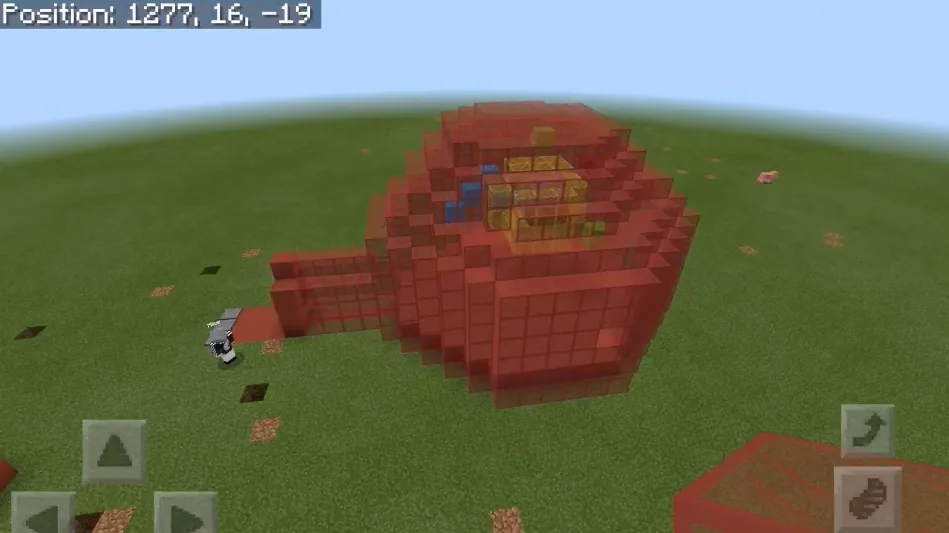
Traditional diagrams often reinforce the misconception that cells are flat, two-dimensional surfaces. By constructing their models in a three-dimensional space like Minecraft or with alternative materials, learners visualize internal depth, place organelles spatially, and label essential parts based on guided research checklists.
Learning objectives
By the end of this lesson students will be able to:
- Identify key organelles within plant and animal cells, including the nucleus, mitochondria, and cell membrane.
- Compare structural differences between plant cells and animal cells, such as the presence of chloroplasts and cell walls.
- Explain how individual cells combine to form tissues, organs, and whole organisms.
- Build and label a three-dimensional model representing either an animal or plant cell.
Blocks and items used in this lesson


Key vocabulary
- Organelle
- A specialized structure within a cell that performs a specific life function.
- Cell Membrane
- A flexible outer boundary that controls what enters and leaves a cell.
- Cell Wall
- A rigid outer layer surrounding plant cells that provides structural support.
- Chloroplast
- An organelle found in plant cells that captures light energy to produce food.
- Mitochondrion
- An organelle that releases usable energy for cellular processes.
- Vacuole
- A cellular storage structure, prominently found as a large central space in plant cells.
Before class
Lesson sequence
- Introduction and Research Checklist
Distribute the project objectives checklist and introduce the core concept that all living things are made of cells. Have students watch assigned instructional videos, answer guiding questions, and take notes detailing essential organelles.
- Comparing Cell Types
Guide students to contrast plant and animal cell structures. Discuss why cells are three-dimensional rather than flat, and explain how individual cells organize into tissues, organs, and complex organisms.
- 3D Model Construction
Have students work individually or in teams to construct a three-dimensional cell model using Minecraft or approved alternate materials. Students map out organelles such as the nucleus, endoplasmic reticulum, and cytoplasm.
- Labeling and Review
Learners place clear labels on each represented organelle within their build and verify their work against the original checklist before presenting their completed cell model.
Assessment: success criteria
- Accurately constructs a three-dimensional model of an assigned plant or animal cell.
- Labels required cellular structures including the nucleus, cytoplasm, and membrane.
- Distinguishes between structures unique to plant cells and those shared with animal cells.
- Completes the research checklist and notes documenting cell roles and multicellular organization.
Differentiation
Provide a pre-formatted diagram and a reduced checklist highlighting only the most central organelles.
Challenge students to model both a plant and an animal cell to demonstrate direct side-by-side structural comparisons.
Knowledge check
5 questions to check understanding after the lesson. Tap an answer to see if it is right; the score appears at the end.
1Which organelle is found in plant cells but absent from typical animal cells?
Answer: B. Plant cells contain chloroplasts for photosynthesis, whereas animal cells do not.
2What is a major reason for building cell models in a 3D environment like Minecraft?
Answer: C. Constructing models in 3D helps learners recognize that cells have depth rather than being flat surfaces.
3What biological hierarchy describes how cells form complex living systems?
Answer: A. Cells combine to create tissues, which then assemble into organs and complete organisms.
4Which structure serves as the outer boundary regulating entry and exit in animal cells?
Answer: D. Animal cells rely on a flexible cell membrane as their outer boundary, lacking a cell wall.
5Which organelle is present in both plant and animal cells?
Answer: B. Both plant and animal cells contain mitochondria to release usable energy.
Frequently Asked Questions
Do all students have to build their cell models inside Minecraft?
No, Minecraft is optional. Learners are encouraged to use whichever digital platform or hands-on physical materials make them feel most comfortable.
Is there a specific downloadable world required for this project?
No custom world download is required. Students can build in a standard open world or create their structures with ordinary classroom materials.
Adapted from Unity in diversity: cells by Andreia Salgueiro on Minecraft Education, last updated Feb 14, 2018. This classroom version, the timings and the quiz were written by 9Minecraft Education.