- Type
- Lesson plan
- Ages
- Ages 6-13
- Includes
- Quiz: 5 questions
How can we use collaborative Minecraft builds to tell the story of traditional Sardinian weaving and cultural identity?
Overview
Traditional garments offer a window into regional history and identity. In this lesson, students explore the folk costumes of Sardinia, Italy, examining how patterns, materials, and everyday textile symbols capture cultural heritage and reflect community life across generations.
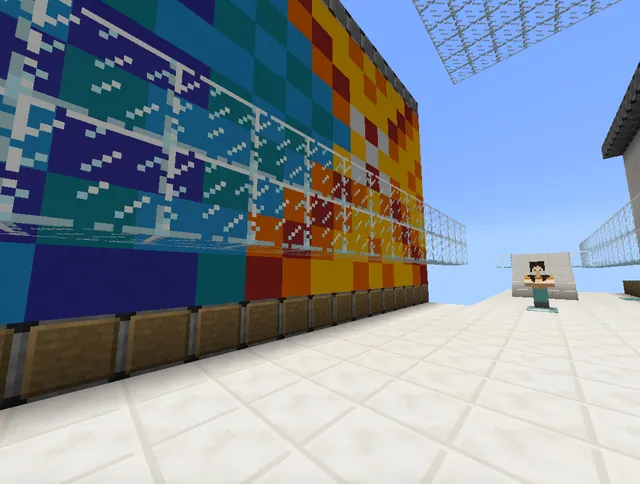
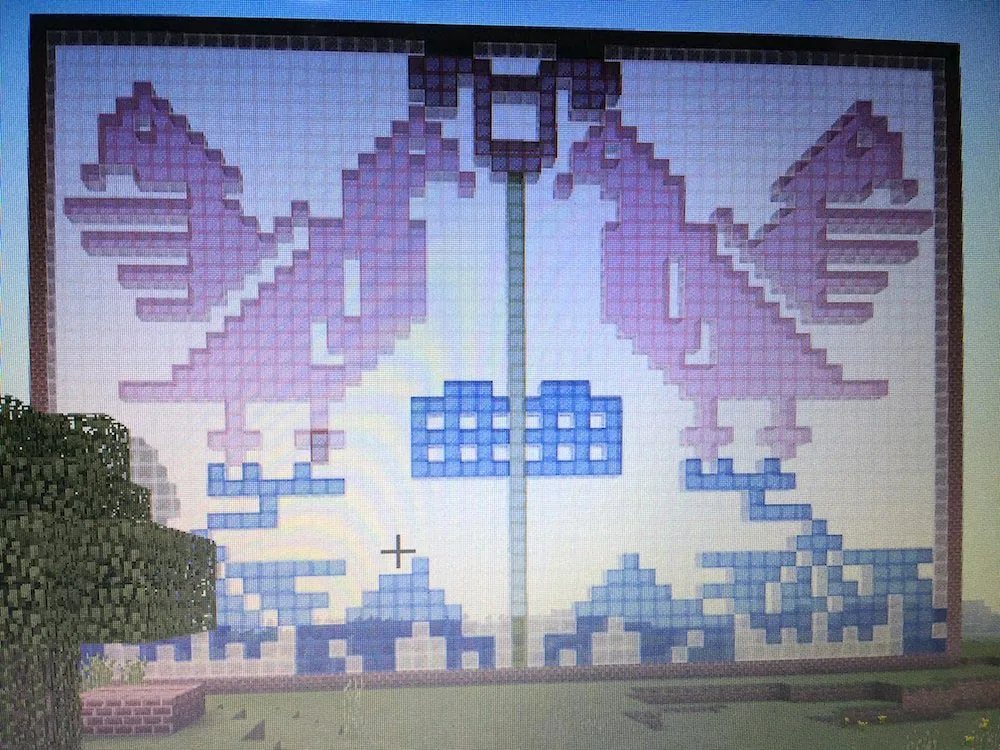
Working collaboratively, students draft traditional symbols on checked paper before translating them into Minecraft as pixel art patterns. Using in-game narrative tools, groups design an exhibition path that guides visitors through the meaning, materials, and history behind each woven design.
Learning objectives
By the end of this lesson students will be able to:
- Investigate traditional Sardinian textile symbols, materials, and their cultural significance.
- Draft a chosen weaving motif onto checked paper to plan its proportions.
- Recreate the planned textile pattern inside Minecraft using pixel art techniques.
- Build an interactive narrative path using storytelling tools to guide visitors through the history of regional costumes.
- Collaborate with peers to document and share findings as part of a collective historical memory.
Blocks and items used in this lesson


Key vocabulary
- Weaving
- The craft of interlacing threads or yarns to produce fabric or decorative textiles.
- Pixel Art
- A visual design style created using individual colored squares or blocks to form larger patterns.
- Symbol
- A shape, figure, or design that represents a specific meaning, tradition, or cultural value.
- Costume
- Traditional clothing and accessories typical of a particular region, historical era, or community.
Before class
Lesson sequence
- Discovering Sardinian Textiles
Introduce students to the regional folk costumes of Sardinia, Italy. Discuss how textile patterns and everyday objects carry educational meaning, convey regional identity, and evolve across different historical periods.
- Research and Motif Selection
In small groups, students research Sardinian weaving traditions and identify symbols commonly woven into garments. Each group selects a specific motif to study, noting its cultural significance and the base materials historically used in the fabric.
- Grid Paper Planning
Before entering Minecraft, students map out their chosen symbol on checked paper. Each square on the grid represents one block, allowing the team to plan proportions, colors, and layout carefully in advance.
- Minecraft Pattern and Story Build
Teams enter a collaborative world to construct their textile pattern as pixel art using blocks that match their grid design. Students also incorporate in-game storytelling elements to explain the fabric materials, historical context, and symbolic meaning.
- Guided Walkthrough and Collective Memory
Student groups establish a walking path connecting their builds. Teams guide classmates along the trail, sharing their textile narratives and contributing their findings to a shared class record of cultural heritage.
Assessment: success criteria
- Student group prepares a complete motif draft on checked paper before starting in-game construction.
- The in-game Minecraft build accurately translates the planned grid pattern into pixel art.
- The presentation clearly identifies the materials, history, and symbolic meaning of the Sardinian textile.
- Group members work collaboratively, sharing project roles and guiding visitors along an informative path.
Differentiation
Provide simplified geometric weaving symbols and assign partner pairs to count grid coordinates directly from paper to Minecraft blocks.
Encourage students to create an expanded narrative route that contrasts how weaving symbols and clothing shapes transformed across multiple eras.
Knowledge check
5 questions to check understanding after the lesson. Tap an answer to see if it is right; the score appears at the end.
1Which region's traditional costumes and weaving history form the focus of this lesson?
Answer: B. The lesson specifically focuses on rebuilding the history of the traditional costumes of Sardinia, Italy.
2What planning step do students complete before constructing their textile symbols in Minecraft?
Answer: C. The activity instructions state that students choose a symbol and first draw it on checked paper.
3How do students recreate their selected textile patterns inside the Minecraft world?
Answer: A. The performance expectations state that students realize the pattern inside Minecraft as pixel art.
4What is the primary purpose of adding storytelling tools to the Minecraft build?
Answer: B. Students use storytelling tools to explain fabric materials and guide spectators along a path showing the links between clothing and customs.
5Why do students publish and present their completed projects at the end of the lesson?
Answer: A. A core objective of the lesson is that students publish their work to build a collective memory.
Frequently Asked Questions
Does this lesson require a custom downloadable world template?
No special world download is required. Teachers can set up any blank or standard flat world in Minecraft Education to give groups space to build their pixel art and narrative trails.
Why is checked paper used before building in Minecraft?
Checked paper allows students to map out each block precisely as a pixel grid, making it easier to plan proportions, calculate dimensions, and divide building tasks before placing blocks in the game.
Adapted from The weaving by Cristiana Pivetta on Minecraft Education, last updated Feb 14, 2018. This classroom version, the timings and the quiz were written by 9Minecraft Education.