- Type
- Lesson plan
- Ages
- Ages 11-13
- Duration
- 3 hours
- Level
- Beginner
How does obtaining raw materials for modern technology impact the environment and global resource availability?
Overview
Modern society depends heavily on technology, yet the raw elements required to manufacture electronics must be extracted from the Earth. In this lesson, students explore how natural resources are obtained, investigate the environmental consequences of mining and reclamation, and examine the economic pressures caused by shortages of materials needed for semiconductors and computer chips.
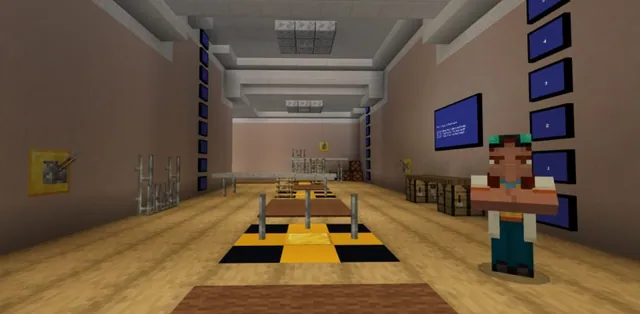
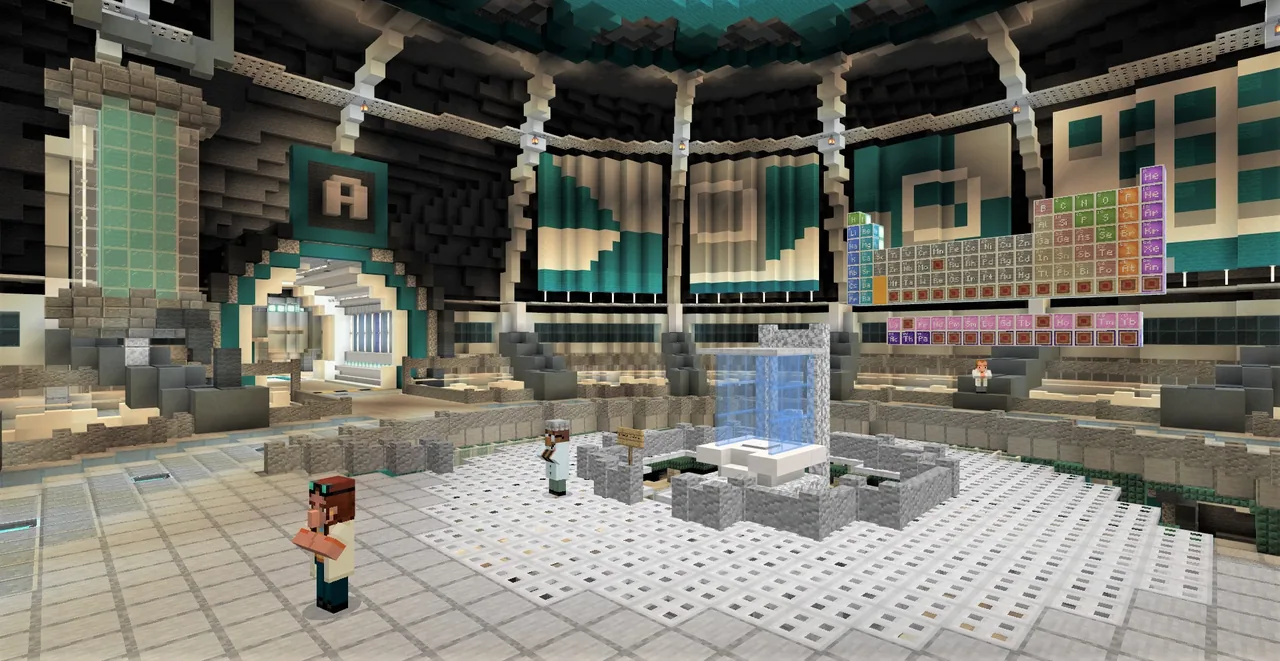
Using Minecraft: Education Edition, students explore an in-world element book library to research the building blocks of everyday technology. Learners use the in-game camera and Book and Quill to document key rare-earth elements, photograph them, and connect each chemical component to the everyday consumer electronics they power.
Learning objectives
By the end of this lesson students will be able to:
- Explain how synthetic materials and technological items originate from natural Earth resources.
- Analyze the environmental impacts of mining operations and the importance of land reclamation.
- Investigate the supply challenges and scarcity of rare-earth elements used in semiconductor manufacturing.
- Document twelve rare-earth elements and their everyday technological applications inside a Minecraft Book and Quill.
Blocks and items used in this lesson
 Book and Quill
 Camera
 Neodymium (Element 60)
 Yttrium (Element 39)
 Lanthanum (Element 57)
 Cerium (Element 58)
 Europium (Element 63)
 Scandium (Element 21)
Key vocabulary
- Raw Materials
- Unprocessed natural substances extracted from the Earth to create goods and products.
- Semiconductor
- A material or device essential for controlling electric current in modern computer chips and electronics.
- Rare-Earth Elements
- A set of seventeen metallic elements crucial for producing high-tech items like smartphones and computers.
- Reclamation
- The process of restoring land disturbed by mining back to a usable, natural state.
- Sustainable Development
- Using natural resources in a way that meets current needs without depleting them for future generations.
Before class
Lesson sequence
Suggested timing: about 180 minutes in total.
- Everyday Metals Brainstorm and Reading25 min
Lead a class brainstorm identifying minerals found in the classroom and daily life, such as in vehicles or along sidewalks. Have students read the article on where metals come from, utilizing text-to-speech tools or peer pairs for reading support.
- Mining Exploration and Reclamation Lab35 min
Have students tally everyday metals they interact with using the Dig into Mining resource. Discuss how mining impacts local ecosystems, then guide students through the Aim to Reclaim virtual lab while completing their student handbooks.
- Resource Scarcity and Technology Research30 min
Discuss raw material shortages in semiconductor manufacturing and watch the World's Largest Lesson animations. Introduce the seventeen rare-earth elements essential for smartphones, appliances, and computers, guiding students through non-fiction text features to find key uses.
- Minecraft Element Investigation60 min
Students enter the Minecraft world to explore the element library. Using an in-game camera and Book and Quill, each learner must locate and document twelve rare-earth elements valued in computer chip manufacturing, recording facts and pairing each with a real-world object.
- Reflection and Sustainability Sharing30 min
Learners review their completed Minecraft books and post a video response to the Flipgrid prompts, sharing their perspectives on sustainable resource consumption and how society can reduce waste.
Assessment: success criteria
- Accurate identification and documentation of twelve rare-earth elements from the Minecraft world.
- Clear associations made between each documented element and an everyday real-world technology.
- Completion of the Aim to Reclaim virtual lab handbook detailing mining and land restoration.
- Thoughtful participation in sustainability discussions explaining the impact of material extraction.
Differentiation
Pair students for technical readings, utilize Immersive Reader, and provide targeted non-fiction text clues to help locate element details.
Have students research alternative manufacturing materials or propose conservation methods to mitigate semiconductor supply shortages.
Knowledge check
5 questions to check understanding after the lesson. Tap an answer to see if it is right; the score appears at the end.
1Where do the synthetic materials and metals used in electronics ultimately originate?
Answer: A. Synthetic materials and metals originate from natural Earth resources and minerals.
2What is the primary goal of land reclamation following mining activities?
Answer: B. Reclamation focuses on restoring the land and ecosystem after mining operations have ceased.
3How many rare-earth elements are recognized as essential to modern technology?
Answer: D. The lesson references seventeen specific rare-earth elements that are vital to modern technological devices.
4Shortages of raw materials have created major supply issues for which technology component?
Answer: A. The reading highlights how raw material shortages heavily impact semiconductor enterprises and computer chip manufacturing.
5Which in-game Minecraft item do students use to document photos and descriptions of elements?
Answer: B. Students record photos and research findings about the twelve elements inside a Book and Quill.
Resources
- Lesson package (.zip)Everything the author attached to this lesson in one download.
- Lesson PlanLesson Plan PDF for Periodic Odyssey World
- Lesson worldOpens the world page in Minecraft Education (sign-in with a school account may be needed).
Frequently Asked Questions
How many elements must students document in their Minecraft assessment?
To meet the standard on the rubric, students must identify twelve rare-earth elements used in semiconductor manufacturing and link each one to real-world objects in their Book and Quill.
How should the three hours of instructional time be organized?
The lesson is structured across multiple sessions, typically beginning with two 60-minute research and lab days followed by Minecraft exploration and reflective sharing.
Adapted from Periodic Odyssey by BlockWorks on Minecraft Education, last updated Feb 14, 2026. This classroom version, the timings and the quiz were written by 9Minecraft Education.