- Type
- Lesson plan
- Ages
- Ages 11-18
How can we model living and non-living components in Minecraft to showcase biodiversity and promote ecosystem conservation?
Overview
An ecosystem is a complex system composed of diverse organisms interacting with both living (biotic) and non-living (abiotic) components. In this lesson, students explore how even a small area of land can host substantial plant biodiversity, with distinct species demonstrating their own unique traits and variations.
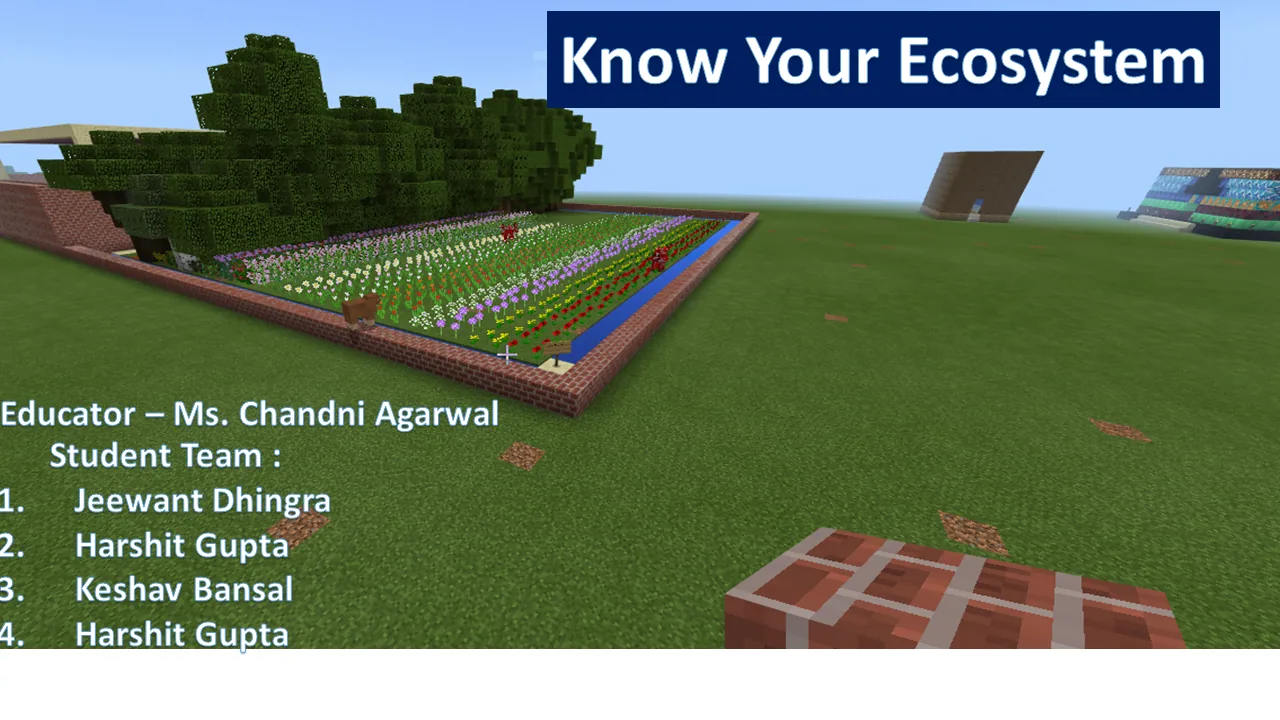
Using Minecraft as a collaborative workspace, student groups choose a project theme—such as a forest scene, a farm, or an animal life cycle habitat—and build realistic landscapes. They use in-game tools to simulate natural features like mountains and flowing rivers, balancing natural habitats with human-built elements while championing the theme of saving our ecosystems.
Learning objectives
By the end of this lesson students will be able to:
- Identify and represent biotic and abiotic components within a model ecosystem.
- Demonstrate how even small areas of land can sustain diverse and unique plant species.
- Collaborate in teams to plan, divide tasks, and build an environment focused on conservation.
- Communicate the importance of keeping environments clean and protecting natural ecosystems.
Blocks and items used in this lesson


Key vocabulary
- Ecosystem
- A biological community of interacting organisms and their physical environment.
- Biotic Components
- The living parts of an ecosystem, including animals and plants.
- Abiotic Components
- The non-living physical features of an environment, such as water, rock, and light.
- Biodiversity
- The variety of different plant and animal species living within a particular habitat.
Before class
Lesson sequence
- Prior Knowledge Review
Lead a short discussion reviewing basic ecosystem components. Emphasize that ecosystems consist of both biotic (living) and abiotic (non-living) elements, and discuss how small geographic areas can host surprisingly rich plant biodiversity.
- Team Planning & Theme Selection
Organize students into small teams and introduce the central theme: SAVE OUR ECOSYSTEM. Have each team select a scenario—such as an Animal Life Cycle, a Farm, or a Forest scene—and distribute building roles among group members.
- Collaborative World Building
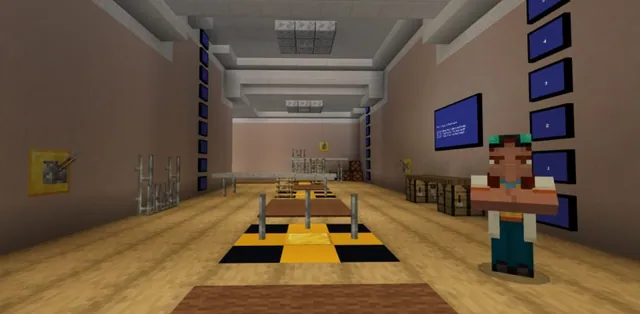
Students build their chosen ecosystem in Minecraft. Encourage them to add realistic biotic and abiotic features, such as mountains, ponds, flowing rivers created with water buckets, bird cages, animal habitats, and light sources using lava, alongside supporting structures like shelters or art galleries.
- Showcase and Environmental Reflection
Teams present their completed worlds to the class, pointing out living elements, species variations, and abiotic features. Students articulate their conservation ideas and acknowledge each team member's contribution to the project.
Assessment: success criteria
- Build includes both biotic elements (plants, animals) and abiotic elements (water, mountains, light sources).
- Model demonstrates plant variety and uniqueness within the chosen habitat area.
- Students successfully communicate their core message about saving and preserving ecosystems.
- Team members equitably divide, complete, and acknowledge shared project work.
Differentiation
Provide a focused checklist from the Ecosystem Snapshot document and assign the learner a single habitat feature, such as a farm enclosure or a pond.
Challenge students to organize an environmental action plan to maintain clean surroundings or design a guide for a visit to a botanical garden or national park.
Knowledge check
5 questions to check understanding after the lesson. Tap an answer to see if it is right; the score appears at the end.
1What two types of elements make up an ecosystem?
Answer: A. The lesson introduces ecosystems as being composed of both biotic (living) and abiotic (non-living) elements.
2What key concept about plant life are students expected to demonstrate?
Answer: C. One of the primary learning objectives is understanding that even small land areas can contain wide plant biodiversity.
3Which of the following is listed in the lesson as an example project theme?
Answer: A. The source identifies a Forest scene, Animal Life Cycle, or a Farm as example project options.
4How can students use a water bucket according to the lesson's guiding ideas?
Answer: B. The guiding ideas suggest using water buckets to create flowing rivers from mountains and provide water for animals.
5Which of the following is suggested as an extension activity?
Answer: B. The assessment expectations suggest visits to national parks or botanical gardens as extension activities.
Resources
- Lesson package (.zip)Everything the author attached to this lesson in one download.
- Power Pyramid
- Ecosystem Snapshot
Frequently Asked Questions
Is there a specific downloadable world file required for this lesson?
No custom world download is required; students can create and collaborate within standard Minecraft worlds.
What supporting files are mentioned for this lesson?
The lesson references two supporting documents: Power Pyramid and Ecosystem Snapshot.
How are human structures incorporated into the natural ecosystem build?
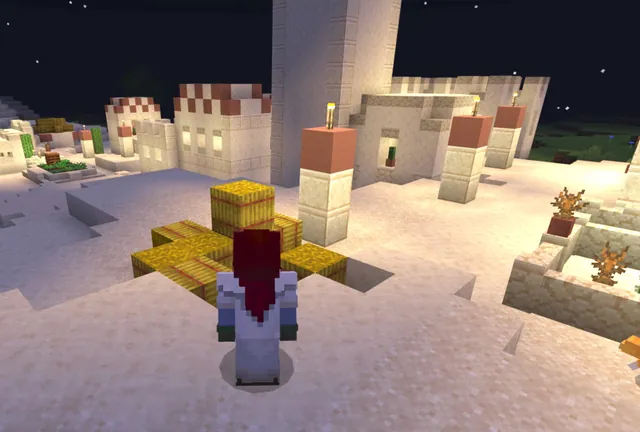
Students can add realistic features such as houses, bird cages, transportation, or art galleries to balance human elements with the surrounding natural environment.
Adapted from Know your Ecosystem by Chandni Agarwal on Minecraft Education, last updated Jul 7, 2022. This classroom version, the timings and the quiz were written by 9Minecraft Education.