- Type
- Lesson plan
- Subject
- Science
- Topics
- Science
- Ages
- Ages 11-13
- Duration
- 1 hour
- Level
- Beginner
How do the distinctive properties of gases and metals determine how we use them in the real world?
Overview
Understanding the periodic table requires connecting chemical symbols to actual physical materials, their properties, and their everyday purposes. In this introductory chemistry lesson, students explore the distinction between gaseous and metallic elements while discovering why specific elements are selected for practical applications in manufacturing, technology, and daily life.
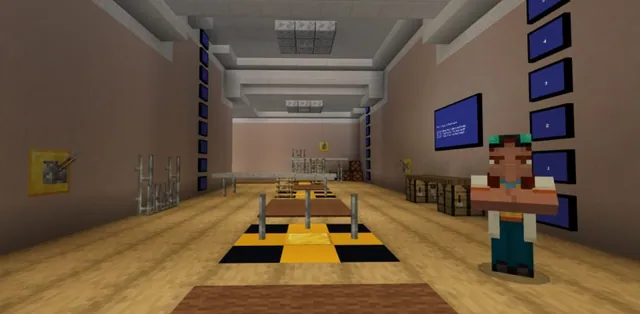
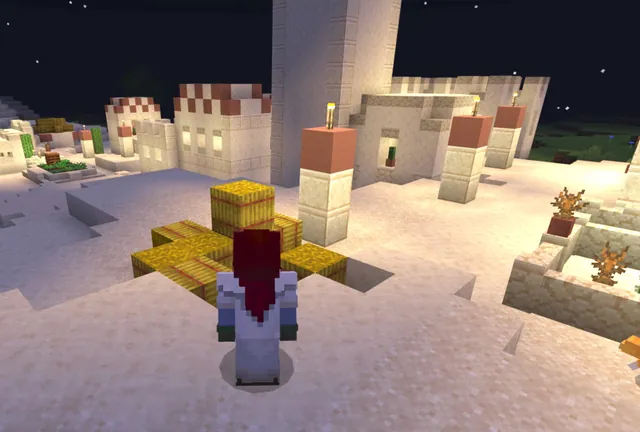
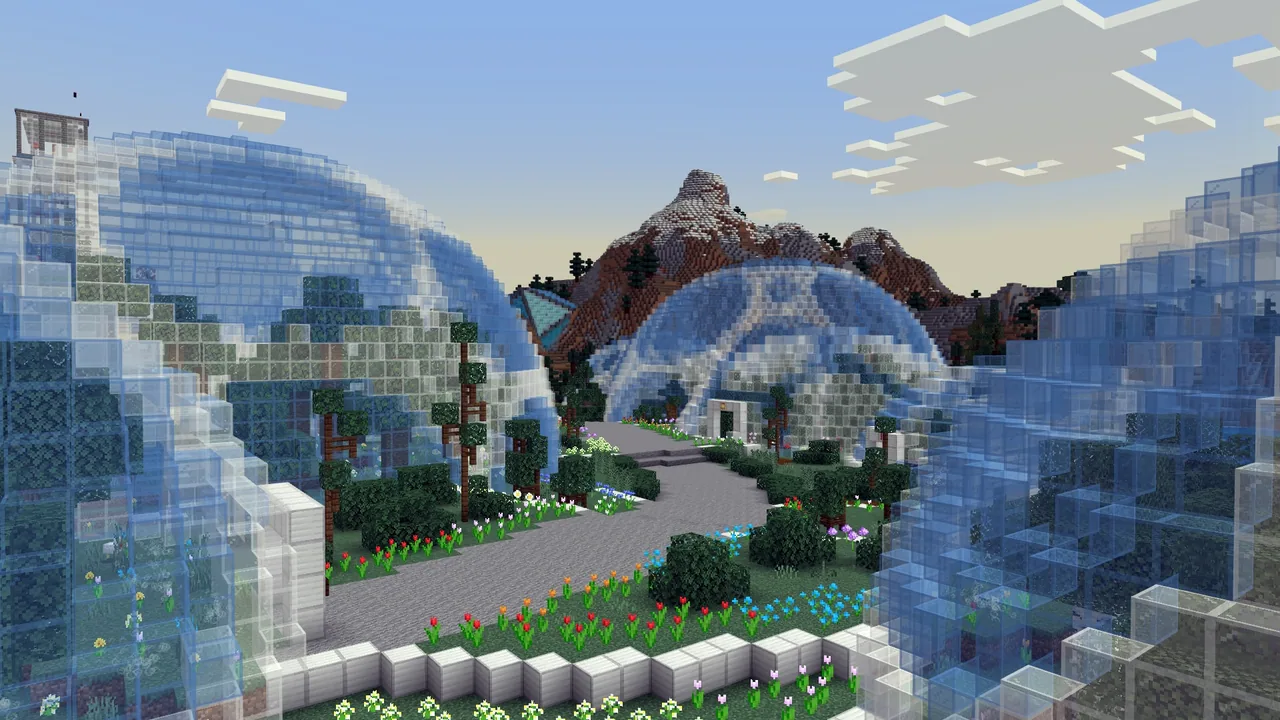
Using the custom Periodic Odyssey world, learners travel through laboratory zones to harvest atmospheric gases in protective domes and extract metallic ores from an underground mine. After sorting their findings into corresponding test chests, students consult an in-game chemist to research properties and record their data on an element tracking sheet.
Learning objectives
By the end of this lesson students will be able to:
- Recall and record standard chemical symbols for common gases and metals.
- Collect and sort gaseous and metallic element samples across dedicated Minecraft laboratory zones.
- Investigate real-world uses for selected elements and relate those uses to their physical properties.
- Identify differences between where elements are discovered in the Minecraft world and where they occur in nature.
Blocks and items used in this lesson


Key vocabulary
- Element
- A pure chemical substance made up of only one kind of atom that cannot be broken down into simpler substances.
- Chemical Symbol
- A standard one- or two-letter abbreviation used worldwide to identify a specific chemical element.
- Property
- An observable or measurable feature of a substance, such as its state of matter, density, or conductivity.
- Ore
- A naturally occurring rock or mineral deposit from which valuable metals or non-metals can be extracted.
Before class
Lesson sequence
Suggested timing: about 60 minutes in total.
- Introduction and Briefing10 min
Review chemical symbols and introduce the goal of the expedition: collecting gases and metals to uncover their practical uses. Explain lab navigation and distribute the student recording sheets or instruct learners on using the camera and book and quill.
- Zone A: Gas Harvesting15 min
Students head to Lab Room A, speak to the NPC to teleport to Zone A, and collect their gas mask and gas bottles. Learners harvest gas elements from the containment domes, return to the lab to deposit bottles in the matching chests, and write down the corresponding symbols.
- Zone B: Metal Mining20 min
Students enter Lab Room B and teleport to Zone B, grabbing torches at the entrance before exploring the mine. Learners locate metal patterns along the mine walls, extract samples of six metal elements, take the lift back, and place them into the correct chests to trigger the indicator lights.
- Atrium: Research and Synthesis15 min
Learners gather in the Lab Atrium and speak with the Head Chemist NPC to access the interactive periodic table. Students look up the real-world uses and unique properties of their collected elements, finishing their element tables and comparing Minecraft locations with real-world extraction.
Assessment: success criteria
- Correctly records the elemental symbols for all required gases and metals.
- Accurately deposits harvested gas bottles and mined ores into matching laboratory chests.
- Identifies at least one real-world application for each collected element.
- Explains a specific material property that makes each element suitable for its identified application.
Differentiation
Provide a pre-populated checklist with element symbols so students only need to locate the items and match uses, or pair struggling readers with a partner.
Ask learners to explain why carbon is mined in Zone B despite not being a metal, or have them document differences between in-game element locations and real-world natural deposits.
Knowledge check
5 questions to check understanding after the lesson. Tap an answer to see if it is right; the score appears at the end.
1Where in the world do students travel to collect gaseous element samples?
Answer: B. Zone A features specialized gas domes where students harvest gaseous elements using bottles.
2What happens when a student places a mined metal into the correct chest in Lab Room B?
Answer: A. The chests in Lab Room B are wired so that an indicator light illuminates once the correct metal is inserted.
3Which gear must students collect from the Zone A NPC before gathering gases?
Answer: C. The Zone A NPC gives students a gas mask and gas collection bottles for gathering atmospheric samples.
4Why is carbon a notable talking point when students explore the mine in Zone B?
Answer: A. Carbon is mined alongside metals in Zone B, making it an excellent example of a non-metal found in an ore deposit.
5Which non-player character provides the link to the interactive periodic table for element research?
Answer: D. The Head Chemist NPC stands near the large Periodic Table in the Lab Atrium and provides the research link.
Resources
- Lesson package (.zip)Everything the author attached to this lesson in one download.
- Lesson Plan
- Student Sheet
Frequently Asked Questions
Can students complete this lesson without printed worksheets?
Yes. Students can use the in-game camera to document the elements they locate and write their symbols, uses, and properties directly into a book and quill item.
How can I help students finish the metal collection within the time limit?
Have students work in pairs to divide the search for the six metals, or assign specific target elements to each team so they can quickly share and compile information.
What should students do after correctly filling all chests in Zone A?
Once all gas chests are properly filled, students can open the bonus chest located at the end of the zone as an added reward before moving to the next task.
Adapted from Element Quest by BlockWorks on Minecraft Education, last updated Apr 21, 2022. This classroom version, the timings and the quiz were written by 9Minecraft Education.