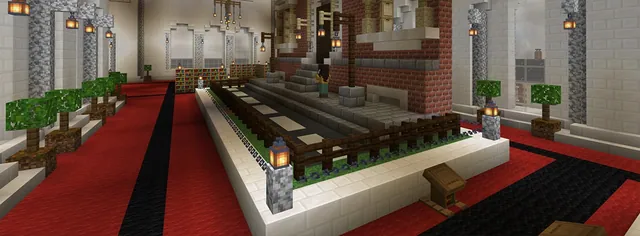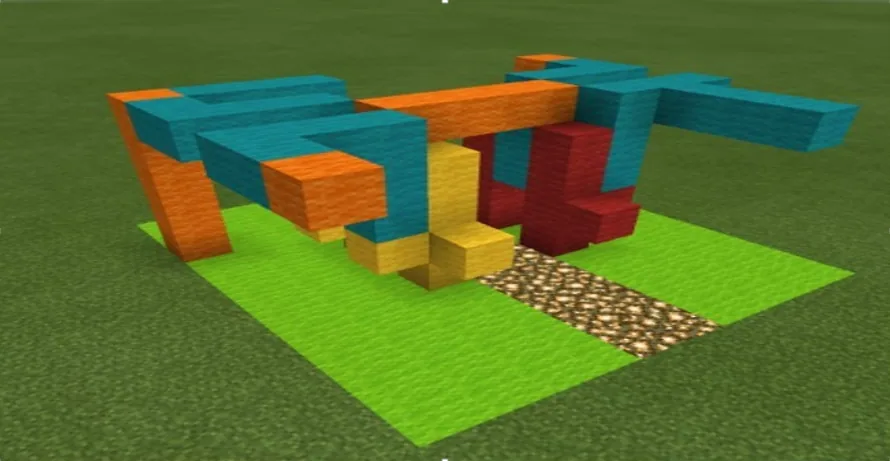
How can we define sculpture and create meaningful three-dimensional art without physical materials?
Overview
In this lesson, students investigate the definition and historical evolution of sculpture while addressing what it means to create three-dimensional art without physical materials. Moving away from traditional studio tools, learners examine how virtual environments can expand artistic expression and provide new avenues for fine art.Learning objectives
By the end of this lesson students will be able to:
- Define the art of sculpture and describe how it has evolved over time.
- Collaborate with a partner to design and build a virtual 3D sculpture.
- Apply repetition while varying size, color, and direction in a virtual space.
- Demonstrate an understanding of positive and negative space by balancing fullness and emptiness.
Blocks and items used in this lesson


Key vocabulary
- Sculpture
- A three-dimensional work of art formed by shaping solid materials or virtual structures.
- Fullness and Emptiness
- The artistic relationship between solid elements and open spaces within a structure.
- Repetition
- Using the same element, shape, or pattern multiple times across an artwork.
- Three-Dimensional
- Having height, width, and depth rather than being flat.
Before class
Lesson sequence
- Research and Discussion
Introduce the lesson by asking students how they define sculpture. Guide them through a brief research discussion about how sculpture has changed across centuries and what happens when artists replace traditional physical supplies with digital tools.
- Pair Brainstorming
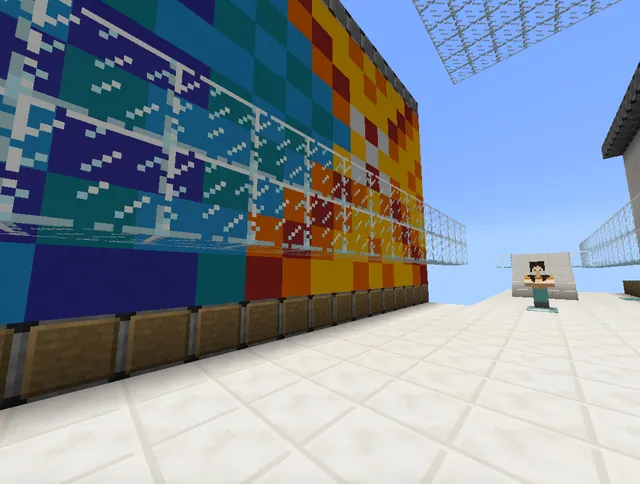
Group learners into pairs and share reference photos of virtual sculptures. Partners discuss their ideas, agree on the general shape of their planned artwork, and decide how they will utilize space on the platform.
- Virtual Construction
Pairs enter the flat platform world and begin sculpting with cubes. Remind students to experiment freely with repeating elements, varying sizes, colors, and directions, while actively balancing filled areas with empty openings.
Encourage learners not to fear mistakes, as digital blocks allow them to alter and repair their work without penalty.
- Gallery Walk and Reflection
Students view each other's virtual sculptures on the platform. Conclude with a discussion about how building in a virtual environment influenced their artistic decisions and their understanding of sculpture.
Assessment: success criteria
- Students can explain how sculpture functions in a digital environment without physical mediums.
- Partners collaborate constructively to plan and execute a unified 3D design.
- The completed build shows intentional repetition combined with diversity in size, direction, and color.
- The sculpture clearly addresses the relationship between solid masses and open spaces.
Differentiation
Provide reference images and suggest starting with a simple repeating geometric pattern before experimenting with complex directions.
Challenge advanced pairs to incorporate intricate arrangements of positive and negative space that look distinct from every viewing angle.
Knowledge check
5 questions to check understanding after the lesson. Tap an answer to see if it is right; the score appears at the end.
1What tool do students use to make sculptures during this lesson instead of traditional art supplies?
Answer: A. The lesson replaces traditional physical art tools and materials entirely with Minecraft.
2How are students instructed to work during the construction phase?
Answer: C. The student activities specify that learners discuss shapes and construct their sculptures in pairs.
3Which spatial concept are students asked to address in their sculptures?
Answer: B. The performance expectations state that students should create spaces and address the problem of fullness and emptiness.
4Why are students encouraged not to worry about making construction mistakes?
Answer: D. Building in a virtual environment allows learners to quickly fix mistakes and create without constraint.
5Besides repetition, what variations should students incorporate into their structures?
Answer: A. The expectations highlight the use of repetition alongside a diversity of size, color, and direction.
Resources
- Photos of virtual sculpturesphotos of virtual sculptures done by my students
- Lesson worldOpens the world page in Minecraft Education (sign-in with a school account may be needed).
Frequently Asked Questions
What world setting is required for this lesson?
The lesson uses a flat platform world so students have an open, clear surface to collaborate and build their virtual sculptures.
How does digital sculpting benefit students who lack traditional studio confidence?
Because virtual blocks can be broken and replaced instantly, students can experiment with complex 3D forms without worrying about wasting supplies or making irreversible errors.
Adapted from Virtual Sculptures by anis amouri on Minecraft Education, last updated Jul 5, 2021. This classroom version, the timings and the quiz were written by 9Minecraft Education.