- Type
- Lesson plan
- Subject
- Computer Science & Coding
- Topics
- Computer Science
- Grade
- Early years (Pre-K to Grade 2)Primary (Grades 3-5)Middle school (Grades 6-8)High school (Grades 9-12)
- Ages
- All ages
- Duration
- 1 hour
- Level
- Beginner
How can analyzing our initial attempt help us develop a faster, more effective strategy to find a hidden objective?
Overview
This lesson introduces students to computational thinking and iterative problem-solving in preparation for the Velocity Prize challenge. Rather than relying on guesswork or speed alone, learners discover how to treat an initial test run as valuable data. By examining bottlenecks, unexpected obstacles, and inefficient paths, students learn that methodical reflection leads directly to performance gains.Learning objectives
By the end of this lesson students will be able to:
- Formulate an initial strategy to locate, retrieve, and return a hidden flag in a custom world.
- Identify obstacles and unexpected delays encountered during a first practice attempt.
- Modify at least one specific approach or path based on structured reflection.
- Demonstrate measurable improvement in speed or efficiency between the first and second run.
Blocks and items used in this lesson

Key vocabulary
- Iteration
- Repeating a process while making small adjustments to produce a better result.
- Computational Thinking
- Breaking a complex challenge down into manageable steps and logical strategies.
- Reflection
- Carefully examining an experience to understand what worked, what failed, and what to change.
- Optimization
- Refining a plan or path to make it as fast and resource-efficient as possible.
Before class
Lesson sequence
Suggested timing: about 60 minutes in total.
- Challenge Setup10 min
Introduce the Velocity Prize challenge using the presentation slides. Explain that a single hidden flag is placed somewhere in the custom world and its position changes each run, meaning memorization will not work. Set the objective: locate the flag, retrieve it, and return as efficiently as possible.
- First Run: Data Gathering15 min
Students launch the world and begin their first search attempt. Emphasize that this run is not an assessment of ability, but an information-gathering exercise to observe the environment, test ideas, and identify potential challenges.
- Reflection and Think-Pair-Share10 min
Pause student activity and prompt them with targeted reflection questions: What slowed you down? What surprised you? What would you ignore next time? Students discuss observations with a partner and identify one specific strategy to alter.
- Second Run: Implementing Improvements15 min
Students re-enter the world for their second run, putting their revised plan into action. The goal for this round is visible progress over their first attempt rather than flawless execution.
- Debrief and Evaluation10 min
Regroup as a class to review progress. Have students explain how their thinking evolved from wandering to structured planning, and celebrate teams that demonstrated clear improvement between attempts.
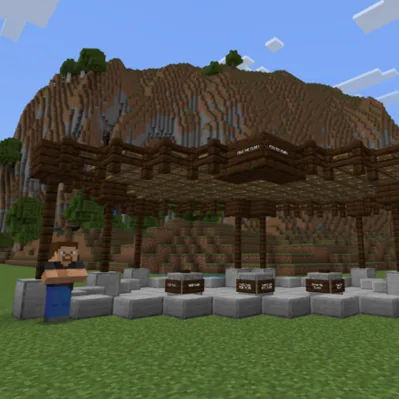
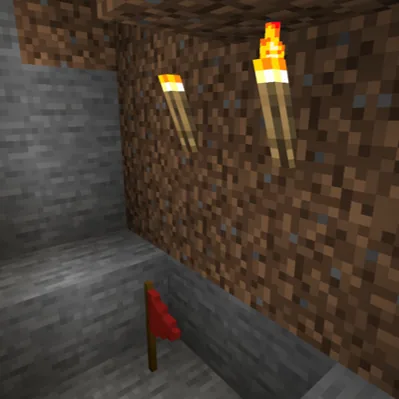
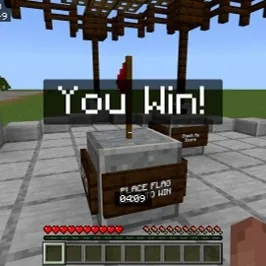
Inside the lesson world
Assessment: success criteria
- Student can clearly explain the adjustments made between their first and second attempts.
- Student shows measurable improvement in navigation, route efficiency, or search logic on run two.
- Student identifies specific distractions or obstacles that hindered their initial run.
- Student demonstrates structured planning rather than restarting repeatedly without reflection.
Differentiation
Pair struggling learners with a peer partner and encourage them to focus on eliminating just one major delay rather than attempting a complete route redesign.
Invite advanced learners to integrate automated routines, structured algorithms, or Copilot assistance to further refine their search path.
Knowledge check
5 questions to check understanding after the lesson. Tap an answer to see if it is right; the score appears at the end.
1Why is it impossible to rely on a memorized route in the Velocity challenge?
Answer: B. The flag is placed in a different location each time, requiring students to develop a search plan rather than memorizing coordinates.
2What is the primary objective of completing the first run?
Answer: D. The first run serves as a source of information to help students identify bottlenecks and plan better.
3What should a student do immediately after their first run finishes?
Answer: A. The source outlines reflection and changing one element as the vital bridge between runs.
4Which behavior is listed as a common mistake to avoid during the lesson?
Answer: C. Restarting without reflection prevents students from learning from their mistakes and planning improvements.
5What does success look like by the end of this practice session?
Answer: B. The lesson states that success is not just about the fastest time, but about visible improvement and the ability to explain thinking.
Resources
- Lesson package (.zip)Everything the author attached to this lesson in one download.
- Class PPT PresentationPowerpoint guide for your class to begin using the world.
- Velocity Prize PlaybookReference guide for facilitating the Velocity Prize challenge with Minecraft Education.
- Lesson worldOpens the world page in Minecraft Education (sign-in with a school account may be needed).
Adapted from Velocity Prize (Practice) by Minecraft Education on Minecraft Education, last updated Oct 2, 2026. This classroom version, the timings and the quiz were written by 9Minecraft Education.