- Type
- Lesson plan
- Ages
- Ages 6-13
- Duration
- about 2 hours (suggested)
- Includes
- Quiz: 5 questionsLesson files
How can we use descriptive details and interactive portals to transition between familiar and imagined settings?
Overview
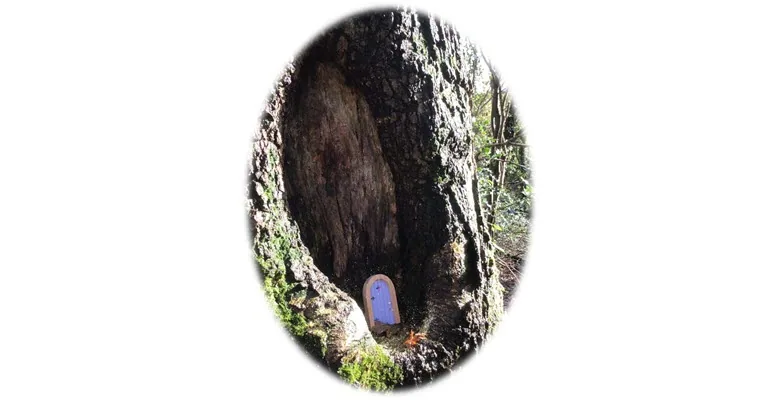
In this cross-curricular challenge, students explore how setting shifts create narrative tension and contrast. By studying portal stories from literature or media, learners develop descriptive writing techniques that engage the senses, observing how details capture both everyday locations and fantastical worlds.
Students then bring their writing into Minecraft by constructing two contrasting environments: a familiar everyday space and an imagined destination. To transition between the two, learners identify a gateway object and program an in-game Non-Player Character using teleport commands to transport players directly between settings.
Learning objectives
By the end of this lesson students will be able to:
- Draft descriptive writing comparing a familiar environment to an imagined one using sensory details.
- Construct contrasting familiar and imagined settings within a Minecraft world.
- Configure an interactive portal mechanism using an NPC and a teleport command to connect the two locations.
Blocks and items used in this lesson


Key vocabulary
- Setting
- The time and physical location in which a story or scene takes place.
- Portal
- A gateway, doorway, or magical entrance that transports characters between different locations.
- Non-Player Character (NPC)
- An in-game character that does not move on its own and can be configured with text and commands.
- Teleport Command
- A command such as /tp used to instantly relocate a player to specific coordinates in a world.
Before class
Lesson sequence
Suggested timing: about 120 minutes in total.
- Warm-up: Examining Portal Stories and Familiar Settings40 min
Read a story extract or watch a media clip featuring a portal transition, discussing examples such as The Lion, the Witch and the Wardrobe or The Tunnel. Ask students to select a familiar real-world setting—such as their bedroom, school, or local community—and identify sensory details covering what they see, hear, taste, and smell. Students establish a success criteria checklist and write a description of this familiar place.
- Explore: Planning and Programming the Portal35 min
Ask students to decide what object or location in their familiar setting will serve as a gateway to another world. In Minecraft, learners configure a transport mechanism, such as placing an NPC and assigning it a teleport command (for example, /tp @p followed by destination coordinates) that will instantly transport players to a new area.
- Build and Reflect: Drafting and Building the Imagined Setting45 min
Learners imagine and write a descriptive text for an inventive destination, which can be inspired by an existing author or text. Once drafted, students build this contrasting world in Minecraft, link it back to their portal coordinates, and test the full journey between the two settings.
Assessment: success criteria
- Does the student's writing include sensory descriptions (sight, sound, taste, smell) for both settings?
- Do the two Minecraft environments show a clear contrast between a familiar and an imagined place?
- Does the student successfully configure an NPC or portal mechanism using correct teleport coordinates?
Differentiation
Provide a sensory word bank and a written template for the teleport command to help students complete their writing and technical setup.
Encourage students to add detailed backstory dialogue to the portal NPC and expand their imagined setting with complex architectural details.
Knowledge check
5 questions to check understanding after the lesson. Tap an answer to see if it is right; the score appears at the end.
1Which command syntax example is provided in the lesson to transport a player between settings?
Answer: C. The source explicitly provides the teleport syntax /tp @p followed by coordinate numbers as an example.
2What two types of settings do students compare and build during this challenge?
Answer: A. The lesson specifically focuses on comparing a familiar setting, like a school or bedroom, with an imagined one.
3What sensory details are highlighted in the introductory questions for writing setting descriptions?
Answer: B. The guiding questions prompt students to reflect on what they can see, hear, taste, and smell.
4Which book by C. S. Lewis is mentioned as an example of a portal narrative?
Answer: D. The source explicitly references C S Lewis and The Lion, the Witch and the Wardrobe as an example text.
5What in-game element does the lesson suggest placing in the world to trigger the teleport command?
Answer: B. The source suggests placing an NPC in the world and adding a teleport command to move the learner.
Resources
Frequently Asked Questions
Do I need to download a specific world file to teach this lesson?
No, the source states that there is no downloadable world required; students can create their familiar and imagined settings in any standard Minecraft world.
How much instructional time is required for this project?
The challenge consists of three steps that are estimated to take approximately two or more hours in total.
What age groups is this lesson designed for?
The lesson covers a wide age range from 6 to 13 years old, allowing teachers to scale the complexity of the writing criteria to suit different grade levels.
Adapted from Through the Portal by Hwb MLCs on Minecraft Education, last updated Apr 27, 2021. This classroom version, the timings and the quiz were written by 9Minecraft Education.