- Type
- Lesson plan
- Ages
- Ages 8-13
- Includes
- Quiz: 5 questions
How can we recreate the farm setting from The Wild Robot Escapes and model its machinery using redstone circuits?
Overview
This cross-curricular project connects literacy and computer science through Peter Brown's novel, The Wild Robot Escapes. After reading the opening chapters, students analyze descriptive details from the text to visualize Roz's new farm environment and consider how automated machines support human productivity.
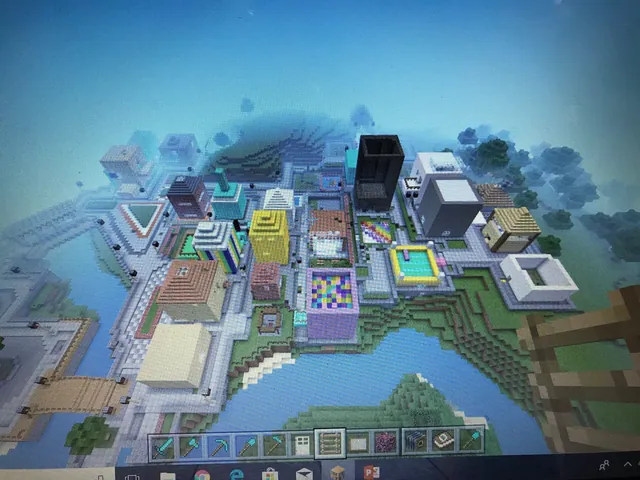
Working in collaborative groups, students translate their sketches into a shared Minecraft world. Teams design key farm sectors, engineer automated machinery using redstone circuits, and place signs and non-player characters to document story elements for their peers.
Learning objectives
By the end of this lesson students will be able to:
- Illustrate the farm setting described in the first three chapters of the novel through sketches and digital builds.
- Divide construction goals into collaborative subtasks to assemble a unified farm environment.
- Build working automated farm machinery using basic redstone circuits.
- Explain key story elements within the world using signs and non-player characters.
- Document daily design progress in the in-game portfolio.
Blocks and items used in this lesson


Key vocabulary
- Setting
- The time and place where the events of a story happen.
- Redstone
- A Minecraft material used to power and connect simulated electrical circuits.
- Circuit
- A closed loop or pathway through which an electrical signal can travel to power a device.
- NPC
- A non-player character used to display dialogue, instructions, or information to visitors.
- Consensus
- A general agreement reached by all members of a group.
Before class
Lesson sequence
- Reading and Setting Visualization
Students read at least the first three chapters of The Wild Robot Escapes. Each student creates an individual sketch showing their interpretation of the farm where Roz is placed, identifying essential structures, fields, and equipment mentioned in the text.
- Team Planning and World Layout
Students gather in small teams to compare drawings and reach a consensus on the farm's critical elements. The class then determines a master layout plan, assigning specific sectors or farm features to individual sub-teams so everyone works cooperatively in the shared world.
- Collaborative World Construction
Teams enter Minecraft Education to build their assigned sections of the farm. At the beginning of each session, students hold a brief meeting to share their immediate goals and ensure coordination across all working groups.
- Redstone Engineering and Story Annotation
Students enhance the farm by engineering working machinery using redstone circuits to simulate automated agricultural tasks. Meanwhile, designated team members install signs and NPCs to explain key book details and plot points to visitors.
- Portfolio Documentation and Celebration
Students record their daily build progress using the in-game portfolio. The project concludes with a celebration of learning where teams tour the completed farm and demonstrate their working machines.
Assessment: success criteria
- The class build accurately represents the farm setting described in the opening chapters of the book.
- Individual teams fulfill their assigned subtask to contribute to a cohesive class build.
- Functional redstone circuits are incorporated to model working farm machinery.
- Signs and NPCs are clearly placed to explain key elements of the story.
- Students maintain daily documentation of their work inside the portfolio tool.
Differentiation
Provide guided checklists of essential farm features from chapters 1-3 and simple redstone circuit diagrams for the machines.
Challenge students to design complex, multi-stage redstone automation systems and write detailed backstory dialogue for their NPCs.
Knowledge check
5 questions to check understanding after the lesson. Tap an answer to see if it is right; the score appears at the end.
1Which novel serves as the literary basis for this Minecraft building project?
Answer: B. The lesson is built directly around the novel The Wild Robot Escapes by Peter Brown.
2How many chapters must students read at minimum before beginning their sketches?
Answer: C. The source specifies that students must read at least through the first three chapters.
3Which in-game tool is used to create working farm machines that simulate real-world circuits?
Answer: A. Students utilize redstone to learn circuit basics and build automated farm machines.
4How should teams begin each work session during the building phase?
Answer: C. The source states that each workday should start with students explaining their work and goals so everyone agrees.
5What method is used to record and showcase student progress throughout the project?
Answer: B. All work is documented in the portfolio each day to prepare for the celebration of learning.
Frequently Asked Questions
Do I need a pre-made world file to teach this lesson?
No pre-made world is required. Students start from a standard Minecraft Education world and build the farm layout entirely from their own text-based sketches and group plans.
How should students share information about the book inside the Minecraft world?
Students should place signs and non-player characters (NPCs) throughout the build to label key features, describe story details, and guide visitors through the farm setting.
Adapted from The Wild Robot Escapes by Aaron Maurer on Minecraft Education, last updated Jan 13, 2022. This classroom version, the timings and the quiz were written by 9Minecraft Education.