- Type
- Lesson plan
- Ages
- Ages 6-13
- Includes
- Quiz: 5 questionsLesson files
Why was ancient Egypt considered the gift of the Nile, and how did its geography, beliefs, and society shape its civilization?
Overview
This lesson introduces learners to the core elements of ancient Egyptian civilization, focusing on geography, culture, and social structure. Students examine why the Nile River was essential for survival, agriculture, and commerce, while exploring cultural achievements, social classes, religious customs, and the factors that led to the civilization's decline.
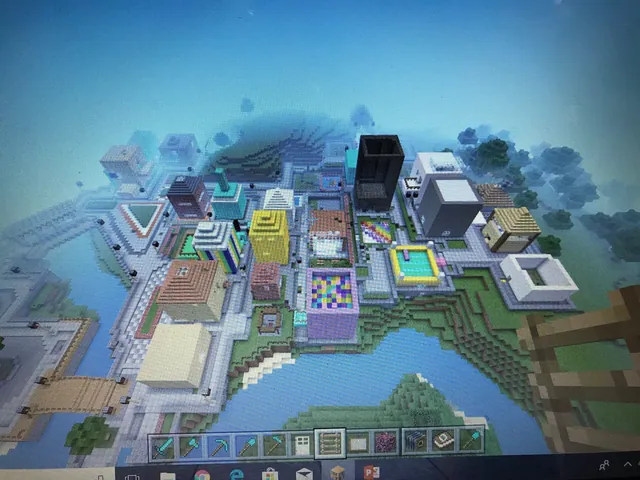
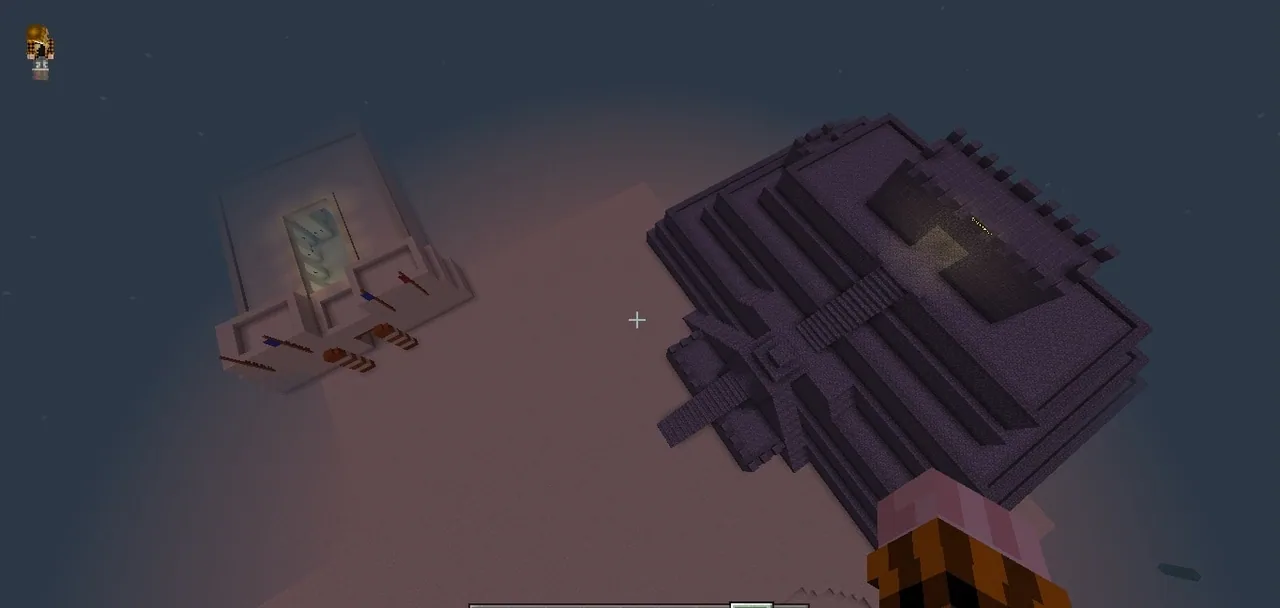
Using Minecraft as a collaborative workspace, students design and construct Egyptian monuments, settings, or characters based on their research. They document their understanding by integrating in-game storytelling items such as slates, posters, boards, signs, non-player characters, and portfolio photos to showcase historical concepts.
Learning objectives
By the end of this lesson students will be able to:
- Explain why Egypt was called the gift of the Nile and how irrigation and trade routes sustained its society.
- Describe key features of Egyptian civilization, including social classes, occupations, religious beliefs, and achievements.
- Summarize the mummification process and how it connected to ancient beliefs regarding the afterlife.
- Construct a collaborative Minecraft scene depicting an Egyptian monument, setting, or character supported by reading evidence.
Blocks and items used in this lesson


Key vocabulary
- Gift of the Nile
- A phrase referring to how the river's August floods, irrigation canals, and trade transport sustained Egyptian civilization.
- Mummification
- The process of preserving a body with spices and placing daily items in the coffin due to beliefs in an afterlife.
- Pharaoh
- The supreme ruler of ancient Egypt.
- Hieroglyphics
- The ancient Egyptian system of picture writing.
- Sphinx
- A monumental stone statue built by ancient Egyptians.
Before class
Lesson sequence
- Reading and Geography Exploration
Students read the chapter on The Egyptian Civilization and record key terms in their notebooks. The class examines the role of the Nile River, focusing on how parched soil was flooded in August, how canals and reservoirs supported agriculture, and how the river served as a national highway for trade.
- Direct Instruction and Multimedia
The teacher explains the origins, social classes, daily life, occupations, religion, and eventual decline of the civilization. Students watch a video on mummification to observe how bodies were embalmed with spices and coffins were stocked with everyday items for the afterlife.
- Brainstorming and Minecraft Construction
Students work through guided discussion questions addressing topics like pharaohs, gods such as Ra and Thoth, mathematics, and medicine. In groups, learners enter Minecraft to build their chosen monuments, settings, or characters that convey a specific lesson or scene from the text.
- Documentation and Review
Groups enhance their virtual builds with historical explanations using slates, posters, boards, signs, and NPCs. Students take pictures using the camera, compile their portfolios, and present their scenes to show why Egypt was the gift of the Nile and how mummification was performed.
Assessment: success criteria
- Students explain in writing or speech why Egypt was called the gift of the Nile using details about floods and navigation.
- Teams build an identifiable character or scene that clearly reflects an event or concept from the chapter text.
- Learners accurately describe the mummification procedure and the religious belief in life after death.
- Builds successfully incorporate documentation tools including slates, posters, boards, signs, cameras, portfolios, or NPCs.
Differentiation
Provide a guided note-taking organizer with key terms pre-listed so students can focus on flood cycles and mummification steps.
Challenge advanced students to use NPCs to present detailed dialogue comparing Egyptian gods like Ra, Thoth, Horus, and Anubis, or progress in medicine and mathematics.
Knowledge check
5 questions to check understanding after the lesson. Tap an answer to see if it is right; the score appears at the end.
1Why did ancient Egyptians build canals and reservoirs along the Nile?
Answer: B. The Nile flooded parched land in August, prompting Egyptians to construct canals and reservoirs to support agriculture and create a land of plenty.
2Why were everyday objects placed inside coffins with mummies?
Answer: A. Ancient Egyptians embalmed bodies with spices and included daily items in coffins because of their belief in life after death.
3During which month did the annual flooding of the Nile typically reach the parched land?
Answer: C. The lesson materials specify that Nile floods occurred when the ground was dry in the month of August.
4Which deities are explicitly highlighted in the lesson's religion topics?
Answer: A. The discussion questions specifically direct students to examine Ra, Thoth, Horus, and Anubis.
5Which group of in-game items are students expected to use to document and explain their builds?
Answer: D. The assessment criteria specifically require learners to communicate their evidence using telling tools like slates, posters, boards, signs, NPCs, cameras, and portfolios.
Resources
Frequently Asked Questions
Is a specific downloadable Minecraft world required for this lesson?
No downloadable world file is supplied in the source materials, meaning teachers can host a standard creative or flat world where student groups build freely.
What subjects does this lesson plan cover?
The lesson integrates geography, reading and writing, and history through research, notebook recording, and virtual world construction.
What specific communication tools should students use within Minecraft?
Students are expected to share their research using slates, posters, boards, signs, non-player characters (NPCs), cameras, and portfolios.
Adapted from The Egyptian Civilization by Monica Joshi on Minecraft Education, last updated Oct 2, 2018. This classroom version, the timings and the quiz were written by 9Minecraft Education.