How can principles from an urban master plan be interpreted and demonstrated through a planned city design?
Overview
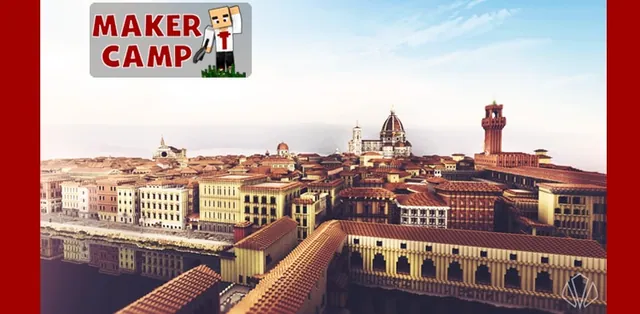
Walt Disney's initial vision for E.P.C.O.T. was an actual functioning city rather than a theme park. In this project, students explore how urban spaces can be designed around nature, multi-tier transit, distinct living options, and industrial zones by examining an informational text.
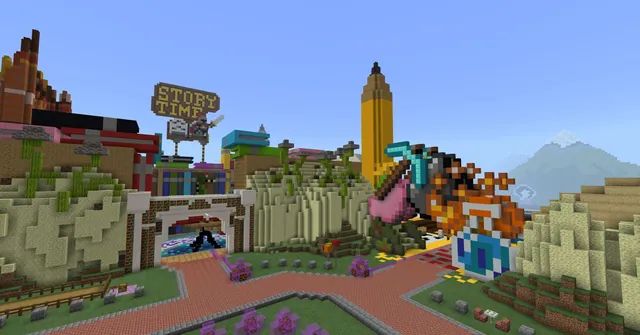
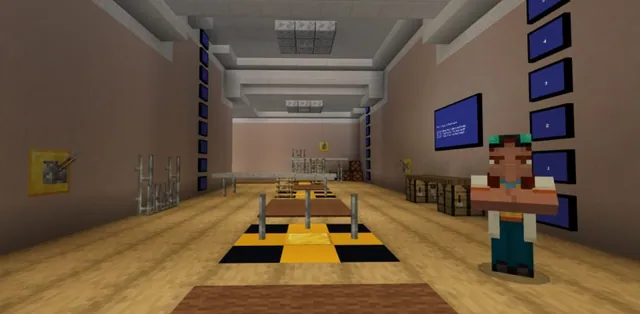
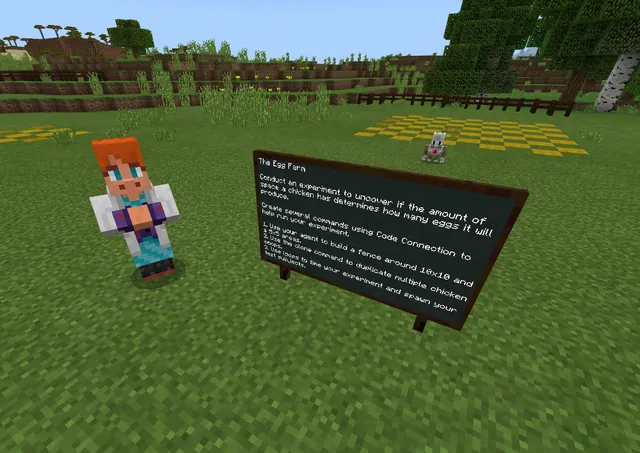
Students translate textual evidence into functional spatial designs within Minecraft. By placing non-player characters and informational boards throughout their builds, learners document the historical and design principles that guide their city centers and surrounding districts.
Learning objectives
By the end of this lesson students will be able to:
- Analyze a complex text about Walt Disney's original E.P.C.O.T. concept to extract key design principles.
- Draft a city layout that demonstrates center-outward development and integration with nature.
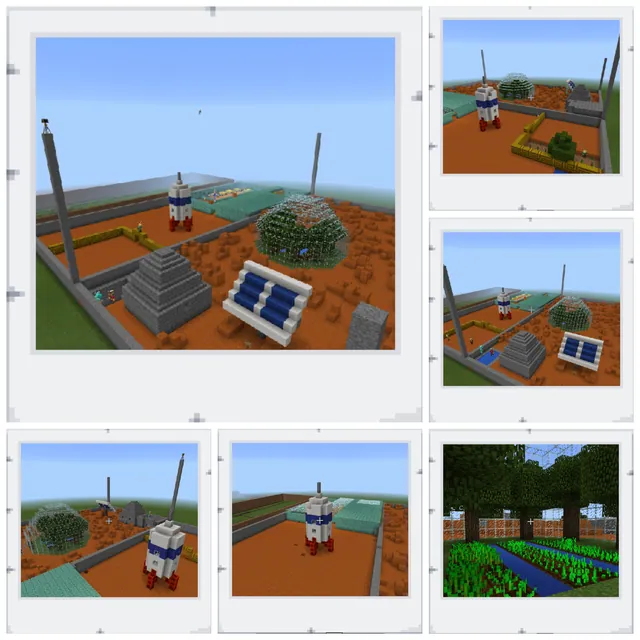
- Construct a city in Minecraft featuring distinct zones such as an urban core, residential areas, and industrial facilities.
- Incorporate text-based evidence into Minecraft builds using boards or non-player characters.
- Present urban planning choices through video recordings, written portfolios, or live tours.
Blocks and items used in this lesson


Key vocabulary
- E.P.C.O.T.
- Walt Disney's original planned prototype city designed to showcase modern urban development rather than a theme park.
- Master Plan
- A comprehensive document guiding the spatial layout, zoning, and growth of a city.
- NPC (Non-Player Character)
- An interactive in-game character used in Minecraft Education to provide information or dialogue to visitors.
- Center-Outward Design
- An urban layout strategy where development and transit systems originate from a central hub and radiate outward.
Before class
Lesson sequence
- Reading and Text Analysis
Direct students to read the Walt & Epcot Master Plan text and answer the included guided reading questions. Facilitate a discussion on how Disney intended to balance nature, transit networks, entertainment zones, and industrial parks.
- Drafting and Plan Sharing
Have students use their reading responses and class discussions to sketch an initial city layout on paper. Once complete, students record a short Flipgrid video displaying their draft and explaining their intended layout.
- Minecraft Construction with Text Evidence
Students launch Minecraft and begin building their city from the center outward. Remind students to adhere to the project rubric by embedding textual evidence across their city using NPCs and Boards to justify their architectural and zoning decisions.
- Presentations and Reflection
Students present their completed or in-progress worlds to demonstrate connections to Disney's original vision. Presentations can be conducted through live in-person tours, Book & Quill portfolio submissions, or recorded Flipgrid walkthroughs. Students with unfinished builds are encouraged to present their current work and explain their future design intentions.
Assessment: success criteria
- City layout clearly demonstrates a center-outward plan, transportation links, and integration around natural terrain.
- Multiple NPCs or Boards cite specific evidence from the master plan text to justify city features.
- Presentation thoroughly explains the relationship between the built world and Disney's historical plan.
- Student demonstrates sustained time management and self-directed work throughout the project.
Differentiation
Provide graphic organizers that directly connect specific paragraphs of the text to corresponding city zones in Minecraft.
Have advanced students record in-depth video tours analyzing how future technological expansions would fit into their industrial and transit networks.
Knowledge check
5 questions to check understanding after the lesson. Tap an answer to see if it is right; the score appears at the end.
1What was Walt Disney's original concept for E.P.C.O.T. that forms the basis of this project?
Answer: C. The source explicitly states that students build a city based on initial plans for E.P.C.O.T. as a city, not a theme park.
2How do students embed their textual evidence directly into their Minecraft builds?
Answer: A. The rubric and activities specify incorporating text-based evidence through NPCs and Boards placed across the city.
3According to the performance expectations, how should the city layout be organized?
Answer: D. The assessment criteria require cities to be designed from a center-outward pattern that works around nature.
4If a student does not finish their build in time for presentations, what should they do?
Answer: B. The source instructs that unfinished students should present what they have and explain what they would have built.
5What tool is used to share and explain the initial draft plan before building begins?
Answer: A. Students are instructed to complete a linked Flipgrid assignment to show their draft and explain their initial plans.
Resources
- Lesson package (.zip)Everything the author attached to this lesson in one download.
- Lesson PlanA more detailed breakdown of the process with tips and outside references.
- Project Outline and RubricIncludes an outline of the steps necessary to complete the project and a rubric to reference.
- Text: Walt & Epcot Master PlanStudents will need to read this text and complete the embedded guided reading questions as a foundation for their designs.
Frequently Asked Questions
Does this lesson plan require a pre-built downloadable world?
No, the project does not use a downloadable world. Students can build their designs in standard open or flat worlds in Minecraft Education.
What presentation formats are acceptable for student submissions?
Teachers can have students present live in person, submit an in-game Book & Quill, or record a video walkthrough using Flipgrid.
Adapted from Text Based City Design Project by Kelley Predieri on Minecraft Education, last updated Sep 25, 2020. This classroom version, the timings and the quiz were written by 9Minecraft Education.