How can we authentically represent another country's culture, history, and traditions in a virtual Minecraft world?
Overview
SkypeCraft bridges the virtual and physical worlds by connecting students with an international partner classroom. Through an interactive Mystery Skype guessing game, learners deduce the location of their global peers, opening up meaningful discussions about geography, history, and community identity.
Once the country is identified, student groups take on specific cultural elements such as architecture, food, traditions, and recreation to recreate inside Minecraft. After completing their builds, students re-connect with the partner class via video call to evaluate the authenticity and accuracy of their virtual representations.
Learning objectives
By the end of this lesson students will be able to:
- Identify the geographic location of an international partner class through inquiry questioning.
- Investigate specific cultural aspects, key historical milestones, and iconic symbols of the partner country.
- Build a functional Minecraft environment that mirrors an assigned cultural dimension such as architecture or traditions.
- Assess the cultural accuracy of the completed builds during a follow-up video call with the partner class.
Blocks and items used in this lesson


Key vocabulary
- Mystery Skype
- An educational video call activity where two classrooms ask questions to guess each other's geographic location.
- Cultural Icon
- A widely recognized symbol, structure, or artifact that clearly represents a particular society or nation.
- Seminal Moment
- An influential event in history that strongly shapes the future development of a culture or nation.
Before class
Lesson sequence
- Mystery Skype Session
Conduct a Mystery Skype call with the international partner class. Students ask structured geographic and cultural questions to determine the location of the other classroom.
- Cultural Research & Project Planning
Once the country is confirmed, divide students into teams and assign each an aspect of that culture, such as food, architecture, art and music, traditions, or recreation. Groups research seminal historical events, determine the timeframe they will represent, and select key icons to model.
- Minecraft World Building
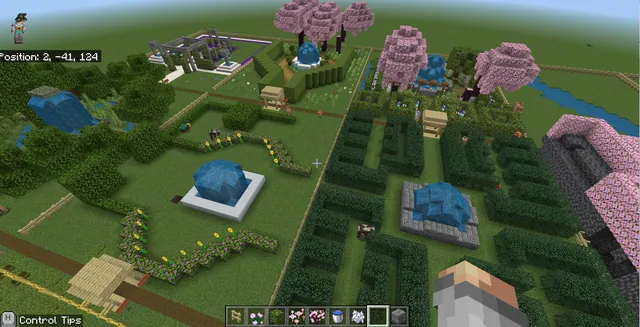
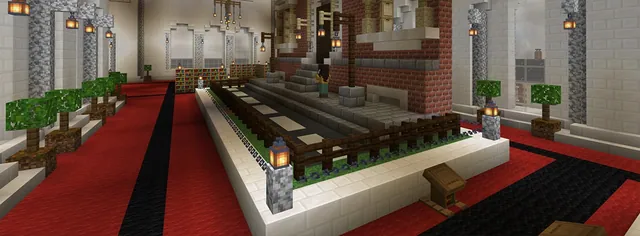
Teams enter Minecraft to construct functional, authentic environments that represent their assigned cultural theme. Encourage students to carefully reflect the chosen timeframe and architectural styles.
- Follow-Up Video Call & Peer Review
Re-connect with the international partner class on Skype. Students present their finished Minecraft worlds so the native students can verify if the builds serve as accurate, respectful reflections of their culture.
Assessment: success criteria
- Successfully deduce the location of the partner class through collaborative questioning.
- Construct a Minecraft world that distinctly represents the assigned cultural aspect and timeframe.
- Incorporate recognized cultural icons and historical elements into the virtual build.
- Participate in the evaluation conference to verify cultural accuracy with international peers.
Differentiation
Provide students with curated photo references and a focused list of cultural icons to guide their builds.
Encourage advanced builders to recreate complex historical architecture or represent pivotal historical events with detailed contextual signage.
Knowledge check
5 questions to check understanding after the lesson. Tap an answer to see if it is right; the score appears at the end.
1How do students discover the location of the international classroom?
Answer: C. Students engage in a Mystery Skype session to determine which country their partner class is from.
2Which guiding question are students asked to consider when planning their build?
Answer: A. The lesson specifically asks students to decide what timeframe they are representing and what seminal historical moments took place.
3What do student teams do after learning the identity of the partner country?
Answer: D. Teams are assigned cultural aspects like architecture, food, or traditions to model inside Minecraft.
4Why do students connect with the partner class a second time?
Answer: B. The final Skype call allows the partner class to evaluate whether the Minecraft models authentically reflect their country.
5Which set of subjects does this project explicitly integrate?
Answer: A. The lesson lists Math & Economics, Art and Design, and Geography as its targeted subjects.
Frequently Asked Questions
Is there a required custom world template for this lesson?
No custom world download is required. Students can build their projects in standard creative or flat worlds within Minecraft Education.
How can teachers find an international classroom to partner with?
Teachers can connect with partner classrooms through global educator communities, professional social networks, or collaborative school exchange programs that participate in Mystery Skype activities.
Adapted from SkypeCraft by James Butler on Minecraft Education, last updated Jan 25, 2019. This classroom version, the timings and the quiz were written by 9Minecraft Education.