- Type
- Lesson plan
- Subject
- Computer Science & Coding
- Topics
- Computer Science
- Ages
- Ages 11-13
- Duration
- 2 hours
- Level
- Intermediate
- Skills
- Critical thinking
- Includes
- Quiz: 5 questions
How can computational thinking concepts help us break down and solve multi-step problems in an unfamiliar environment?
Overview
Escape from Bebras Tower challenges students to apply computational thinking to solve complex problems in an interactive format. Adapted from the Australian Bebras International Challenge for Years 9 and 10, the curriculum focuses on six core areas: abstraction, pattern recognition, decomposition, algorithms, evaluation, and modelling and simulation.
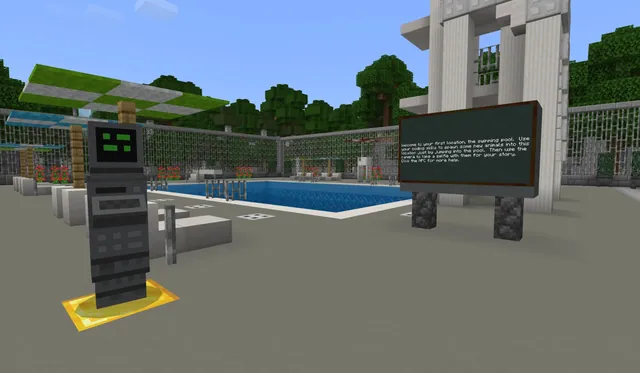
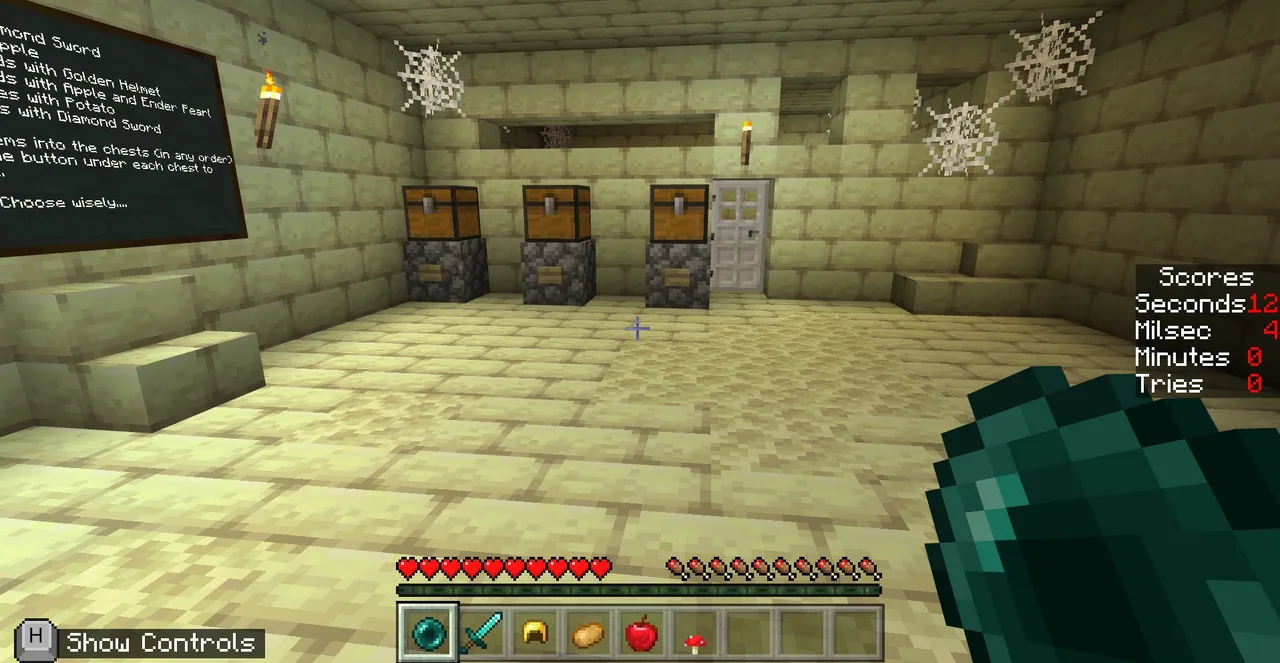
Using a downloadable Minecraft world, students navigate through ten distinct puzzle chambers designed around Minecraft mechanics. In-game timers and attempt counters track progress, giving teachers concrete data to observe how learners apply systematic reasoning and critical thinking to overcome obstacles.
Learning objectives
By the end of this lesson students will be able to:
- Apply decomposition to break down multi-stage challenges into smaller steps.
- Identify patterns and use abstraction to ignore irrelevant details in game puzzles.
- Formulate step-by-step algorithms to successfully complete escape room stages.
- Evaluate failed attempts and adapt strategies using in-game trial data.
Blocks and items used in this lesson


Key vocabulary
- Decomposition
- Breaking down a complex problem into smaller, easier-to-manage parts.
- Pattern Recognition
- Noticing similarities, trends, or repeating features across different situations.
- Abstraction
- Focusing only on the essential information while ignoring unnecessary details.
- Algorithm
- A clear, ordered sequence of instructions used to solve a problem or complete a task.
- Evaluation
- Reviewing and testing a solution to see if it works effectively and achieves the desired result.
- Modelling and Simulation
- Representing a real-world system or process to test how it behaves under different conditions.
Before class
Lesson sequence
Suggested timing: about 120 minutes in total.
- Warm-up and Refresher15 min
Introduce the challenge and review core computational thinking terms. Have students reflect on a common digital routine, such as creating or signing up for an email account, and discuss the logical steps, validations, and rules involved in that process.
- Tower Challenge: First Chambers45 min
Launch the world and allow students to begin exploring the initial puzzle stages. Remind them that navigating the 3D space requires extra time alongside solving the logic. Encourage students to observe the built-in timer and monitor their number of tries as they test hypotheses.
- Tower Challenge: Advanced Chambers40 min
Students continue through the remaining stages of the 10-level tower. Encourage learners who encounter roadblocks to practice decomposition by identifying which component of the puzzle is failing before restarting a trial.
- Reflection and Class Debrief20 min
Gather the class to share solutions and strategies. Have students discuss what prior classroom knowledge helped them overcome specific puzzle mechanics and how trial data influenced their thinking.
Assessment: success criteria
- Student demonstrates progression through the 10 challenge stages within the allotted time.
- Student explains how computational concepts (such as abstraction or algorithms) helped solve specific stages.
- Student uses feedback from failed attempts and in-game counters to refine problem-solving strategies.
Differentiation
Allow students who need more time up to the full two hours and encourage pair collaboration to talk through logic steps.
Challenge advanced students to complete all ten stages in under an hour with the lowest possible attempt count.
Knowledge check
5 questions to check understanding after the lesson. Tap an answer to see if it is right; the score appears at the end.
1How many puzzle stages are featured in the Escape from Bebras Tower challenge?
Answer: B. The world includes ten stages adapted from the Bebras computational thinking challenge.
2Which everyday task does the lesson suggest reviewing as a refresher before starting the tower?
Answer: A. The activity instructions suggest reflecting on signing up for email accounts as a warm-up exercise.
3What built-in features help teachers monitor student attempts and application of thinking skills?
Answer: C. A built-in timer and number-of-tries tracker are integrated into the world to gauge student progress.
4From what source were the puzzles in this Minecraft challenge adapted?
Answer: B. The puzzles are adapted from the 2019 Australian chapter of the Bebras International Challenge.
5Why does solving puzzles in Minecraft typically require more time than paper-based Bebras questions?
Answer: C. Moving around and interacting within the Minecraft environment adds extra time beyond standard 15-minute challenge tasks.
Frequently Asked Questions
What grade and skill level is this world designed for?
This resource targets students aged 11 to 13 (Years 9 and 10 difficulty) with an intermediate experience level in Minecraft Education.
How long should I set aside for the complete lesson?
Plan for a total duration of two hours, as top students may finish in under an hour while others will need up to the full two hours to navigate all ten stages.
Adapted from Escape from Bebras Tower by Kevin Tan on Minecraft Education, last updated Dec 9, 2022. This classroom version, the timings and the quiz were written by 9Minecraft Education.