- Type
- Lesson plan
- Ages
- Ages 11-18
What might e-sports look like if girls designed the games, rules, and community themselves?
Overview
The Girls E-sports Club introduces students to STEM, game design, and competitive gaming through a collaborative club model. Students investigate existing e-sports culture, question what competitive gaming designed by and for girls looks like, and build agency by defining their own competition formats and community standards.
Using Minecraft Education, teams build multiplayer games designed for approximately five players per side. Partnering with another club or school, participants test each other's designs, record video feedback, and run a live tournament featuring student designers, players, shoutcasters, and cheer squads.
Learning objectives
By the end of this lesson students will be able to:
- Design a competitive Minecraft game built for teams of approximately five players.
- Playtest student-created games and provide structured feedback to peer designers.
- Collaborate with peers from another school or club using asynchronous video tools.
- Participate in an organized tournament across diverse roles including player, coach, and commentator.
Blocks and items used in this lesson


Key vocabulary
- E-sports
- Organized, competitive video gaming played by individuals or teams.
- Playtesting
- Testing a game during development to identify bugs, balance issues, and gameplay quality.
- Shoutcaster
- A live commentator who describes the action and provides analysis during a competitive match.
- Tenancy
- An organizational network boundary that determines whether Minecraft Education users can connect to the same hosted world.
Before class
Lesson sequence
- Club Introduction & Exploration
Establish the club during lunch or after school. Have students explore Minecraft Education challenges to build comfort with game mechanics, and discuss their past gaming experiences.
Examine existing elite e-sports media. Discuss whether current commercial competitions appeal to girls and what kinds of competitive games the group would prefer to play.
- Game Design & Prototyping
Form student design teams to plan and construct competitive mini-games inside Minecraft. Direct teams to design games meant for approximately five players per side.
- Peer Playtesting & Feedback Exchange
Connect with a partner school or club to share game worlds. Use Flipgrid for students to share ideas, record feedback, and get to know each other, obscuring camera faces if privacy is needed.
Have participants vote on the most playable game for their upcoming tournament. Give the winning design team time to implement suggested improvements.
- Tournament Preparation
The design team coaches a separate squad of five players from their school to compete in the tournament. Assign remaining club members to roles such as shoutcaster, commentator, or cheer squad.
- Live Tournament Event
Link the two schools via a live video conference in Teams Meeting. Host the selected world on one computer and share the screen.
Have both five-player teams and commentators join the match. Capture team photos using the in-game Minecraft camera before and during play.
Assessment: success criteria
- Active participation in club responsibilities such as designer, coach, commentator, or competitor.
- Completion of a playable five-player competitive game concept in Minecraft.
- Constructive playtest feedback provided to peer designers via Flipgrid.
- Application of peer feedback to refine and polish game mechanics.
Differentiation
Allow students who prefer privacy to obscure their faces when recording feedback videos, and start beginners on pre-built challenges before game creation.
Assign experienced students to manage tournament shoutcasting or configure parallel game worlds across distinct network tenancies.
Knowledge check
5 questions to check understanding after the lesson. Tap an answer to see if it is right; the score appears at the end.
1What team size is recommended for the student-designed Minecraft games in this program?
Answer: B. The source specifies that club teams develop games requiring approximately five players.
2Which tool was used between the two schools to share game ideas and record feedback videos?
Answer: A. The source highlights Flipgrid as the tool for video communication and feedback exchange.
3How can students contribute to the tournament if they are not playing on the five-person team?
Answer: D. Club members who are not competing can act as coaches, cheer squad members, or shoutcasters/commentators.
4How was the live tournament match shared between the two schools during competition?
Answer: C. The source describes using a Teams Meeting to project the host computer screen to both schools.
5What tool was used inside Minecraft to capture team photos before and during matches?
Answer: A. The source states that team photos were taken with the Minecraft camera at the start and during play.
Resources
- Lesson package (.zip)Everything the author attached to this lesson in one download.
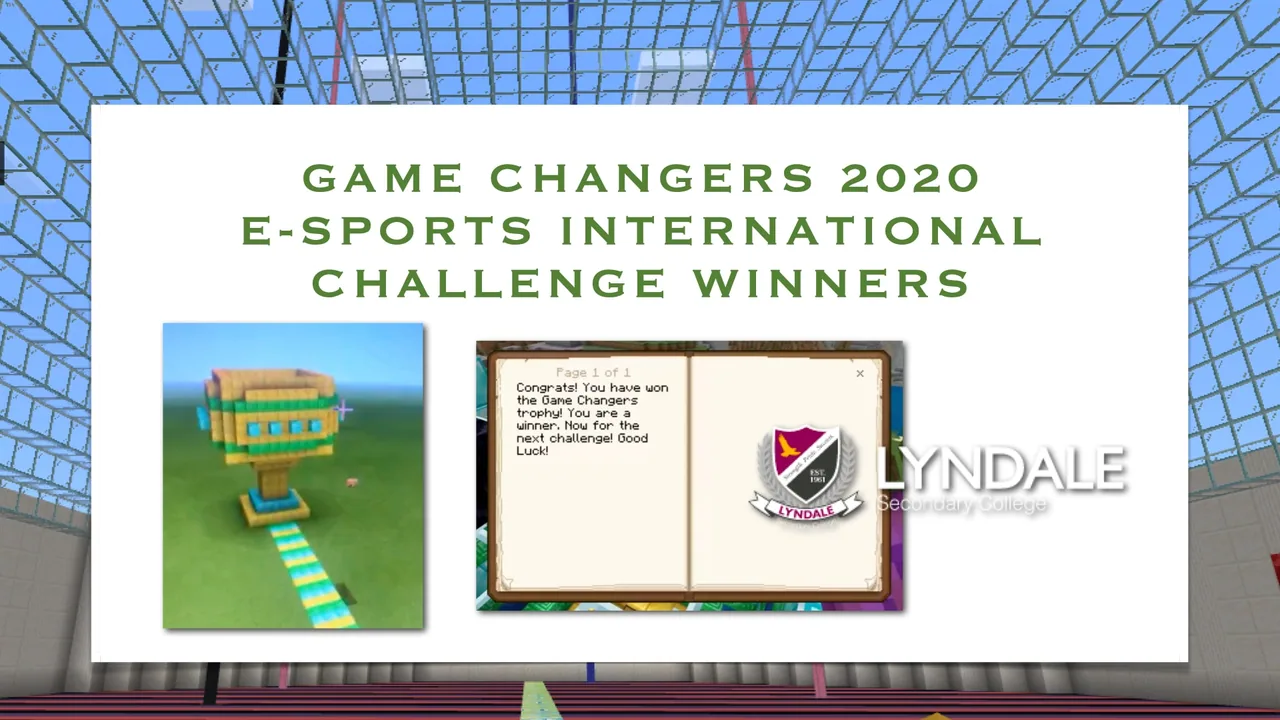
- PVP DropMatch WorldGamechanger's First Game world designed by the Girls Minecraft Club of Lyndale Secondary College for the inaugural Gamechanger's E-sports Tournament.
Frequently Asked Questions
How do tenancy restrictions affect multiplayer play between different schools?
Minecraft Education requires players to share the same tenancy to join a single hosted world. If schools cannot share a tenancy, teams can run and compete across parallel versions of the same world hosted separately.
What supporting world is mentioned for this program?
The source mentions a downloadable world file titled PVP DropMatch World for use in the e-sports club.
Adapted from Girls E-sports Club by Victorian Minecraft Innovators on Minecraft Education, last updated Jun 6, 2022. This classroom version, the timings and the quiz were written by 9Minecraft Education.