- Type
- Lesson plan
- Ages
- Ages 6-13
What was daily life like at a fur trade post, and how did different cultural groups contribute to the trade?
Overview
The North American fur trade relied on intricate interactions and partnerships between First Nations, the Métis Nation, and European traders. Understanding the daily life within a trading post helps students see how economic demand for resources like beaver pelts shaped human settlements and geography.
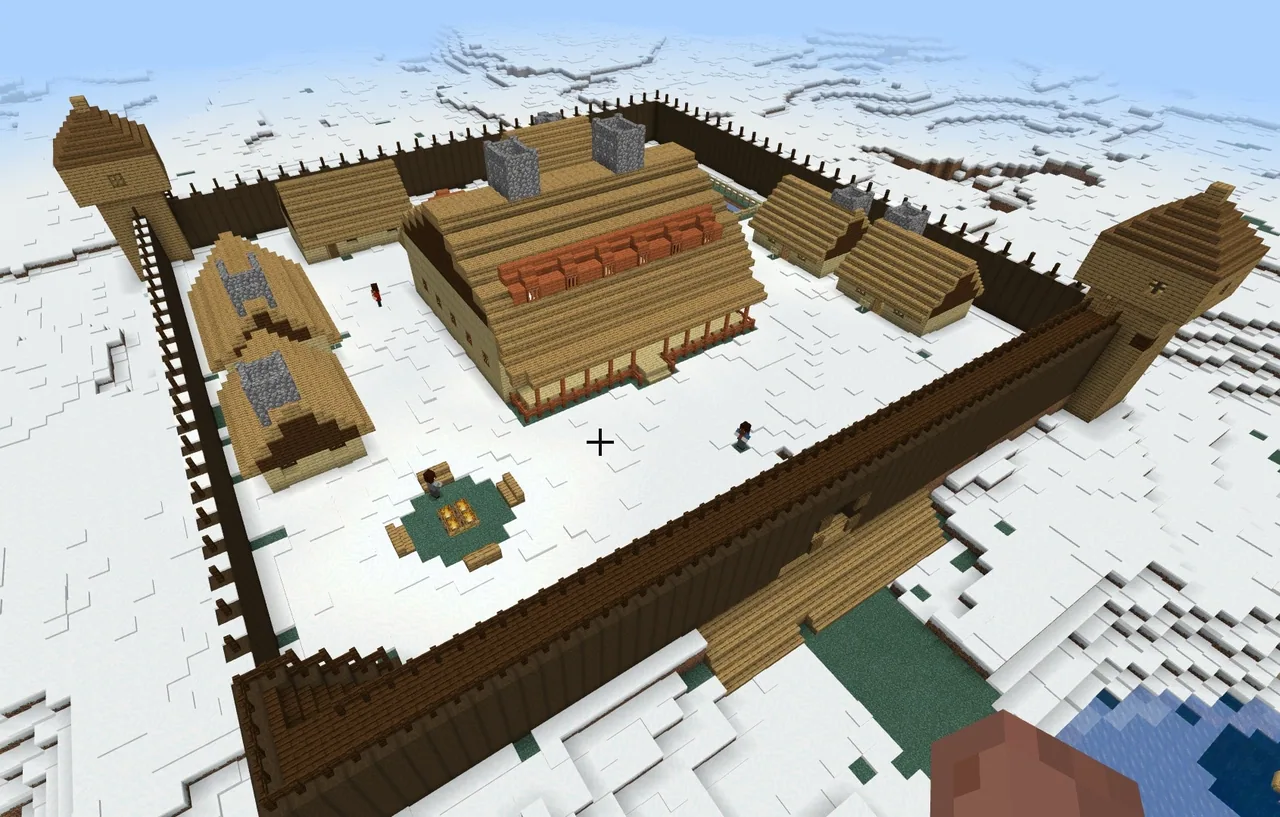
Using a virtual model of Fort Gibraltar, students explore the buildings and grounds to investigate how people lived and worked during the fur trade era. As they navigate the fort, they locate answers to a student question handout placed throughout the game environment.
Learning objectives
By the end of this lesson students will be able to:
- Describe daily life and challenges faced by different groups working at a fur trading post.
- Explain the importance of beaver pelts and why trading post locations were chosen.
- Give examples of how the fur trade depended on First Nations and Métis men and women.
- Find hidden answers within the virtual fort to complete the student question sheet.
Blocks and items used in this lesson


Key vocabulary
- Trading Post
- A fortified station where furs and goods were exchanged between Indigenous peoples and European traders.
- Voyageur
- A boatman or canoeist who transported furs and supplies across long trade routes.
- Beaver Pelt
- The treated fur and skin of a beaver, highly valued in Europe for hat-making.
- Métis Nation
- An Indigenous people with distinct culture and history tracing back to unions between First Nations and Europeans.
Before class
Lesson sequence
- Introduction & Fur Trade Context
Introduce the fur trade era and share the guiding questions: why beaver pelts were so valuable, where trading posts were built, and who the voyageurs were.
- Fort Gibraltar Exploration
Students enter Fort Gibraltar in Minecraft to explore its structure, daily activities, and the key roles played by different workers and community members.
- Question Hunt
Students locate clues and historical details placed inside the fort to complete the questions on their assigned handout.
- Review & Class Discussion
Gather the class to review the answers and discuss how First Nations, the Métis Nation, and European traders relied on one another.
Assessment: success criteria
- Accurate completion of the student question handout using facts discovered in the fort.
- Ability to describe daily life and challenges inside a fur trade post.
- Clear explanation of the roles played by First Nations and Métis men and women in the fur trade.
Differentiation
Allow students to explore in pairs to read clues and record answers together.
Ask students to write a short journal entry describing a full day of work from the perspective of a fort resident or voyageur.
Knowledge check
5 questions to check understanding after the lesson. Tap an answer to see if it is right; the score appears at the end.
1Which animal pelt was considered especially valuable during the fur trade?
Answer: B. The lesson specifically focuses on why the beaver pelt was so valuable.
2What type of settlement is Fort Gibraltar?
Answer: D. Fort Gibraltar was a trading post central to the fur trade.
3Who were the voyageurs mentioned in the lesson?
Answer: A. Voyageurs were the boatmen responsible for transporting furs and trade supplies.
4Which groups did the fur trade rely upon according to the learning goals?
Answer: C. The learning objectives highlight that the fur trade depended on First Nations and Métis men and women.
5How do students find the answers to their study handout during the lesson?
Answer: B. The source states that answers to the student handout are hidden within the game world.
Resources
- Lesson package (.zip)Everything the author attached to this lesson in one download.
- Student Questions - EnglishStudent Questions - English
- Student Questions - FRStudent Questions - FR
- World File (FR)French world file
- Lesson worldOpens the world page in Minecraft Education (sign-in with a school account may be needed).
Frequently Asked Questions
What language options are available for this lesson?
The supporting resources include student question files in both English and French, as well as a French world file.
How long does this lesson take?
The source does not specify a duration, so teachers can adjust exploration time to fit a single class period or extend it into a multi-day history unit.
Adapted from Fort Gibraltar & the Fur Trade by Fabrice Siaux on Minecraft Education, last updated Jan 30, 2024. This classroom version, the timings and the quiz were written by 9Minecraft Education.