- Type
- Lesson plan
- Ages
- Ages 8+
- Duration
- 45 min
- Level
- Beginner
- Includes
- Quiz: 5 questionsMinecraft world
What makes a team communicate and work together effectively during a creative challenge?
Overview
Effective communication, strategic planning, and self-evaluation are core competencies in both creative computing and collaborative esports. In this lesson, students engage in a team-based build challenge where they must establish success criteria, coordinate their construction efforts, and critically assess both their own and their peers' work.
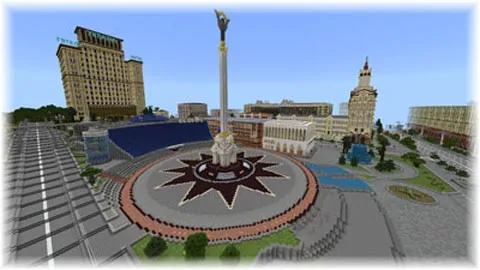
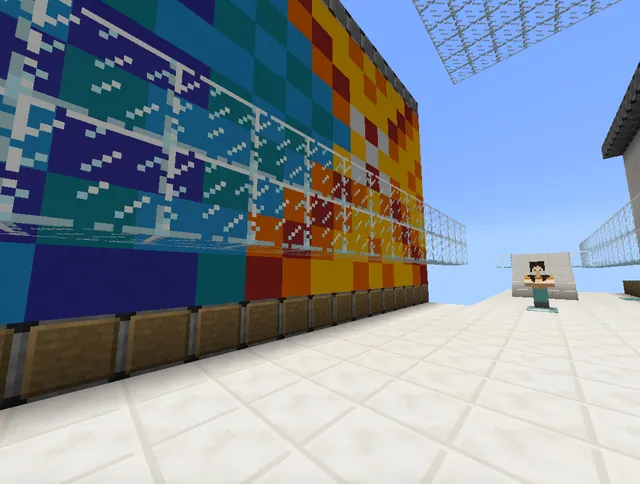
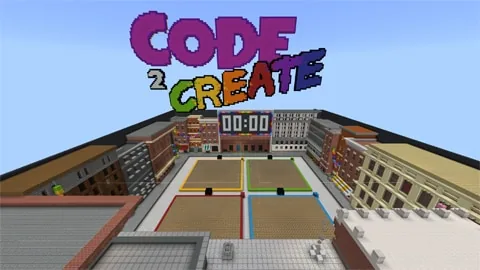
Using a street-themed Minecraft practice environment designed for four teams, learners apply coding and spatial visualization skills to bring 3D designs to life. Spectators actively participate by commentating, analyzing gameplay, and voting on designated platforms, while builders document their growth and teamwork strategies in personal reflection journals.
Learning objectives
By the end of this lesson students will be able to:
- Collaborate within a team of four to six members to plan and execute a themed build.
- Apply coding skills to construct structures in a group assessment scenario.
- Evaluate peer builds using agreed-upon success criteria.
- Reflect on teamwork and personal contributions using a play journal to guide future improvement.
Blocks and items used in this lesson


Key vocabulary
- Shoutcaster
- A commentator who narrates and analyzes the action of a competitive match for spectators.
- Peer Assessment
- The process where students review, evaluate, and provide feedback on each other's work using set criteria.
- 3D Visualization
- The ability to mentally conceptualize and translate two-dimensional shapes into three-dimensional objects.
Before class
Lesson sequence
Suggested timing: about 45 minutes in total.
- Introduction and Criteria Setting10 min
Introduce the city street setting and divide students into teams of four to six players. Assign non-builder roles to extra students, such as shoutcasters, media, coaches, or analysts. Work together to establish clear success criteria for evaluating the builds before construction begins.
- Practice Build Battle20 min
Reveal the build prompt or 2D geometric shape. Teams enter the arena to plan, communicate, and use coding and building techniques to create their 3D structures, while spectators observe and analyze group strategies.
- Peer Assessment and Voting5 min
Stop the building phase and allow students to view each team's creation. Have evaluators stand on the designated voting platforms within the world to cast their votes based on the established criteria.
- Journal Reflection and Goal Setting10 min
Guide students through stimulus questions in their Professional Play journals. Have each learner evaluate their team's communication, identify personal strengths and areas for growth, and set goals for future team activities.
Assessment: success criteria
- Students actively communicate and coordinate construction tasks with their teammates.
- Students construct a three-dimensional model matching the assigned theme or geometric prompt.
- Students apply shared criteria to evaluate other teams' builds using the voting platforms.
- Students document thoughtful self-assessments and future goals in their journals.
Differentiation
Provide struggling groups with a simple 2D diagram of a geometric shape to recreate directly in blocks.
Have advanced groups build intricate 3D models in-game and challenge the rest of the class to accurately draw them in 2D.
Knowledge check
5 questions to check understanding after the lesson. Tap an answer to see if it is right; the score appears at the end.
1What is the recommended number of players per team for this build battle?
Answer: B. The lesson guidelines recommend organizing students into teams of 4 to 6 players.
2How do students cast their votes for the winning creation after the build battle?
Answer: C. Students vote for their favorite build by standing on allocated voting platforms inside the practice arena.
3Which of the following is a role spectating students can take on during the match?
Answer: B. Spectators can engage as shoutcasters, media reporters, team coaches, or gameplay analysts.
4What tool do students use to record reflections and set personal goals for future play?
Answer: D. Students reflect on their collaboration and performance using a Professional Play journal.
5How can teachers adapt this lesson to specifically target 3D spatial thinking?
Answer: A. Providing a 2D geometric shape and challenging teams to construct it in 3D directly practices spatial visualization.
Resources
Frequently Asked Questions
Does this practice arena include an automated timer or scoreboard?
No, the practice world intentionally does not include an automatic timer or scoreboard, allowing teachers to pace the build battle flexibly according to classroom needs.
How can non-building students stay engaged during the session?
Spectating students can take on active esports roles such as shoutcasters, press and media, team coaches, or gameplay analysts to observe and report on team dynamics.
Adapted from Code 2 Create – Practice Plaza X 4 by Minecraft Education on Minecraft Education, last updated Apr 15, 2025. This classroom version, the timings and the quiz were written by 9Minecraft Education.