- Type
- Lesson plan
- Ages
- Ages 8+
- Duration
- 45 min
- Level
- Beginner
- Includes
- Quiz: 5 questionsMinecraft world
How do clear communication, shared evaluation criteria, and honest reflection help a build team succeed?
Overview
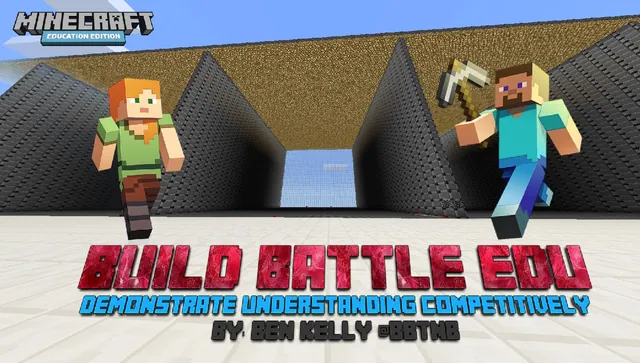
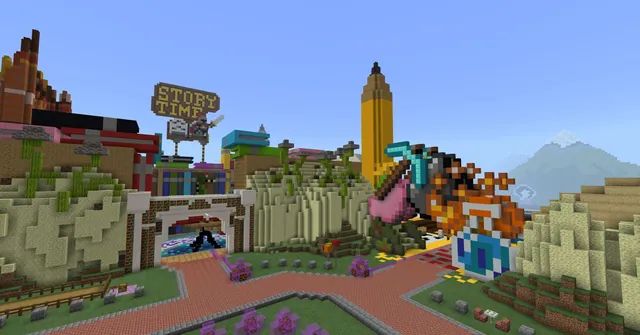
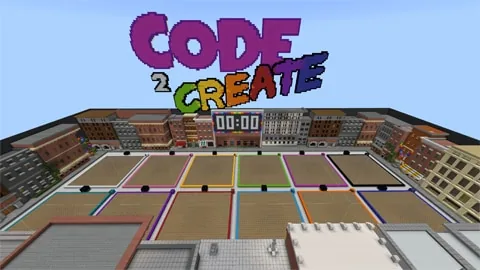
Practice Plaza X 12 provides a shared, street-themed arena designed for competitive team building and coding practice. Without automated timers or preset scoreboards, the environment gives educators full flexibility to run custom build battles, develop 3D spatial reasoning, and nurture strong communication habits within an esports-style setting.
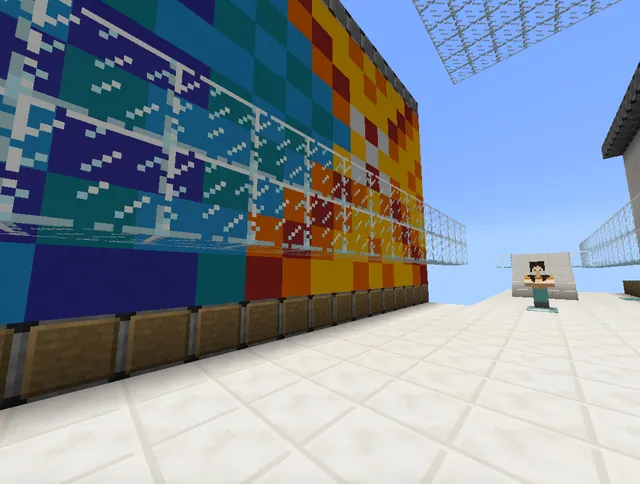
Students work in groups across twelve separate build plates to create themed structures or convert two-dimensional geometry into three-dimensional models. Beyond building and coding, learners step into esports roles such as shoutcasters or analysts, assess rival builds on voting platforms using clear criteria, and evaluate personal growth in a dedicated journal.
Learning objectives
By the end of this lesson students will be able to:
- Collaborate in small teams to plan and construct a themed model using building and coding skills.
- Translate visual concepts between two-dimensional shapes and three-dimensional block structures.
- Evaluate peer creations fairly using co-created success criteria on voting platforms.
- Analyze personal and team performance by documenting reflections in a Professional Play journal.
Blocks and items used in this lesson


Key vocabulary
- Build Plate
- A designated flat foundation in Minecraft where a team creates their build.
- Shoutcaster
- An announcer who provides live commentary and match analysis during a competitive event.
- Peer Assessment
- The process of reviewing and offering feedback on classmates' work against established criteria.
- Professional Play Journal
- A notebook or digital log used by learners to reflect on teamwork, strategies, and personal performance.
Before class
Lesson sequence
Suggested timing: about 45 minutes in total.
- Briefing and Role Assignment10 min
Organize students into groups of 4 to 6 players and introduce the street-themed build prompt or 2D geometric challenge. Establish the evaluation criteria together with the class so every learner understands how builds will be judged. Assign supporting roles to non-builders, such as shoutcasters, media reporters, team coaches, or gameplay analysts.
- Strategy and Build Battle20 min
Teams report to their assigned build plates to coordinate strategy, write code, and place blocks. Shoutcasters and media groups observe and commentate on the action while team coaches guide collaboration. Encourage teams to continually monitor their progress against the agreed-upon success criteria.
- Showcase and Platform Voting8 min
Call time on construction and invite all students to tour the build plates. Learners review each entry against the success criteria within a limited voting window, then cast their votes by standing on their chosen team's designated voting platform.
- Journal Reflection and Goal Setting7 min
Conclude the session away from the screens or in quiet study. Have students open their Professional Play journals to respond to reflective stimulus questions, evaluate their team's communication, and set actionable goals for the next team challenge.
Assessment: success criteria
- Active participation in team planning, communication, and block placement or coding.
- Accurate translation of the assigned street theme or geometric shape into a 3D structure.
- Objective application of agreed success criteria during the voting platform phase.
- Completion of a thoughtful reflection in the Professional Play journal identifying strengths and future goals.
Differentiation
Provide a simple 2D blueprint of the target shape and pair learners with a student coach to help organize construction steps.
Challenge fast finishers to write automated coding sequences for their builds or serve as shoutcasters analyzing tactical decisions.
Knowledge check
5 questions to check understanding after the lesson. Tap an answer to see if it is right; the score appears at the end.
1How many team build plates are available in the Practice Plaza world?
Answer: C. The Practice Plaza world contains twelve build plates for shared team challenges.
2What is the primary role of a student shoutcaster during the match?
Answer: B. Shoutcasters act as live commentators, analyzing action and encouraging teams as spectator roles.
3How do student spectators register their final votes for the best build?
Answer: C. Students vote for the winning build by standing on the allocated voting platforms.
4What is the primary purpose of keeping a Professional Play journal?
Answer: A. The journal helps learners self-evaluate, reflect on team dynamics, and set goals for upcoming matches.
5What environmental theme is featured throughout the Practice Plaza build world?
Answer: D. The lesson source states that the Practice Plaza world is built around the theme of city streets.
Resources
Frequently Asked Questions
Does the Practice Plaza world include built-in match timers or scoreboards?
No. The world intentionally omits automatic timers and scoreboards, giving educators the freedom to manage match pacing and scoring criteria according to classroom needs.
What is the recommended group size for each build plate?
The lesson recommends organizing students into teams of 4 to 6 players, allowing up to twelve distinct teams to build simultaneously.
How can students participate if they are not actively building or coding?
Spectating students can take on auxiliary esports roles, including shoutcasters, media reporters, gameplay analysts, or team coaches to stay deeply engaged.
Adapted from Code 2 Create – Practice Plaza X 12 by Minecraft Education on Minecraft Education, last updated Apr 15, 2025. This classroom version, the timings and the quiz were written by 9Minecraft Education.