How do the cultural legacies of Horace and Frederick II, along with environmental conservation, shape our understanding of Basilicata?
Overview
The rich cultural and natural heritage of southern Italy's Basilicata region encompasses the ancient Greek settlements of Magna Graecia, Roman literature, and medieval statecraft. By examining historical figures like the poet Horace and Emperor Frederick II alongside regional geography, students gain an integrated perspective on how literature, law, and environmental resources have shaped local society over centuries.Learning objectives
By the end of this lesson students will be able to:
- Identify the cultural contributions of Horace and the medieval governance of Frederick II.
- Examine ancient winemaking and agricultural practices demonstrated in the Melfi vineyards.
- Investigate historical artifacts and documents, including a brocchetta and the Constitutiones Augustales.
- Apply environmental conservation techniques by repairing water filtration systems and supporting lake biodiversity.
Blocks and items used in this lesson


Key vocabulary
- Magna Graecia
- Coastal areas of southern Italy colonized by Greek settlers during the 8th and 7th centuries BCE.
- Carpe Diem
- A Latin phrase meaning 'seize the day', originating from the poetry of Horace.
- Constitutiones Augustales
- A set of historic medieval laws promulgated by Holy Roman Emperor Frederick II.
- Brocchetta
- A small historical jug or pitcher unearthed during archaeological digs.
- Biodiversity
- The variety of living plant and animal species within a particular ecosystem.
Before class
Lesson sequence
Suggested timing: about 45 minutes in total.
- Introduction to Basilicata10 min
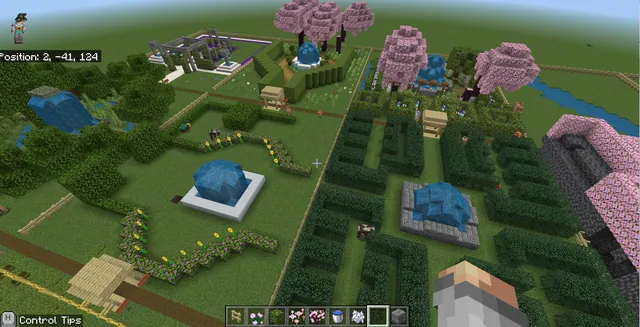
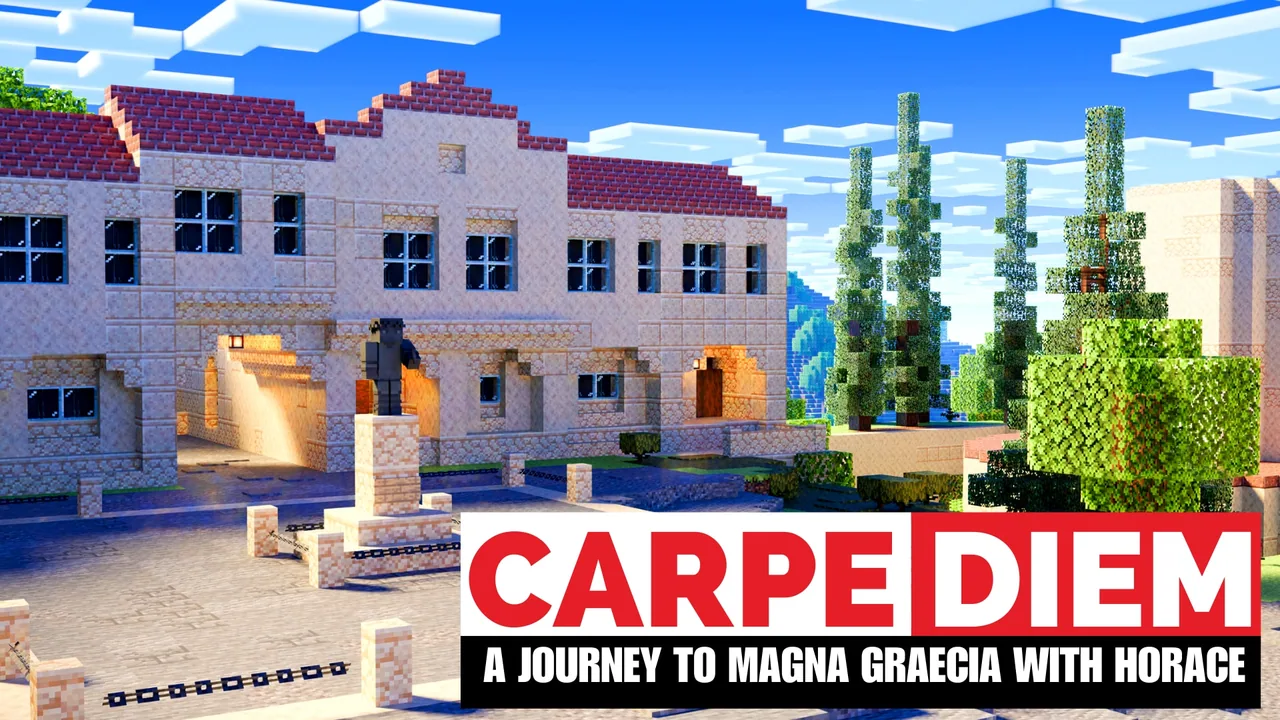
Introduce students to the geography of Basilicata and explain the concepts of Magna Graecia, Horace's poetry, and Frederick II's rule. Direct students to launch the Carpe Diem map and review the mission structure.
- Historical Missions in Venosa and Melfi15 min
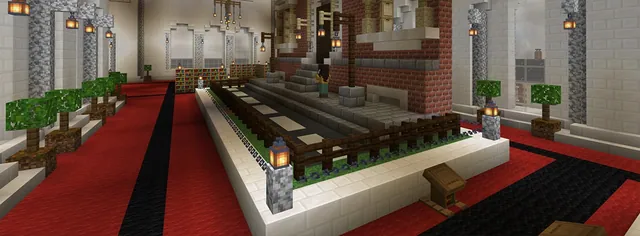
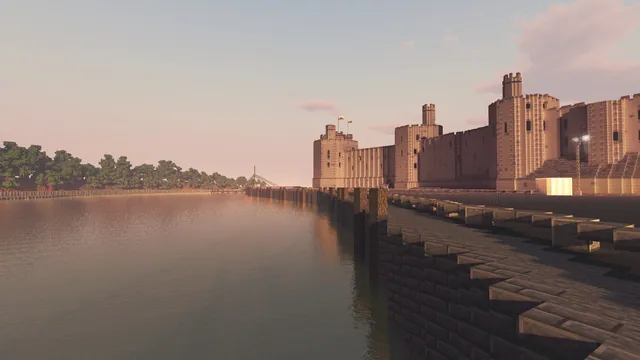
Students explore Venosa on an archaeological dig guided by Horace to uncover artifacts like the brocchetta. They then visit the Melfi vineyards to harvest grapes using ancient winemaking methods and search the Castle of Melfi for the Constitutiones Augustales.
- Conservation at Vulture and Monticchio10 min
Learners proceed to Vulture Springs to repair a municipal water filtration system before assisting a park ranger at Monticchio Lakes with planting flowers to sustain local habitat biodiversity.
- Journaling and Creative Extension10 min
Students record key findings and philosophical reflections in their journals. Optionally, groups can sketch out design plans for building a new map section depicting Roman or medieval Italian history.
Assessment: success criteria
- Completion of core in-game mission tasks across Venosa, Melfi, and the nature reserves.
- Demonstrated understanding of the roles of Horace and Frederick II in Italian history during discussions.
- Accurate explanation of the importance of local water conservation and biodiversity efforts.
- Reflective journal entries showing clear connections between in-game discoveries and historical facts.
Differentiation
Pair students together to navigate missions and provide guided reading cards for NPC dialogues.
Ask fast finishers to write a short research presentation on Horace's poetry or Frederick II's legal code.
Knowledge check
5 questions to check understanding after the lesson. Tap an answer to see if it is right; the score appears at the end.
1Which historical figure guides students during the archaeological dig in Venosa?
Answer: B. Horace guides learners through the Venosa dig as they uncover artifacts and discuss his poetry.
2What legal manuscript do students search for in the Castle of Melfi?
Answer: C. The Constitutiones Augustales is the historical manuscript associated with Frederick II's rule located in the castle.
3What sustainability task do students perform at Vulture Springs?
Answer: A. At Vulture Springs, students learn about conservation by repairing a water filtration unit.
4What does the term Magna Graecia refer to historically?
Answer: B. Magna Graecia refers to southern Italian areas colonized by Greek settlers in the 8th and 7th centuries BCE.
5How do students help preserve biodiversity at the Monticchio Lakes?
Answer: D. Students work alongside a ranger to plant flowers and protect the lake habitat.
Frequently Asked Questions
Who created or commissioned this educational map?
The Carpe Diem map was produced through the initiative of APT Basilicata, the regional territorial promotion agency for Basilicata, Italy.
Is this lesson suitable for beginners to Minecraft?
Yes, the lesson is designed for a beginner experience level and can be adapted across age groups ranging from elementary students to adults.
Adapted from CARPE DIEM - A JOURNEY TO MAGNA GRAECIA WITH HORACE by Marco Vigelini on Minecraft Education, last updated Oct 8, 2024. This classroom version, the timings and the quiz were written by 9Minecraft Education.