- Type
- Lesson plan
- Topics
- GeographyClimate Science
- Ages
- Ages 3-13
- Includes
- Quiz: 5 questionsMinecraft world
Why do humans build controlled environments like glasshouses, and how do different plants and biomes support life around the world?
Overview
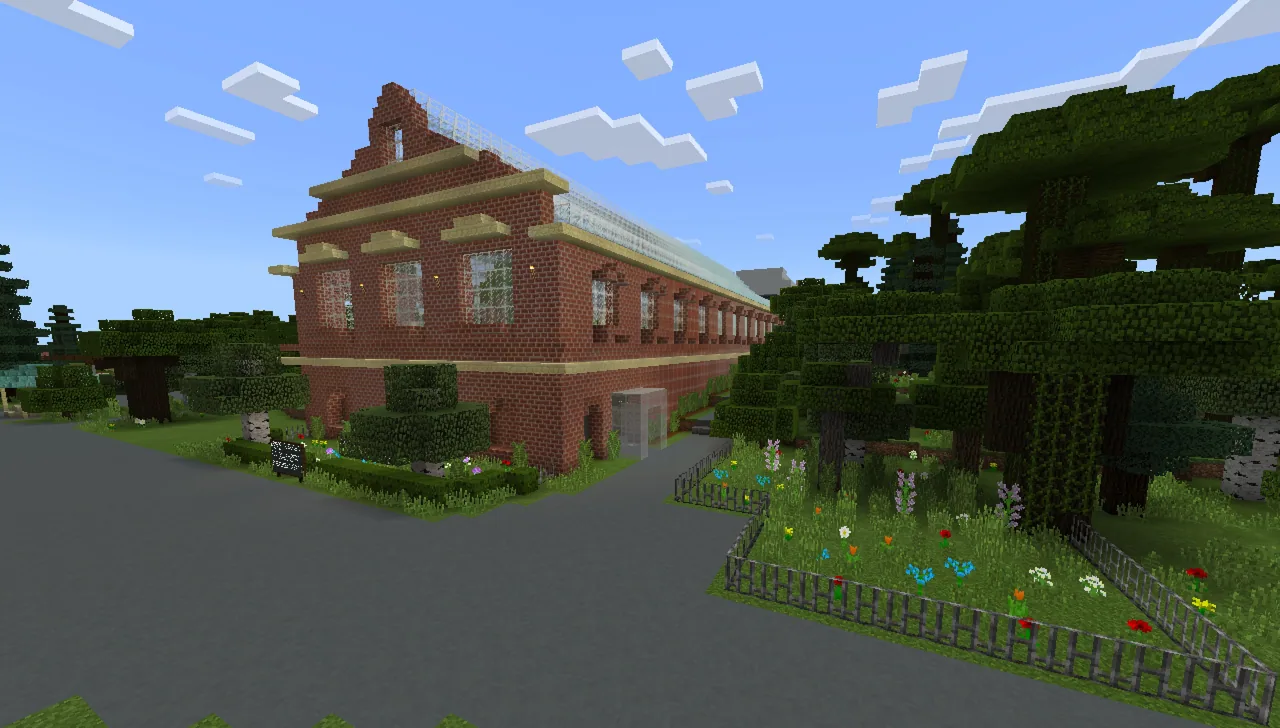
In this cross-curricular geography and climate science lesson, students tour Belfast's Botanic Gardens, the Tropical Ravine, and the historic Palm House. Learners investigate the purpose of conservatories, discover how plants adapt to distinct environments, and explore how humans interact with and rely on plant life across the globe.
Using Minecraft Education, students interact with non-player characters to gather plant and historical facts, then travel to age-specific activity zones. Within designated build plots, learners collaborate to construct models ranging from everyday plant-derived products to global biomes and functioning glasshouses.
Learning objectives
By the end of this lesson students will be able to:
- Explain the purpose and historical significance of the Tropical Ravine and Palm House.
- Identify diverse plant species, their ideal growing conditions, and products made from them.
- Construct a collaborative model of a plant product, global ecosystem, or glasshouse within a designated plot.
- Document observations and completed structures using the in-game camera to export a PDF report.
Blocks and items used in this lesson


Key vocabulary
- Tropical Ravine
- A specialized conservatory built to house tropical plant species in cooler climates.
- Palm House
- A large glasshouse structure historically constructed to cultivate exotic plants.
- Biome
- A large geographic area characterized by specific climate conditions, plants, and animals.
- Biodiversity
- The variety of living plant and animal species within a given habitat or environment.
Before class
Lesson sequence
- Park and Glasshouse Exploration
Students tour Belfast's Botanic Gardens, visiting the Tropical Ravine and Palm House. They speak with non-player characters to collect facts about park history and diverse plant species.
- Zone Orientation and Planning
Learners navigate to their designated key-stage zone. Depending on their level, groups plan a model of a plant-derived item, design an international biome, or sketch a glasshouse with an internal watering system.
- Collaborative Plot Building
Students work in groups within their designated build plots:
- Foundation: Study tree varieties such as palm, birch, spruce, acacia, oak, and cactus in mini-biomes.
- Key Stage 1: Construct a large-scale model of a product made from plants in groups of two or three.
- Key Stage 2: Recreate a global biome in teams of four, including native plants and wildlife.
- Key Stage 3: Design a Victorian, modern, or futuristic glasshouse featuring a watering system.
- Photo Documentation and PDF Export
Students use the in-game camera obtained from NPCs to photograph themselves and their finished builds, add descriptive notes, and export the completed project as a PDF.
Assessment: success criteria
- Students can explain the purpose and history of the Tropical Ravine and Palm House.
- Builds accurately reflect the assigned prompt, such as a plant product, a global biome, or a glasshouse structure.
- Students identify specific plant types, environmental requirements, or products derived from plants.
- Learners capture their work using the in-game camera and successfully export a PDF summary.
Differentiation
Place students in pairs in the Foundation or Key Stage 1 zones to focus on identifying basic tree species or building simple everyday objects made from plants.
Encourage Key Stage 3 students to build complex watering mechanisms inside Victorian or futuristic glasshouses and address biodiversity conservation.
Knowledge check
5 questions to check understanding after the lesson. Tap an answer to see if it is right; the score appears at the end.
1Which real-world park is featured in the Tropical Ravine World?
Answer: B. The world allows students to explore Belfast's Botanic Gardens, including the Tropical Ravine and Palm House.
2What are Key Stage 1 students asked to construct in their designated build plots?
Answer: A. Key Stage 1 students work in groups of 2 to 3 to build a large-scale model of an item created from plants.
3Which of the following is studied in the mini-biomes of the Foundation Activity Zone?
Answer: B. Foundation students explore palm, birch, spruce, acacia, and oak trees alongside cacti.
4What additional feature should Key Stage 3 students try to include in their glasshouse builds?
Answer: C. Key Stage 3 students build a Victorian, modern, or futuristic glasshouse and try to include a watering system.
5How do students capture and submit their completed work at the end of the lesson?
Answer: A. The lesson directs students to use the camera provided by NPCs to take photos and notes, exporting them as a PDF.
Resources
Frequently Asked Questions
What age groups can participate in this lesson?
The lesson provides specific activity zones and objectives for Foundation learners (ages 4 to 6), Key Stage 1 (ages 6 to 9), Key Stage 2 (ages 9 to 11), and Key Stage 3 (ages 11 to 14).
Where should students complete their construction projects?
All building activities must take place inside the designated build plots located within each group's assigned activity zone.
What architectural styles can older students use for their glasshouses?
Key Stage 3 students may choose to design their glasshouse in a Victorian, modern, or futuristic architectural style.
Adapted from Tropical Ravine World by Clark Phillips on Minecraft Education, last updated Jun 30, 2021. This classroom version, the timings and the quiz were written by 9Minecraft Education.