How can community and environmental interventions modeled in Minecraft help protect the Taj Mahal from severe pollution?
Overview
The Taj Mahal, an ivory-white marble mausoleum in Agra, India, is designated as a UNESCO World Heritage Site. Despite its global cultural value, the monument faces severe decay and discoloration. Dense toxic smog from municipal solid waste burning, vehicle traffic, wood-burning crematoriums, and nearby factories is turning its pristine marble a yellowish-brown color, while the drying and polluted Yamuna River threatens the monument's foundations.
In this project-based lesson, students explore the principles of UN Sustainable Development Goal 13 (Climate Action) by engineering eco-friendly solutions in Minecraft. Working in collaborative teams, learners model practical interventions such as riverbank Tulsi gardens, minaret mud packs, electric crematoriums, and green transit systems, followed by an outreach plan to engage real-world community stakeholders.
Learning objectives
By the end of this lesson students will be able to:
- Identify major human-made causes of air and water pollution threatening the Taj Mahal.
- Model practical environmental solutions in Minecraft, including mud therapy, botanical river buffers, and clean transportation.
- Relate local conservation interventions to United Nations Sustainable Development Goal 13.
- Develop an advocacy strategy to address community stakeholders about pollution control.
Blocks and items used in this lesson


Key vocabulary
- Brown Carbon
- A form of atmospheric carbon produced by burning biomass, such as cow dung or wood, which discolors surfaces.
- Mud Therapy
- A conservation treatment using clay packs applied to marble surfaces to absorb pollutants and lift discoloration.
- Electric Crematorium
- A crematorium powered by electricity rather than wood, eliminating smoke emissions and saving timber.
- SDG 13
- The United Nations Sustainable Development Goal focused on urgent action to combat climate change and its impacts.
Before class
Lesson sequence
Suggested timing: about 90 minutes in total.
- Introduction to the Taj Mahal Crisis15 min
Introduce the history of the Taj Mahal as a UNESCO World Heritage Site commissioned by Shah Jahan on the banks of the Yamuna River. Discuss how the city of Agra's air pollution, open municipal waste burning, and river sewage have caused the white marble to turn a yellowish-brown color. Connect this issue to UN Sustainable Development Goal 13.
- Researching Practical Solutions15 min
Review documented legal and scientific interventions implemented or proposed for Agra:
- Applying mud packs to the monument minarets to remove yellow patches.
- Planting Tulsi (Indian basil) along a 34 to 35 km stretch of the Yamuna River to clean air and deter mosquitoes.
- Replacing wood cremations with electric crematoriums.
- Banning cow dung burning and shifting to ethanol, CNG, or electric auto-rickshaws.
- Eliminating plastic waste and industrial runoff into the Yamuna River.
- Minecraft Collaborative Build35 min
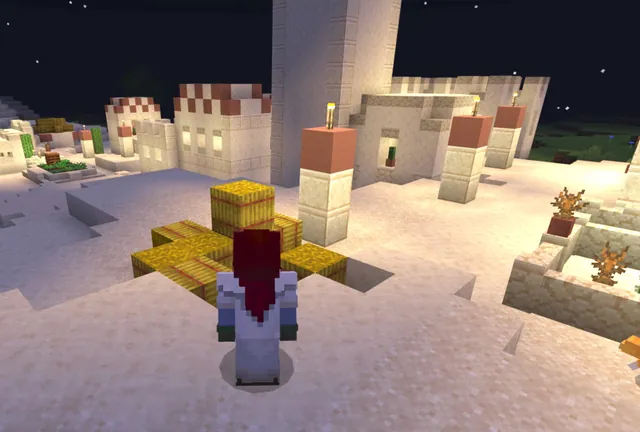
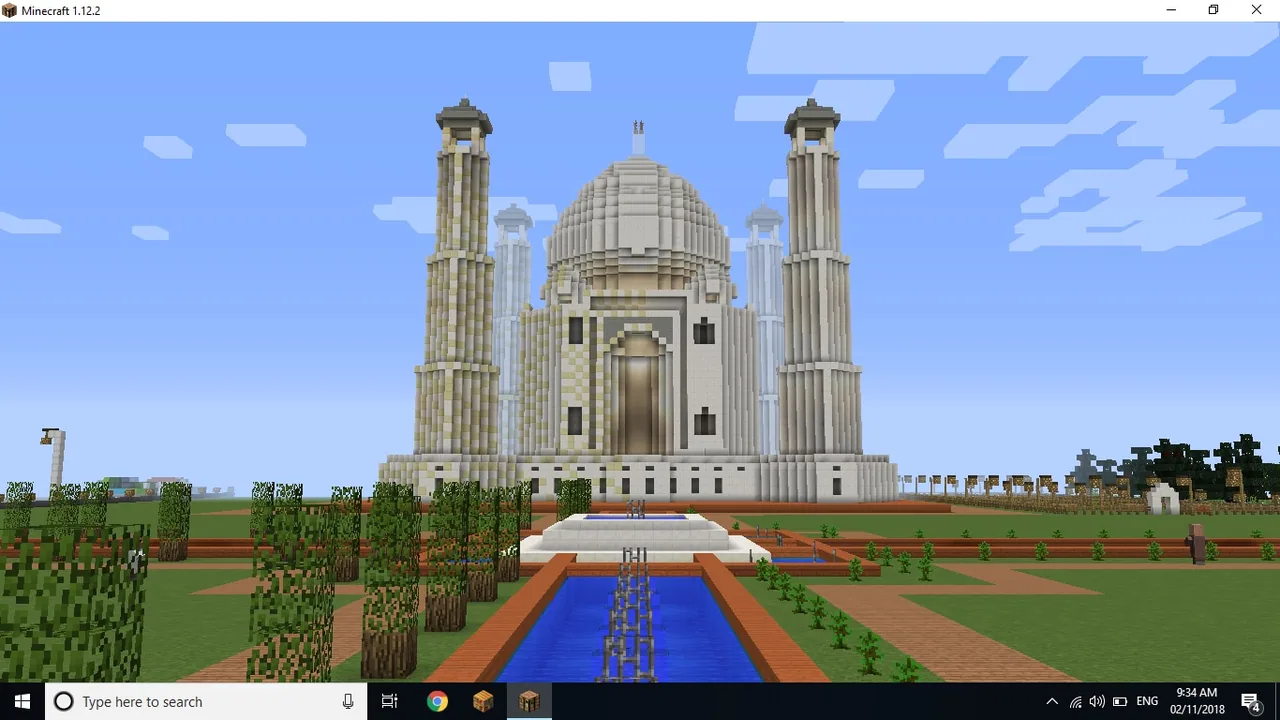
Student groups open a Minecraft world to plan and construct their environmental interventions. Learners build models of clean riverbanks lined with Tulsi beds, assemble mud pack scaffolding on marble towers, construct electric crematorium facilities, and design green transportation hubs for alternative-fuel vehicles.
- Stakeholder Marketing Strategy15 min
Groups develop an outreach plan targeting real-world community stakeholders. Students outline campaigns for local news channels, propose meetings with auto-rickshaw unions to promote green fuels, identify sites for electric crematoriums, and coordinate with local potters and nurseries for restoration supplies.
- Presentation and Heritage Extension10 min
Teams present their Minecraft builds and explain how their solutions protect both the monument and Agra's residents. Conclude by challenging students to identify an endangered heritage site in their own country that could benefit from similar conservation thinking.
Assessment: success criteria
- Students explain at least three distinct sources of pollution causing damage to the Taj Mahal.
- Minecraft builds accurately depict designated interventions, such as Tulsi gardens, mud pack restoration, or clean transit infrastructure.
- Groups identify specific stakeholders and present a practical marketing or awareness campaign.
- Students articulate the link between their conservation plan and UN Sustainable Development Goal 13.
Differentiation
Assign struggling teams a single focused build task, such as creating the riverside Tulsi garden or designing an electric crematorium station.
Have advanced students research a threatened monument in their home country and sketch a Minecraft blueprint addressing its specific environmental hazards.
Knowledge check
5 questions to check understanding after the lesson. Tap an answer to see if it is right; the score appears at the end.
1Which United Nations Sustainable Development Goal (SDG) does this lesson directly address?
Answer: A. The project uses technology and critical thinking to address UN Sustainable Development Goal 13 to combat climate change.
2What is the primary human-caused factor turning the Taj Mahal's white marble yellowish-brown?
Answer: B. The source identifies smog from municipal solid waste burning, vehicle traffic, crematoriums, and factories as the main cause of discoloration.
3What treatment is being applied to the minarets of the Taj Mahal to remove yellow patches from the marble?
Answer: C. Authorities apply mud therapy packs to the marble minarets to pull out pollutants and restore the original color.
4What change to funeral practices was ordered to reduce smoke pollution in Agra?
Answer: D. The Supreme Court of India ordered the replacement of traditional wood-burning crematoriums with electric crematoriums.
5Why was planting a long stretch of Tulsi (Indian basil) proposed along the Yamuna River?
Answer: A. A 34 to 35 km garden of Tulsi along the Yamuna is intended to purify the air and suppress mosquito populations.
Resources
- Lesson package (.zip)Everything the author attached to this lesson in one download.
- Taj Mahalhttps://whc.unesco.org/en/list/252
- Sustainable Developemment Goalshttps://sway.office.com/NSTovS12nByN6eQf?ref=Link&loc=play
- Tech syndicate teamThe team of students from Amity School who took part in the Minecraft project
Frequently Asked Questions
Do students need a pre-built Taj Mahal world file to participate?
No. Students can work in an open sandbox world where they either build a simplified model of the monument or focus directly on modeling the surrounding infrastructure, such as clean transit stations, riverbank gardens, and electric crematoriums.
How does this lesson connect science with civic action?
Beyond studying environmental science, students develop a marketing and outreach strategy. They identify community stakeholders, such as auto-rickshaw unions, local nurseries, and potters, to propose viable civic solutions.
What age group is this lesson plan suited for?
The source targets learners aged 11 to 18 and older, making it adaptable for middle school, high school, or introductory environmental science courses.
Adapted from THE SAVIOURS OF TAJ MAHAL by Arti Chopra on Minecraft Education, last updated Apr 1, 2019. This classroom version, the timings and the quiz were written by 9Minecraft Education.