- Type
- Lesson plan
- Grade
- Early years (Pre-K to Grade 2)Primary (Grades 3-5)Middle school (Grades 6-8)High school (Grades 9-12)
- Ages
- All ages
- Duration
- 45 min
- Level
- Beginner
How can communities combine engineered and natural defenses to protect against flooding while addressing the wider impacts of climate change?
Overview
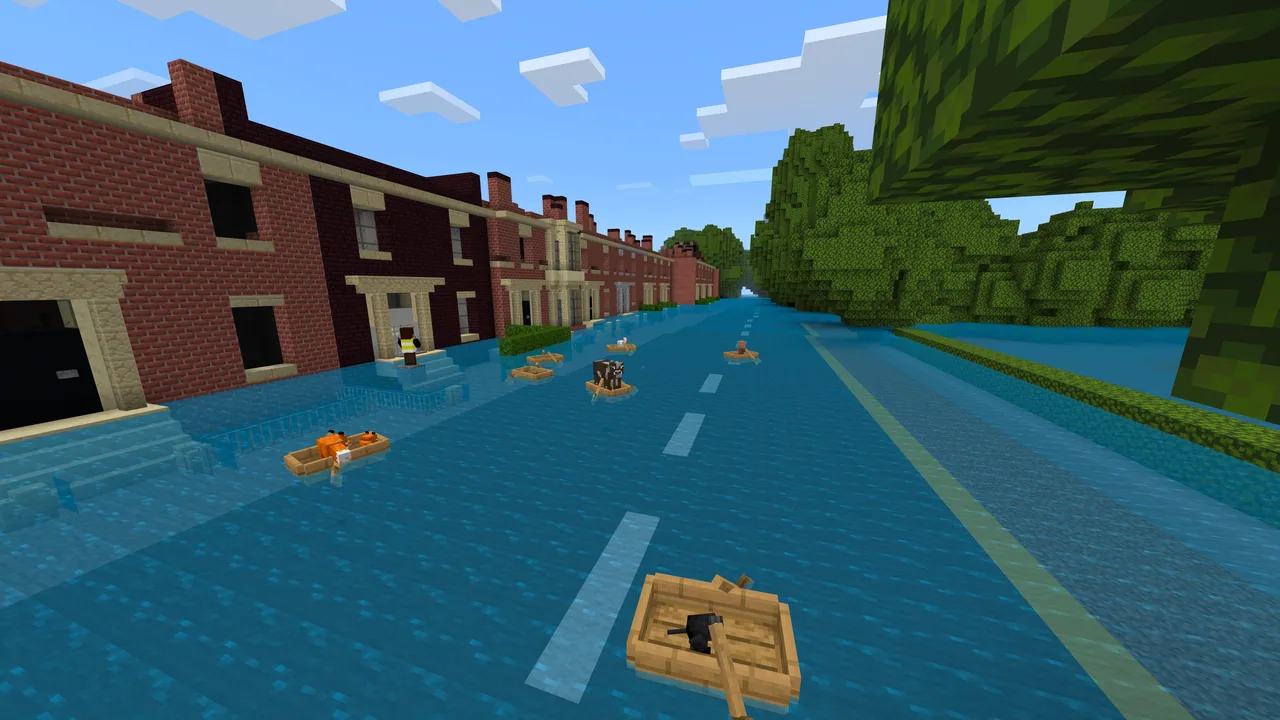
Flooding threatens towns, farmland, and critical infrastructure across the globe, and changing climate patterns continue to intensify these risks. In this lesson, students explore the real-world catchment of Preston in the United Kingdom, discovering how fluvial, tidal, and surface water impact local communities and why flooding can only be mitigated rather than stopped entirely.
Through interactive Minecraft environments developed with the Environment Agency, learners consult with digital project specialists, construct hard and natural flood barriers along the River Ribble, and test their effectiveness against rising water. They also travel forward in time to observe flood damage firsthand and complete practical resource-saving tasks to understand how everyday habits help tackle climate change.
Learning objectives
By the end of this lesson students will be able to:
- Identify three main sources of flooding: river (fluvial), coastal (tidal), and surface water (pluvial).
- Construct and test hard barriers and natural flood management systems along the River Ribble.
- Explain why flood defenses reduce risk but cannot eliminate flooding completely.
- Describe how personal resource conservation, such as reducing water waste, contributes to climate mitigation.
Blocks and items used in this lesson


Key vocabulary
- Fluvial flooding
- Flooding that occurs when rivers burst their banks and spill onto surrounding land.
- Pluvial flooding
- Surface water flooding that happens when heavy rainfall overwhelms the ground or drainage systems.
- Tidal flooding
- Flooding caused by high tides, storm surges, or coastal sea water moving inland.
- Hydraulic model
- A computer simulation used by engineers to calculate water volume in a catchment and choose appropriate defenses.
- Natural flood management
- Using natural landscape features like soil, grass, and trees to slow the flow and hold water back.
Before class
Lesson sequence
Suggested timing: about 55 minutes in total.
- Environment Agency Briefing10 min
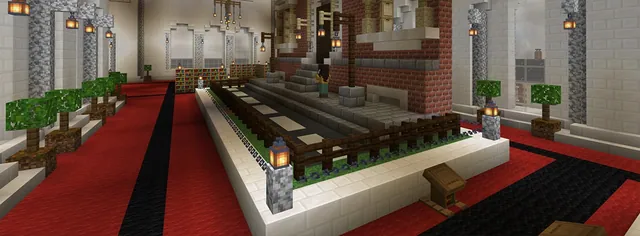
Students spawn inside the digital Environment Agency headquarters. Give them five minutes to meet non-player characters representing real project management professionals, then direct them to interact with the Game 1 expert to teleport to the River Ribble site.
- Hard Defense Construction15 min
Arriving at the Preston Sea Cadet building, learners read information boards detailing the different flood types. Students access chests to retrieve stone and glass, place them on the designated allow blocks to form a river wall, and press test the barrier wall to see if water breaks through. If leaks occur, they press clear the flood and adjust their wall.
- Natural Flood Management15 min
Students proceed to the second challenge, where they replace impermeable concrete blocks with special grass blocks, podzol, and trees. When they trigger the test the natural flood prevention method button, they observe how the organic ground absorbs water, slowing the flow even if minor water remains visible.
- Climate Impact & Reflection15 min
Conclude with a class discussion about how flooding disrupts roads, homes, and food production. Fast finishers can build a custom flood gate using suitable materials or teleport to Game 2 to inspect a flooded home set in 2050 and complete water-saving tasks in the present day.
Assessment: success criteria
- Student successfully constructs a continuous stone and glass barrier that prevents floodwater from breaching the riverfront.
- Student correctly replaces concrete with grass, podzol, and trees and explains how natural management absorbs runoff.
- Student can distinguish between fluvial, pluvial, and tidal flooding when discussing Preston's flood risks.
- Student articulates why flood barriers mitigate flood impact rather than preventing flooding completely.
Differentiation
Pair learners together to locate the build allow blocks and guide one another through placing the correct materials from the supply chest.
Have advanced students complete the bonus flood gate challenge to test which materials withstand water pressure or explore Game 2's climate mitigation tasks.
Knowledge check
5 questions to check understanding after the lesson. Tap an answer to see if it is right; the score appears at the end.
1Which three types of flooding put the city of Preston at risk?
Answer: A. The source identifies Preston as being at risk from surface (pluvial), river (fluvial), and sea (tidal) flooding.
2What tool do Environment Agency experts use on computers to plan appropriate flood defenses for a catchment?
Answer: B. The lesson notes that hydraulic models are built on computers to understand water volume and determine suitable flood defenses.
3What specific materials must students use to build the river wall near the Sea Cadet building?
Answer: C. Students are instructed to build a layer of stone on the allow blocks and place a layer of glass directly on top of it.
4What happens when students test the natural flood management area with grass, podzol, and trees?
Answer: D. Natural flood prevention slows the flow and absorbs water, so some water remains visible, but the flooding is substantially reduced.
5Why are students asked to turn off taps in the present-day house in Game 2?
Answer: A. Processing water to make it safe requires energy, meaning saving water lowers energy use and helps mitigate climate change.
Resources
- Lesson package (.zip)Everything the author attached to this lesson in one download.
- RiverCraft Educator Guide v2A PDF Teacher / Educator resource for River Craft. This is an updated version.
Frequently Asked Questions
What should students do if water breaches their river wall during the test?
Students can press the clear the flood button to reset the water. They should inspect their wall to ensure both the stone foundation and the glass top layer are fully completed on the designated build allow blocks before testing again.
Can the different games in RiverCraft be taught across separate lessons?
Yes. The source outlines three distinct games (Managing Flood Risk, Climate Change and Flooding, and Environment and Wellbeing), each designed to take approximately 45 to 60 minutes to complete.
Adapted from RiverCraft by Block Builders on Minecraft Education, last updated Apr 3, 2026. This classroom version, the timings and the quiz were written by 9Minecraft Education.