- Type
- Lesson plan
- Ages
- Ages 6-13
- Duration
- 45 min
- Level
- Beginner
How can nature-based solutions help catchments manage flood risks and adapt to climate change?
Overview
Climate change increases the risk of flooding and severe dry spells, requiring thoughtful catchment management. Working alongside natural processes—such as reintroducing beavers, constructing upper-catchment ponds, and restoring natural river meanders—offers practical, sustainable alternatives to hard engineering.
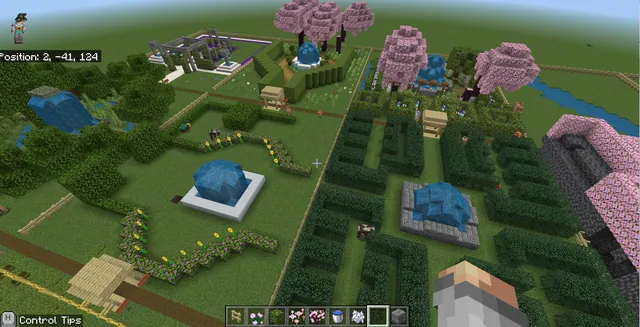
In this Minecraft world, students visit an Environment Agency hub to learn about environmental professions before embarking on active field tasks. By managing beaver dams, excavating storage ponds, and planting suitable tree species, learners see how nature-based interventions slow water flow and lower flood risk.
Learning objectives
By the end of this lesson students will be able to:
- Explain how natural interventions like beaver dams and retention ponds slow water flow and reduce downstream flooding.
- Plant suitable tree species in designated catchment zones to improve soil water storage and carbon capture.
- Describe how river restoration techniques, such as adding meanders, correct the flood risks created by straightened channels.
- Identify environmental careers and responsibilities represented by the Environment Agency.
Blocks and items used in this lesson
 Iron Axe
 Iron Shovel
 Birch Sapling
 Water Bucket
 Oak Boat
Key vocabulary
- Drought
- A natural event that happens when a period of low rainfall creates a water shortage.
- River Restoration
- The process of returning natural features, like meanders, to rivers that were previously straightened.
- Meander
- A natural bend or curve in a river channel that slows down the speed of moving water.
- Nature-Based Solutions
- Actions that protect or manage natural features, such as trees and ponds, to tackle environmental challenges.
Before class
Lesson sequence
Suggested timing: about 45 minutes in total.
- Hub Exploration and Careers10 min
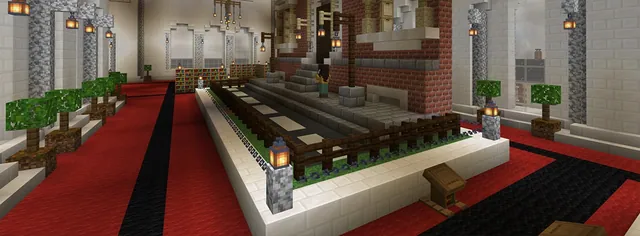
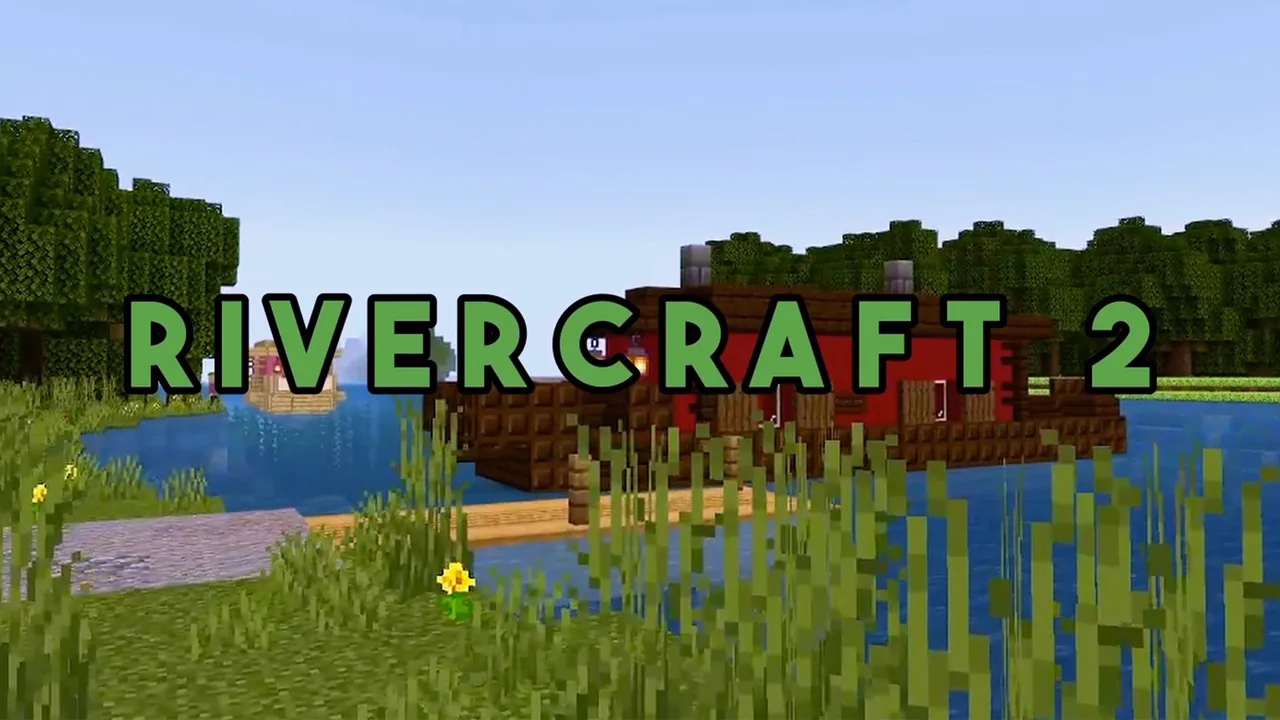
Students spawn by the river and speak with Zac. They explore the Environment Agency Branch building to interact with career NPCs representing real job roles, then head to the red boat to speak with Mo and select Game 1.
- Beaver Dam Management10 min
Students enter the town hall, talk to the Ecologist NPC, and follow the pink trail to the beaver dam. Using an iron axe provided by the Ecologist, they locate and break three blue blocks in the dam, then press Test to view a flythrough showing the water level drop.
- Pond Creation10 min
Students return to the town hall to receive instructions and an iron shovel from the Landscape Designer NPC. Following the pink trail network, they locate and excavate four separate ponds in the upper catchment before pressing Test to trigger the next flythrough.
- Tree Planting10 min
Students meet the Arborist NPC in the town hall and collect birch and ash saplings. They plant four ash trees on discoloured blocks on their side of the river and four birch trees across the river, testing their work to bring water levels back to normal.
- Bonus Meander Task and Review5 min
Fast finishers visit the Bonus Game NPC to complete the river meander restoration task. Conclude with a class discussion on how ponds, trees, and beavers protect communities downstream.
Assessment: success criteria
- Student successfully removes the three blue blocks from the beaver dam and confirms the lowered water level via the Test button.
- Student locates and digs all four designated ponds using the shovel.
- Student correctly places four ash trees and four birch trees in their designated riverside locations.
- Student can identify at least two ways natural catchment features reduce flood severity downstream.
Differentiation
Have students work in pairs to follow the pink trail markers and prompt them to re-read NPC dialogue if a task does not validate.
Direct students to complete the meander restoration bonus task and explain the differences between environmental, public supply, and agricultural droughts.
Knowledge check
5 questions to check understanding after the lesson. Tap an answer to see if it is right; the score appears at the end.
1Why can artificially straightened rivers increase the risk of flooding?
Answer: C. Straightened channels speed up water movement, which can cause high volumes of water to arrive downstream rapidly and flood communities.
2How does planting trees help reduce surface water run-off?
Answer: A. Trees catch rainfall before it hits the ground and help the soil absorb and hold water.
3What materials do beavers primarily use to build their dams?
Answer: D. The source notes that beaver dams are mainly made from woody material, vegetation, and substrate.
4Which three types of drought are identified in the lesson?
Answer: B. The lesson lists environmental, public water supply, and agricultural droughts as the three main types.
5How can ponds created in the upper catchment help farmers during periods of drought?
Answer: A. Water stored in upper catchment ponds provides a vital supply for crop irrigation and livestock during dry conditions.
Resources
- Lesson package (.zip)Everything the author attached to this lesson in one download.
- Rivercraft 2 Teacher PackA PDF file of all the information required to run RiverCraft 2.
Frequently Asked Questions
What should students do if the Arborist's Test button fails?
Verify that students have planted the correct species on the correct sides of the river: four ash trees must be planted in the discoloured blocks on the starting bank, and four birch trees must be planted across the river.
Where do students obtain the tools needed to complete the activities?
Students do not need to bring their own tools. Specific non-player characters provide the required items during instructions, such as an iron axe from the Ecologist and an iron shovel from the Landscape Designer.
Who created these learning games and what real-world work do they showcase?
The games were created by the Environment Agency in England to demonstrate real-world environmental management, flood risk reduction, and climate adaptation strategies.
Adapted from RiverCraft 2 by Block Builders on Minecraft Education, last updated Jul 21, 2025. This classroom version, the timings and the quiz were written by 9Minecraft Education.