How do individuals and local governing bodies balance scarce resources, regulations, and personal finances when establishing a community?
Overview
This simulation explores the complex social, economic, and civic challenges faced by displaced persons and refugees. Students experience the transition from temporary shelter to a fledgling community, learning firsthand how local governance, personal budgeting, zoning guidelines, and resource constraints influence community survival and growth.
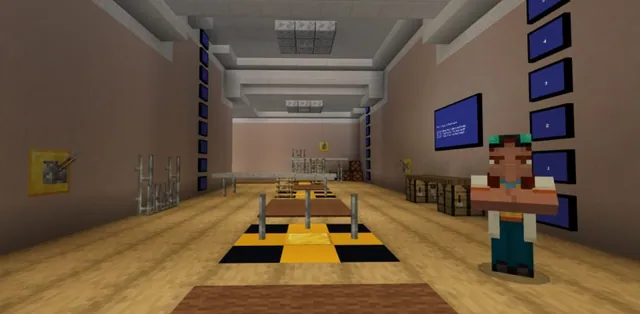
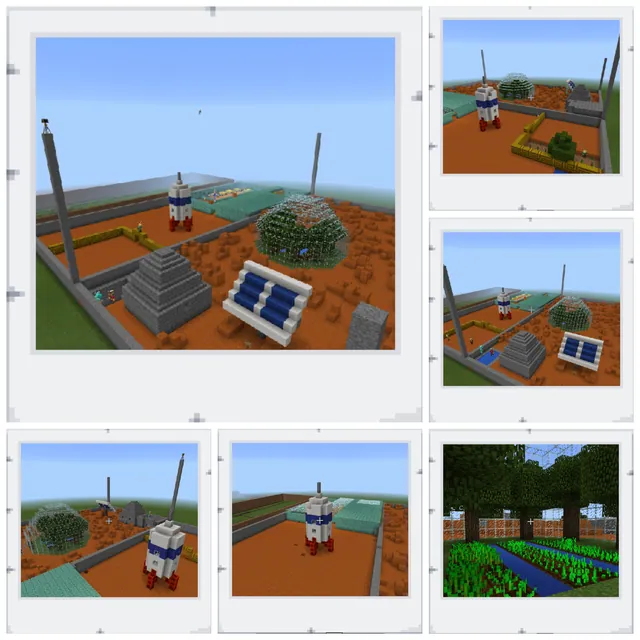
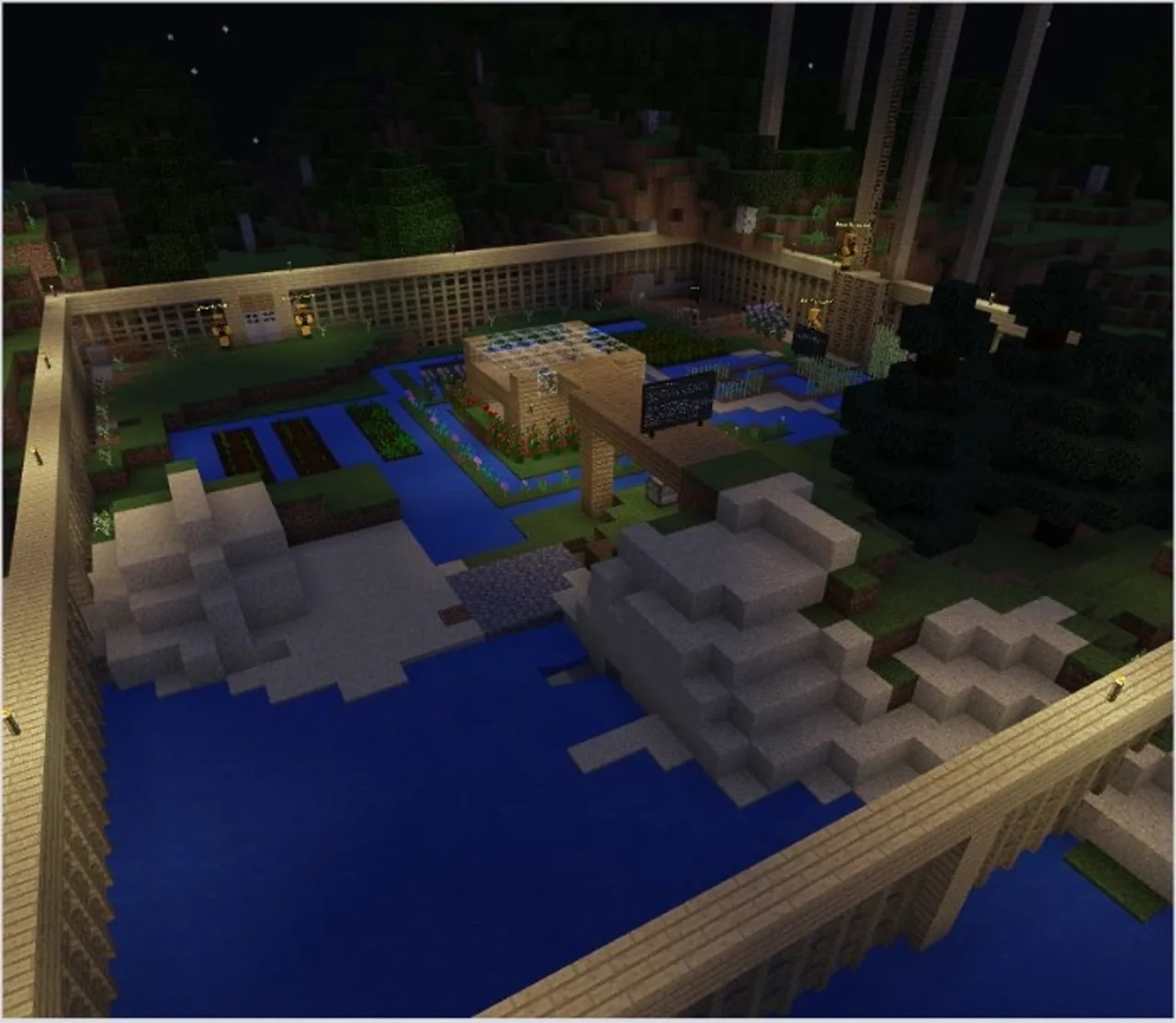
Using Minecraft Education alongside hands-on classroom systems, learners receive land allocations, draft formal building applications, and manage physical paper money. In-game municipal contracts, physical bank orders delivered via powered rail minecarts, and collaborative trade establish a dynamic, student-driven economic system.
Learning objectives
By the end of this lesson students will be able to:
- Explain the personal and economic hardships experienced by displaced people when relocating to a new settlement.
- Draft a formal development application that calculates perimeter and area for a planned residential build.
- Manage a personal budget using physical currency to trade goods, accept municipal contracts, and repay potential loans.
- Collaborate with peers and non-player characters to expand town infrastructure under designated zoning guidelines.
Blocks and items used in this lesson
 Chest
 Minecart
 Powered Rail
 Minecart with Chest
 Rail
Key vocabulary
- Displaced Person
- An individual forced to leave their home or community due to adverse circumstances.
- Development Application
- A formal planning proposal submitted to governing authorities to gain permission for building.
- Zoning
- Rules established by local governments specifying allowable uses and building types for designated land parcels.
- Interest
- An additional fee charged over time for the service of borrowing money from a financial institution.
- Allowance
- A set sum of startup funds granted to an individual to help establish essential living conditions.
Before class
Lesson sequence
- Refugee Camp Arrival
Students log into the world as displaced individuals residing in a temporary refugee camp for their first night. During this phase, learners collect basic survival resources and submit their citizenship allocation paperwork to the educator for formal review.
- Transit and Land Grants
Once citizenship forms receive educator approval, students receive a snap-lock bag containing their physical money allowance. Learners board an in-game railway to travel from the camp to an early-stage settlement, where local authorities assign each student a small plot of land.
- Application and Supply Distribution
Before building, students must complete a formal development application outlining their architectural plan, including area and perimeter calculations. Upon submitting their plans, students visit the in-game bank to collect a starter chest containing torches, a pickaxe, wood, food, and wool.
- Settlement Expansion and Commerce
Students gather natural resources outside the town walls or purchase additional materials through the teacher-operated bank. Learners can also earn extra income by completing construction contracts for local non-player characters, such as assembling a bakery.
- Physical currency is exchanged with the educator banker using the price list.
- The banker writes an order form and transfers it to the warehouse manager.
- The warehouse manager loads a minecart chest with the requested goods and dispatches it along powered rails to the student bank booth.
- Before contract payouts are granted, the warehouse manager flies over to verify that the task has been completed properly.
- Community Reflection
Conclude with a structured group debrief examining the financial, personal, and civic hurdles encountered during settlement expansion. Students reflect on the necessity of planning approvals, loan interest management, and mutual collaboration during times of displacement.
Assessment: success criteria
- Accurate calculation of land area and perimeter recorded on the official development application.
- Sound financial stewardship demonstrated by tracking physical currency reserves, purchasing necessities, and servicing any loans.
- Successful construction of a compliant home and fulfillment of verified community building tasks.
- Clear articulation of the challenges faced by displaced persons navigating community relocation.
Differentiation
Provide a pre-measured grid template on the development application to simplify area and perimeter calculations.
Require advanced students to take out a formal government loan with interest to finance and build a commercial shop.
Knowledge check
5 questions to check understanding after the lesson. Tap an answer to see if it is right; the score appears at the end.
1What initial task must students complete during their first night in the refugee camp?
Answer: B. Students spend their initial night in the camp gathering basic resources before moving to the settlement.
2Which paperwork must be approved by local authorities before construction can begin on an allocated plot?
Answer: A. Students must draft and submit a development application detailing their design before building can start.
3Which items are provided inside the initial starter chest distributed at the bank?
Answer: D. The starter chest explicitly contains torches, a pickaxe, wood, food, and wool for initial shelter construction.
4How are bought construction materials transported from the warehouse to the student inside the bank?
Answer: B. The warehouse manager places the items in a minecart chest and sends it down powered rail to the relevant booth.
5What step must occur before a student can collect their payment reward for completing an NPC task?
Answer: C. The warehouse manager conducts a physical flyover inspection to confirm work is finished before issuing reward money.
Resources
Frequently Asked Questions
How is physical money integrated into the Minecraft gameplay?
Students manage physical tokens or paper money in snap-lock bags, handing cash to the educator acting as a banker at an offline station before goods are dispatched into the game.
Are students restricted to buying building materials solely from the central bank?
No, students are explicitly encouraged to forage for raw resources outside the settlement boundaries and can freely trade or negotiate goods with one another.
What happens if a student runs out of funds during construction?
Students can accept work orders from local non-player characters to earn rewards or apply for a government loan that must be paid back with interest.
Adapted from Relocation and Communities by Lachlan McGuire on Minecraft Education, last updated Jul 10, 2018. This classroom version, the timings and the quiz were written by 9Minecraft Education.