- Type
- Lesson plan
- Subject
- History & Social Studies
- Ages
- Ages 6-10
- Duration
- about 55 min (suggested)
- Includes
- Quiz: 5 questions
How can builders use hidden passages, lighting, and materials to create an authentic burial tomb for an Egyptian pharaoh?
Overview
In this second lesson of an Ancient Egypt unit, students explore the cultural and spiritual significance of pharaohs' burial chambers. By examining what artifacts were buried with rulers and why tombs required protection, learners gain an understanding of how ancient builders designed intricate passages to safeguard sacred resting places.
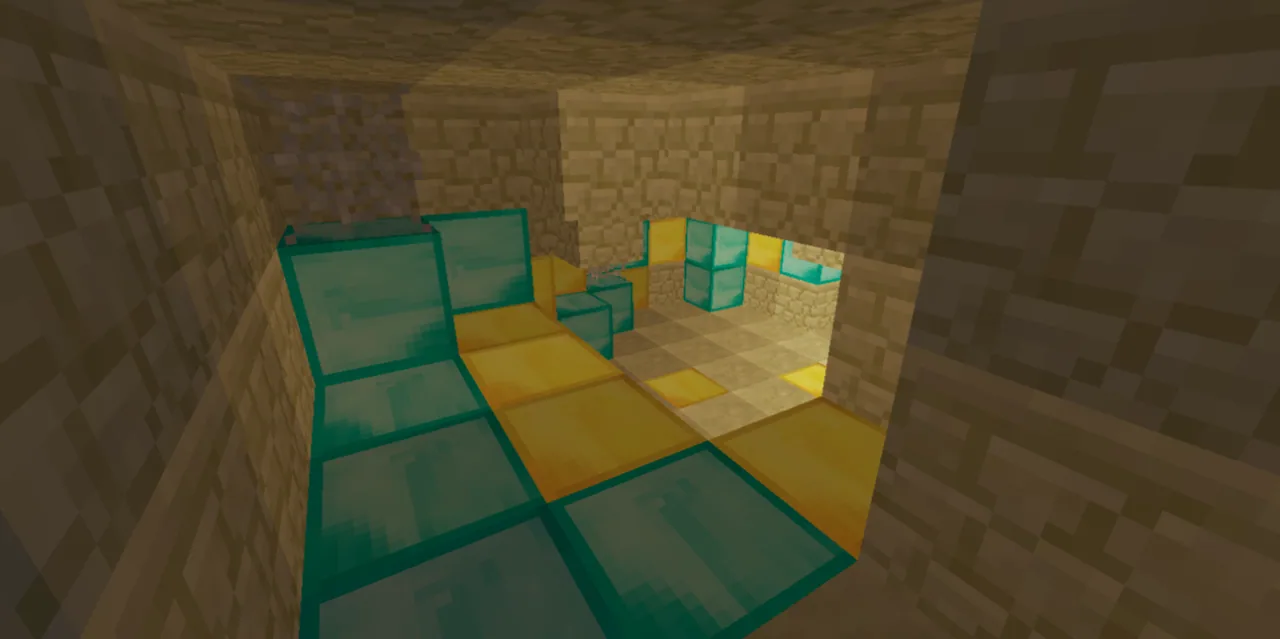
Using Minecraft, student teams tunnel underneath their previously constructed pyramids to build winding labyrinths and concealed burial vaults. They experiment with block textures and sparse lighting techniques to establish a mysterious atmosphere while choosing symbolic materials, such as gold, to represent ancient treasures and sarcophagi.
Learning objectives
By the end of this lesson students will be able to:
- Explain the purpose of ancient Egyptian tombs and identify items buried within them.
- Excavate and construct a hidden subterranean tomb with branching maze corridors beneath a pyramid.
- Manipulate lighting and shadow to establish an appropriate tomb atmosphere.
- Select appropriate Minecraft blocks to represent historical artifacts such as a pharaoh's sarcophagus.
- Collaborate in teams to manage construction roles and pace.
Blocks and items used in this lesson


Key vocabulary
- Pharaoh
- An ancient Egyptian monarch or ruler.
- Tomb
- An underground chamber or vault used as a resting place for the dead.
- Sarcophagus
- A decorated stone or metal coffin used in ancient burials.
- Atmosphere
- The mood or feeling created in a space through light, shadow, and design.
Before class
Lesson sequence
Suggested timing: about 55 minutes in total.
- Review and Challenge Introduction10 min
Review the previous session with the class, discussing what worked well in their teams and how effectively they collaborated. Introduce the lesson goal: excavating and constructing a hidden tomb beneath their pyramid worthy of a pharaoh.
- Brainstorming and Modeling Corridors15 min
Ask students what would have been buried inside an Egyptian ruler's tomb. Have them brainstorm in pairs or using sticky notes, collate their suggestions, and compare them with a historical list of tomb artifacts.
Demonstrate how to dig a tunnel down beneath the pyramid and carve multiple branching corridors to create a maze. Explain that dead-end paths will receive booby traps in a future lesson, so today's priority is creating an atmospheric labyrinth.
- Lighting and Initial Excavation15 min
Discuss how light controls atmosphere: explain that excessive light feels too bright and warm, while complete darkness makes navigation impossible. Model placing sparse light sources in corners to produce deep shadows.
Teams enter Minecraft and begin digging their tunnels and laying out corridors. Circulate and award Egyptian-themed tokens to recognize effective teamwork and steady pacing.
- Burial Chamber Construction15 min
Pause the class to introduce the central burial chamber. Ask students to identify which items belong in a pharaoh's final resting room and what Minecraft blocks could represent them, such as gold blocks for a sarcophagus.
Allow teams to resume building so they can excavate the main chamber, furnish it with symbolic treasures, and finalize their decorative details.
Assessment: success criteria
- The tomb is effectively hidden underground beneath the pyramid with branching paths.
- Corner lighting and shadows are balanced to build a clear tomb atmosphere without blinding or plunging the area into total darkness.
- Material choices meaningfully reflect historical burial items, such as gold for a sarcophagus.
- Team members communicate clearly and share building responsibilities during excavation.
Differentiation
Provide a simple floor-plan sketch showing a basic vertical shaft and two branching corridors to guide initial excavation.
Students who took on advanced exterior projects, like the Sphinx, can split their team between above-ground details and underground excavation, or finish their tomb during the subsequent session.
Knowledge check
5 questions to check understanding after the lesson. Tap an answer to see if it is right; the score appears at the end.
1Why were corridors beneath Egyptian pyramids built with multiple branching paths and dead ends?
Answer: B. Builders excavated multiple paths and dead ends to create a maze that kept the pharaoh's final resting place hidden.
2How does the lesson suggest placing light sources inside the tomb corridors?
Answer: D. Placing limited lights in corners casts shadows that give the tomb a dramatic atmosphere without making navigation impossible.
3Which Minecraft block is suggested to represent a pharaoh's sarcophagus?
Answer: A. Gold blocks serve as a suitable representation for an ornate royal sarcophagus.
4What will students add to the dead-end corridors in the lesson that follows this one?
Answer: C. The teacher explains during modeling that dead ends will be equipped with booby traps in the next session.
5What option is provided for an advanced group working on an exterior Sphinx build?
Answer: B. Advanced builders tackling a Sphinx may divide their time between the surface and underground, or complete their tombs in the final session.
Frequently Asked Questions
Do I need a special downloadable world file to run this lesson?
No. Students continue working directly beneath the pyramids they constructed in the previous lesson of the unit.
How can I encourage positive collaboration during the excavation phase?
Use themed Egyptian reward tokens during the build to praise groups demonstrating strong communication, precise digging, and steady work pace.
Adapted from Pyramid Building 2 by Steve Bambury on Minecraft Education, last updated Nov 30, 2016. This classroom version, the timings and the quiz were written by 9Minecraft Education.