- Type
- Lesson plan
- Subject
- Science
- Grade
- Primary (Grades 3-5)
- Ages
- Ages 8-10
- Duration
- 45 min
- Level
- Beginner
How do physical adaptations and sensory memory enable pigeons to survive in urban environments?
Overview
City wildlife often develops specialized traits to thrive alongside humans. In this lesson, students investigate how pigeons satisfy their basic survival needs—such as securing food, finding shelter, and escaping danger—within complex urban environments. Learners explore core concepts of biological adaptation by examining how an animal's physical traits, sensory awareness, and memory respond to its surroundings.
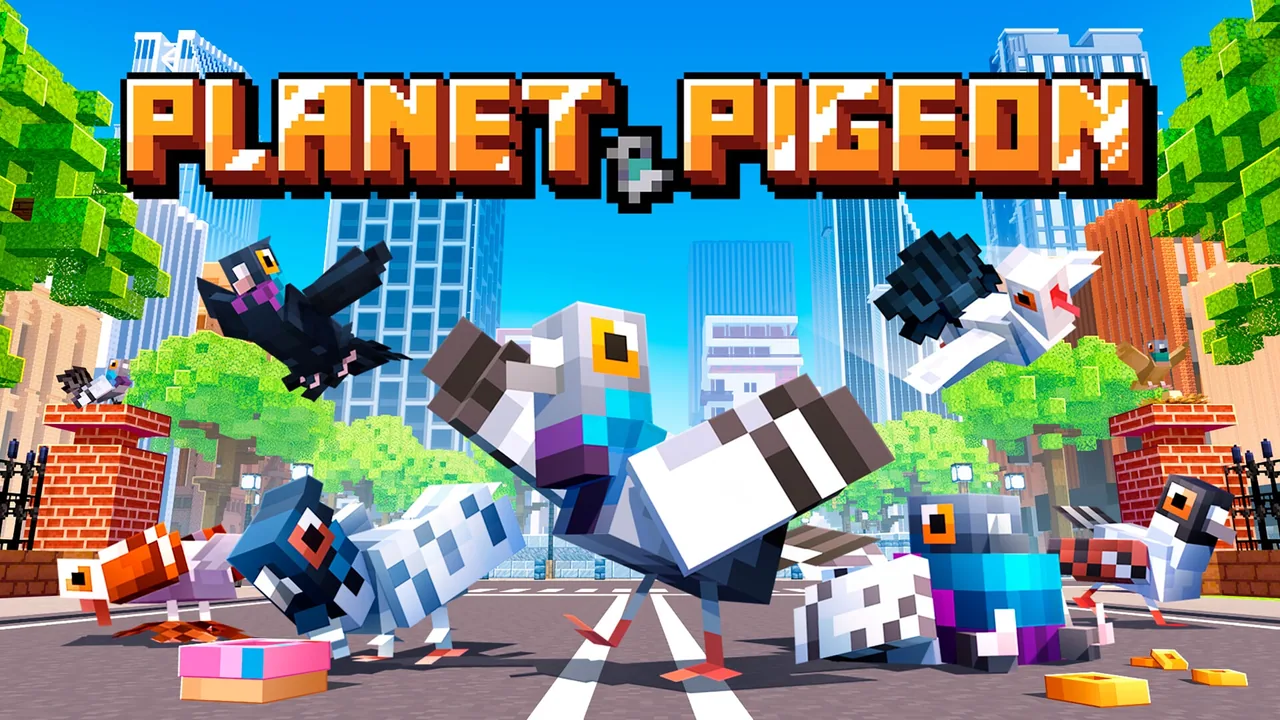
Using the Planet Pigeon world, students experience city life through mini-games that highlight pigeon navigation, foraging near outdoor dining, and quick evasive maneuvers. Afterward, students consolidate their observations into custom trading cards and test their own spatial memory and sense of smell in a classroom-based mapping activity.
Learning objectives
By the end of this lesson students will be able to:
- Identify physical adaptations that allow pigeons to thrive in city environments.
- Explain how pigeons use sensory memory and smell to navigate and locate food.
- Create a trading card displaying key survival traits of a city pigeon.
- Compare human memory and sense of smell to the navigational skills of pigeons.
Blocks and items used in this lesson


Key vocabulary
- Adaptation
- A physical trait or behavior that helps a living organism survive in its habitat.
Before class
Lesson sequence
Suggested timing: about 135 minutes in total.
- Introductory Discussion10 min
Lead a class conversation about basic animal survival needs: food, shelter, and protection from predators. Review the concept of adaptations and prompt students to share what they already know about pigeons and city habitats. Instruct learners to watch for specific pigeon traits and behaviors during gameplay that help meet these survival needs.
- Planet Pigeon Exploration25 min
Students launch the Planet Pigeon world and play through the mini-games. Learners observe how pigeons use their senses to navigate, remember food spots, and maneuver through city spaces.
- Debrief and Adaptation Charting10 min
Have students list the adaptations they observed in the mini-games. Ask students to pair up to compare findings, then review as a whole group. Students record their findings in a two-column chart detailing each physical adaptation and how it addresses a survival need.
- Pigeon Trading Cards45 min
Provide each student with a blank index card placed vertically. Have students draw a dividing line across the center.
- Top half: Write a name for the pigeon across the very top, then draw an illustration of the pigeon in an urban environment.
- Bottom half: Record two impressive adaptations selected from the chart, such as vertical lift, wide-angle vision, keen smell, or sharp memory.
- Classroom Memory Mapping45 min
Distribute 4 or 5 cups of strongly scented aromatics around the room and let students locate each scent station. Remove the stations and take a break for other work. Later in the day or the next day, have students draw a classroom map from memory, plotting where each scent was located. Conclude by comparing student results to pigeon navigational memory.
Assessment: success criteria
- Students can list key pigeon adaptations, including vertical lift, broad field of vision, sense of smell, and superior memory.
- Students explain how pigeons use memory and senses to locate food sources and return to roosts in cities.
- Students produce a complete index card featuring a named pigeon, urban background, and two clearly identified adaptations.
- Students reflect accurately on how human memory and scent detection compare to those of pigeons.
Differentiation
Allow students to work in pairs or use adaptive drawing tools when completing their pigeon trading cards.
Have students research a different animal, create an additional card, and compare which creature would survive best across contrasting environments.
Knowledge check
5 questions to check understanding after the lesson. Tap an answer to see if it is right; the score appears at the end.
1Which physical ability helps pigeons quickly avoid urban hazards like street traffic?
Answer: C. Pigeons use a rapid vertical lift to quickly launch out of the way of traffic and other city hazards.
2What materials are used to set up the sensory stations during the memory experiment?
Answer: A. The activity uses 4 or 5 small cups or bowls with strong aromatics to test scent identification and memory.
3How do city pigeons take advantage of human activity to meet their food needs?
Answer: D. Pigeons meet their basic food needs in cities by tracking outdoor diners and scavenging around food stands.
4What should be written on the lower half of the pigeon trading card?
Answer: B. Underneath the illustration, students record two standout survival adaptations they learned about pigeons.
5Why is a strong memory particularly helpful for a pigeon living in an urban environment?
Answer: C. Superior memory helps pigeons track outdoor feeding locations and find their way through complex cityscapes back to their roosts.
Resources
- Lesson package (.zip)Everything the author attached to this lesson in one download.
- Planet Pigeon (mctemplate)Planet Pigeon world template.
- Planet Pigeon (mctemplate)Planet Pigeon world template.
Frequently Asked Questions
What items work best for the classroom scent stations?
Common household items with recognizable, pungent aromas work best, including ground cinnamon, mint leaves, oregano, vinegar, coffee beans, ginger, or sliced oranges placed in small bowls.
How does the card game extension work?
Students research a non-urban animal, create a trading card for it, and combine them into a shared class deck. The teacher names a specific environment, draws two random cards, and the class votes on which animal is best equipped to survive there.
Adapted from Planet Pigeon by CrackedCubes Ltd on Minecraft Education, last updated Oct 2, 2026. This classroom version, the timings and the quiz were written by 9Minecraft Education.