- Type
- Lesson plan
- Grade
- Primary (Grades 3-5)
- Ages
- Ages 8-10
- Includes
- Quiz: 5 questions
How can the patterns and motifs created by a culture reveal how its people lived, believed, and interacted with their surroundings?
Overview
Studying patterns and motifs provides a window into the heritage, environments, and beliefs of communities throughout history. By analyzing how cultures use repetition, symmetry, contrast, and variety, students learn to interpret the stories and values embedded in traditional art forms.
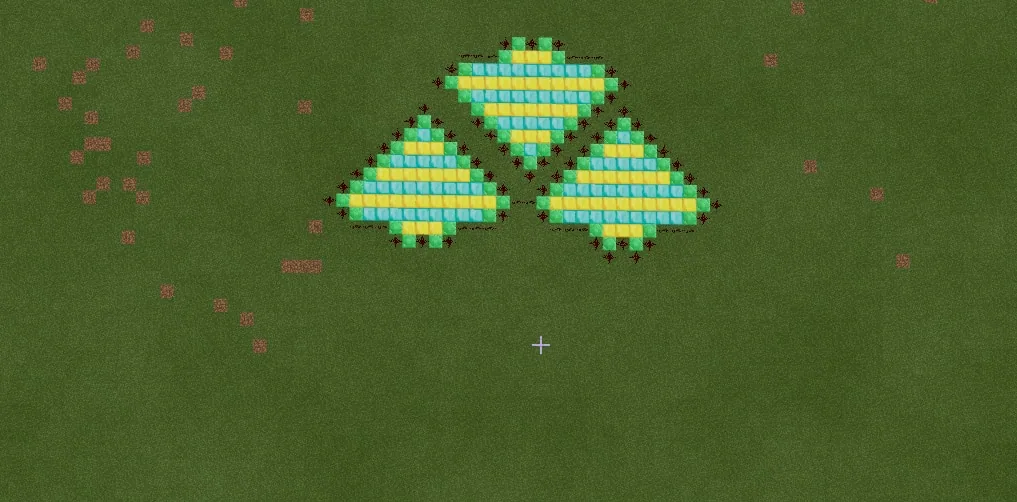
In this lesson, learners examine global examples, conduct research using a See-Think-Wonder framework, and plan their designs using graph paper and tissue paper scale indicators. Working in cooperative groups, they recreate a chosen motif in Minecraft and document its cultural significance using in-game writing tools.
Learning objectives
By the end of this lesson students will be able to:
- Identify geometric and artistic elements such as symmetry, repetition, variety, and contrast within global patterns.
- Research the historical context, beliefs, and living conditions reflected in regional motifs.
- Draft an outline of a selected pattern using graph paper and non-standard scale indicators.
- Reconstruct a cultural pattern in Minecraft and explain its meaning using writable boards or a book and quill.
Blocks and items used in this lesson


Key vocabulary
- Motif
- A distinctive decorative shape, design, or feature that repeats in art and carries cultural meaning.
- Symmetry
- A balanced arrangement where elements on either side of a dividing line mirror each other.
- Contrast
- The noticeable difference between elements, such as light and dark values or distinct shapes, to create visual interest.
- Scale
- The relative size of an object or design compared to a standard reference or measurement.
Before class
Lesson sequence
- Pattern Provocation and Visual Analysis
Display photos of patterns from around the world. Guide students to identify visual elements such as lines, shapes, colors, values, contrast, repetition, variety, and symmetry across the examples.
- Group Roles and See-Think-Wonder Research
Organize students into groups of five, assigning roles: Presenter, Time Keeper, Researcher, Scribe, and Observer. Provide images at each table. Groups write the country names in the center of large paper and record their observations under See, Think, and Wonder headings as they research the culture, beliefs, and environments linked to the patterns.
- Preliminary Drawing and Scale Planning
Each group selects one regional pattern to recreate. Students draw preliminary outlines on graph paper without coloring, using precut white tissue paper as an indicator to establish relative scale. Team members divide responsibilities for recreating specific shapes and sizes.
- Minecraft Building and Documentation
Students translate their paper drawings into blocks within Minecraft, adding color during the build. Using in-game writable boards or a book and quill, groups explain the cultural history, beliefs, and design elements represented by their finished pattern.
Assessment: success criteria
- Student accurately identifies contrast, repetition, variety, and symmetry in sample artworks.
- Student produces an initial paper outline that uses scale indicators to plan block sizes.
- Student builds a coherent pattern in Minecraft that reflects the researched cultural design.
- Student clearly explains the cultural context and history of the motif using in-game text tools.
Differentiation
Have students focus on simple outline drawings and use precut tissue paper directly as a physical guide to determine block dimensions.
Encourage students to analyze more complex composite patterns and detail deeper connections between a community's surroundings and their artistic motifs.
Knowledge check
5 questions to check understanding after the lesson. Tap an answer to see if it is right; the score appears at the end.
1Which set of design elements do students analyze when examining pattern photographs?
Answer: A. The lesson directs students to analyze patterns by identifying contrast, repetition, variety, and symmetry.
2What is the purpose of using precut white tissue paper during the drafting phase?
Answer: B. The source notes that precut white tissue paper is used as an indicator to help students decide on a relative scale.
3Which five group roles are assigned for the cooperative research activity?
Answer: C. The activity explicitly splits each five-student group into Presenters, Time Keepers, Researchers, Scribes, and Observers.
4Why are students instructed to only outline their preliminary drawings on paper?
Answer: C. The teacher prompt specifically instructs students to only outline drawings because they will color them later in Minecraft.
5How do students record their written cultural explanations inside Minecraft?
Answer: A. Students describe their completed patterns within the game using writable boards or a book and quill.
Frequently Asked Questions
How should student groups be organized if devices are limited?
The lesson is structured for groups of five sharing one laptop. Each member takes on a specific role: Presenter, Time Keeper, Researcher, Scribe, or Observer, ensuring everyone contributes equally to the research and planning.
What in-game items are used to provide the written explanation?
Students can use either writable boards or a book and quill to record their research findings and explain the cultural meaning of their pattern directly inside Minecraft.
Adapted from Patterns and motifs by meenakshi uberoi on Minecraft Education, last updated Dec 6, 2017. This classroom version, the timings and the quiz were written by 9Minecraft Education.