- Type
- Lesson plan
- Subject
- Computer Science & Coding
- Topics
- Technology
- Grade
- Primary (Grades 3-5)
- Ages
- Ages 8-10
- Includes
- Quiz: 5 questions
How do print, audio, and video advertisements persuade us, and how can we portray different media industries in a virtual world?
Overview
Media influences daily decisions through print, audio, and video channels. In this unit, learners examine how elements such as color palettes, typefaces, catchy jingles, and celebrity endorsements shape consumer behavior across platforms ranging from traditional radio broadcasts to modern social networks.
Working in collaborative teams, students translate their analytical insights into a virtual environment. Learners design roadside media headquarters within Minecraft, creating architectural spaces and visual signage that represent print, radio, and video production houses alongside busy transit routes.
Learning objectives
By the end of this lesson students will be able to:
- Identify and compare the three main categories of media: print, audio, and video.
- Analyze how advertisers apply colors, typography, music, and recognizable personalities to guide consumer choices.
- Collaborate in defined team roles to research, plan, and present an advertising concept.
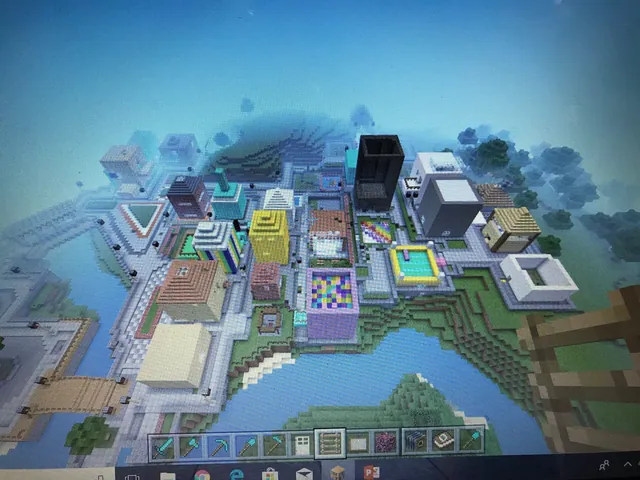
- Build a roadside world in Minecraft Creative mode featuring offices and signage for various media branches.
Blocks and items used in this lesson


Key vocabulary
- Print Media
- Informational or promotional materials distributed on paper, such as posters, newspapers, and pamphlets.
- Jingle
- A short, memorable tune or song used in audio and television advertisements.
- Tagline
- A concise, catchy slogan that helps consumers remember a specific brand or product.
- Advertising
- The practice of creating public notices to promote products, services, or ideas through various media channels.
Before class
Lesson sequence
- Visual and Audio Provocation
Present various company logos to the class and lead a guided discussion on how visual marks impact decision-making. Next, play recorded commercial jingles without video and ask learners to identify the advertised items while analyzing taglines, background music, and sound design.
- Media Investigation and Journaling
Guide students to examine how advertisements appear across daily life, including radio spots and digital sidebars on social media. Have learners record notes in their workbooks about how audio, visual, and print ads communicate with audiences, noting the influence of colors, fonts, and famous spokespeople.
- Team Research and Role Assignment
Distribute sample advertising pamphlets and organize learners into teams of four. Assign each member a designated role: Presenter, Timekeeper, Researcher, or Scribe. Groups research billboard designs and draft advertising concepts representing print, audio, and video offices.
- Poster Planning and Group Presentations
Teams compile their research and sketch a poster design that illustrates their proposed media offices. The designated group presenters share their ideas with the rest of the class to gather feedback before entering the digital workspace.
- Minecraft Media Office Construction
In Creative mode, groups create a world featuring visible traffic routes and roadside infrastructure. Students construct headquarters for print, audio, and video media, incorporating deliberate color schemes, signage, and structural elements planned during their research phase.
Assessment: success criteria
- Students accurately categorize examples into print, audio, or video media.
- Students explain how visual elements like color and font, or audio elements like jingles, influence buyers.
- Each group member actively carries out their designated role during research and planning.
- The completed Minecraft build clearly depicts traffic routes and distinguishable media offices with intentional design choices.
Differentiation
Provide a simplified graphic organizer listing specific color and font prompts to help learners plan their office posters before building.
Challenge advanced students to construct distinct interior studios for their Minecraft buildings, such as a radio recording booth or a video broadcast stage.
Knowledge check
5 questions to check understanding after the lesson. Tap an answer to see if it is right; the score appears at the end.
1Which of the following is considered an example of print media?
Answer: B. Pamphlets, posters, and flyers are physical printed materials, classifying them as print media.
2Why do advertisers frequently use catchy jingles and taglines in audio ads?
Answer: A. Audio advertisements rely on memorable sounds, music, and slogans to create recognition when no visuals are present.
3Which role in the four-person team is primarily responsible for recording notes and written plans?
Answer: D. The scribe is designated to write down notes, plans, and poster concepts for the group.
4What surrounding feature are students instructed to build alongside their media offices in Minecraft?
Answer: B. The activity directs students to design a world with visible traffic so their offices and billboards line the roadway.
5How can advertisers persuade consumers to trust or purchase a product?
Answer: B. Advertisers use recognizable figures, appealing color schemes, and repetition to influence buying decisions.
Frequently Asked Questions
Do students need a specific custom map file to complete the building activity?
No custom map download is required. Students can start in any standard Creative mode flat or infinite world to construct their roadways and media buildings.
How can students represent billboards or print posters inside Minecraft?
Learners can use colored concrete, wool blocks, banners, or in-game signs and slates to display typography, logos, and colorful promotional displays along their roadways.
Adapted from Media by Shweta Agarwal on Minecraft Education, last updated Oct 19, 2018. This classroom version, the timings and the quiz were written by 9Minecraft Education.