- Type
- Lesson plan
- Ages
- Ages 8-18
- Duration
- 3 hours
- Level
- Beginner
How does water move through the hydrological cycle across Earth's environments to support living things?
Overview
Water continuously moves across Earth through different states of matter and environments, traveling between oceans, mountains, rivers, and underground reservoirs to sustain life. Understanding this hydrological cycle helps students grasp environmental balance and the potential consequences of disruptions such as droughts or flooding.
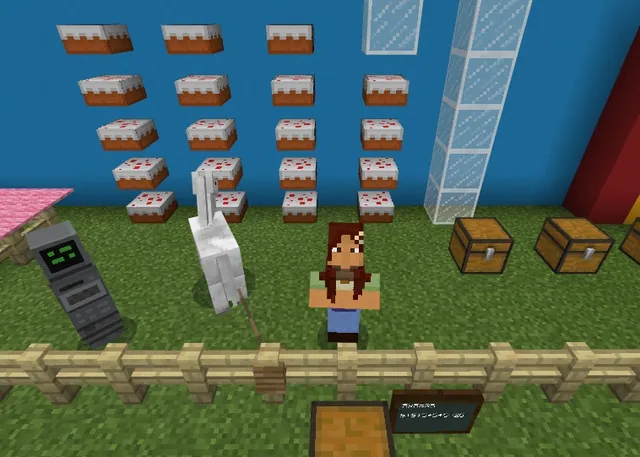
Using Minecraft Education, students navigate a themed world containing 10 distinct educational stations. At each station, they interact with non-player characters (NPCs) to observe specific stages of the water cycle, document their observations on worksheets, and synthesize their learning into a final visual presentation.
Learning objectives
By the end of this lesson students will be able to:
- Describe the 10 stages of the hydrological cycle and their role in sustaining life on Earth.
- Explain how water moves between oceans, mountains, rivers, and underground aquifers.
- Identify different forms of precipitation and their function in the hydrological cycle.
- Describe the role of plants in maintaining environmental moisture balance.
- Explain the importance of storing water in lakes and aquifers for humans, plants, and animals.
Blocks and items used in this lesson


Key vocabulary
- Hydrological Cycle
- The continuous movement of water on, above, and below the surface of the Earth.
- Precipitation
- Water released from clouds in forms such as rain, snow, sleet, or hail that falls to the ground.
- Aquifer
- An underground layer of rock, sand, or gravel that holds and stores water.
- Groundwater
- Water that collects or flows beneath the Earth's surface in soil or rock crevices.
Before class
Lesson sequence
Suggested timing: about 180 minutes in total.
- Introduction and Anticipation30 min
Introduce the water cycle through diagrams and videos. Use a KWL chart or word wall to activate prior knowledge, discuss the importance of water, and generate student questions.
- Minecraft Set-Up20 min
Guide students to log in to Minecraft Education, select their avatars, and load the Hydrological Cycle world. Ensure students understand how to move and interact with the environment.
- In-Game Station Exploration60 min
Students visit all 10 stations across the world, talking to NPCs at each stop to learn about the stages of the water cycle. Students complete their station worksheets as they navigate the map.
- Group Reflection and Discussion30 min
Bring the class together to discuss findings from the stations. Prompt students to talk about water storage, conservation, and the environmental impacts of disruptions like floods or droughts.
- Culminating Project and Presentation40 min
Students create a visual representation of the water cycle that shows how water moves across environments, then present their completed work to the class.
Assessment: success criteria
- Accurate completion of the 10-station worksheet detailing each phase of the water cycle.
- Ability to explain verbally or in writing how water travels from oceans to mountains, rivers, and aquifers.
- Active participation in group discussions concerning water conservation and cycle disruptions.
- Creation and clear presentation of a comprehensive visual representation of the water cycle.
Differentiation
Pair students together to navigate the stations and provide pre-labeled diagram templates to guide their worksheet responses.
Have students propose actionable conservation strategies to address real-world cycle disruptions such as severe drought or regional flooding.
Knowledge check
5 questions to check understanding after the lesson. Tap an answer to see if it is right; the score appears at the end.
1How many stations do students visit in the Minecraft world to learn about the water cycle?
Answer: C. The lesson specifically directs students to visit 10 stations hosted by NPCs to explore each stage of the cycle.
2Which major journey of water is explored throughout this lesson?
Answer: A. The curriculum focuses on the continuous path of water moving from oceans to mountains, rivers, and underground reservoirs.
3According to the lesson objectives, what role do plants play in the hydrological cycle?
Answer: B. One of the primary objectives is explaining how plants help maintain moisture balance in the environment.
4Why is the storage of water in lakes and aquifers important?
Answer: A. Aquifers and lakes hold stored water that is vital for supporting humans, plants, and animals.
5What is the final culminating activity for students in this lesson?
Answer: C. Students conclude the lesson by creating and sharing a visual model that showcases their understanding of the water cycle.
Resources
- Lesson package (.zip)Everything the author attached to this lesson in one download.
- Worksheet alternative to in-game learning journalWorksheet alternative to in-game learning journal
- Water Cycle presentation for anticipatory setSomething to inform students before entering experience
- Common Core StandardsCommon Care Related Standards
- Next Gen Science StandardsRelated NG Science Standards
- ISTE Student StandardsRelated ISTE Student Standards
Frequently Asked Questions
How can this three-hour lesson fit into a typical daily schedule?
The lesson breaks cleanly into smaller 20- to 30-minute modules that can be taught across multiple class periods, separating the introductory research, in-game exploration, and final project.
What options exist if students cannot use digital journals inside Minecraft?
The lesson provides a printable worksheet alternative that students can complete on paper at each station while interacting with the NPCs.
Adapted from Make It Rain! The Hydrological (Water) Cycle in Minecraft Education by Logics Academy on Minecraft Education, last updated Aug 29, 2023. This classroom version, the timings and the quiz were written by 9Minecraft Education.