- Type
- Lesson plan
- Subject
- Art, Music & Design
- Topics
- Art and Design
- Ages
- Ages 8-13
What techniques define Piet Mondrian's abstract art, and how do artists express ideas through non-representational forms?
Overview
Abstract art shifts focus away from realistic depictions, using structured shapes, primary palettes, and geometric arrangements to convey ideas. In this lesson, students explore the life and methods of Dutch painter Piet Mondrian to understand how cultural background and stylistic choices influence historic art movements.
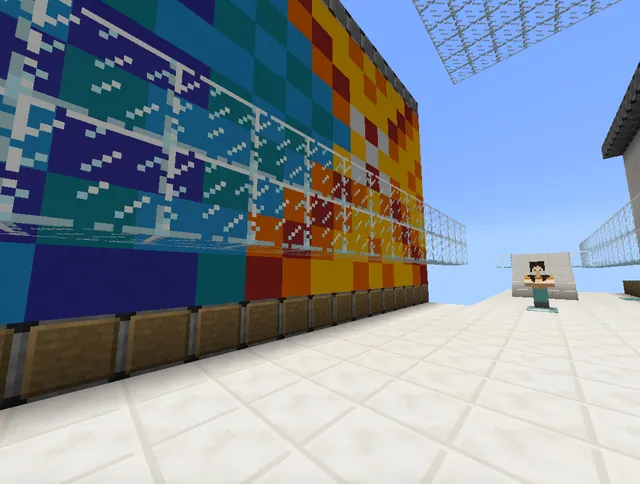
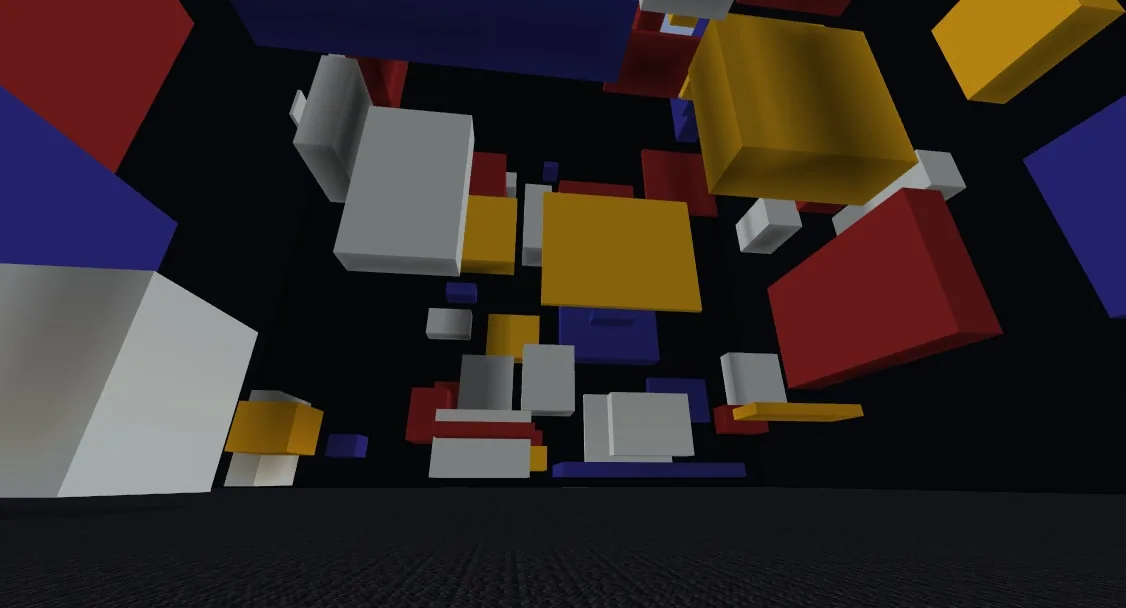
Students begin inside a Minecraft world gallery where an in-game representation of Piet Mondrian introduces his abstract works. After observing these digital installations from different perspectives and discussing his techniques, students transfer their observations to physical sketchbooks using rulers and color media.
Learning objectives
By the end of this lesson students will be able to:
- Identify the distinctive characteristics and techniques of Piet Mondrian's abstract artwork.
- Re-create an abstract piece inspired by Mondrian using sketchbooks, rulers, and coloring materials.
- Present finished artwork to classmates while describing the artistic methods used.
- Write an artist statement that reflects on abstract techniques and explains creative decisions.
Blocks and items used in this lesson


Key vocabulary
- Abstract Art
- Art that expresses ideas through shapes, lines, and colors rather than showing realistic objects or people.
- Craftsmanship
- The quality of skill, neatness, and care shown in making an artwork.
- Artist Statement
- A written reflection where an artist explains their techniques, inspirations, and creative choices.
Before class
Lesson sequence
- In-Game Gallery Exploration
Direct students to enter the Minecraft world and travel to the Piet Mondrian exhibit. Students listen to Mondrian introduce abstract art and spend time examining his work from multiple viewing angles.
- Group Analysis and Discussion
Gather students to analyze Mondrian's style as a class. Facilitate a discussion comparing his abstract approaches with other art forms they have studied, highlighting his use of structure and color.
- Sketchbook Re-creation
Distribute sketchbooks, rulers, and paints or markers. Students draft and complete their own physical re-creations of Mondrian's abstract masterpiece across Days 5 and 6, focusing on craftsmanship and technique.
- Presentation and Written Reflection
Students share their finished re-creations with peers, explaining the techniques they applied. To conclude, each student writes an artist statement reflecting on what they learned about Mondrian and their creative process.
Assessment: success criteria
- The student re-creates an abstract artwork demonstrating intentional craftsmanship with rulers and drawing materials.
- The student actively participates in analyzing and comparing the visual qualities of Mondrian's abstract art.
- The student articulates their creative choices and techniques during peer presentations.
- The student completes an artist statement using art vocabulary to reflect on their learning and methods.
Differentiation
Deliver instructions both visually and verbally, allow students to collaborate in small groups, and extend project deadlines as needed.
Prompt advanced students to design an original abstract composition inspired by Mondrian, make a second landscape or fresco, or research another famous artist.
Knowledge check
5 questions to check understanding after the lesson. Tap an answer to see if it is right; the score appears at the end.
1Which artist and style do students study during this lesson?
Answer: D. The lesson specifically focuses on Piet Mondrian and his abstract art techniques.
2How does the lesson recommend teachers handle classical nude artworks present in the gallery?
Answer: A. The teacher notes indicate that teachers can either remove those pieces or censor them by replacing the blocks.
3Which physical tools are required for the student art activity?
Answer: C. The supply list requires sketchbooks, rulers, paints or markers, and images of Mondrian's paintings.
4What written component must students produce alongside their completed artwork?
Answer: B. Students write an artist statement and reflection explaining what they learned and the choices they made.
5What is an appropriate extension activity for high-ability learners in this lesson?
Answer: D. Differentiation options allow high-ability students to create an original abstract piece, make another fresco or landscape, or research other artists.
Resources
- Lesson package (.zip)Everything the author attached to this lesson in one download.
- Influential Artists RubricResource
- Influential Artists Student Self AssessmentResource
- Lesson worldOpens the world page in Minecraft Education (sign-in with a school account may be needed).
Frequently Asked Questions
How much class time does this lesson take?
This lesson is designed as Lesson 2 of a four-part unit and spans across Day 5 and Day 6, giving students sufficient time to explore the gallery, discuss techniques, and finish their physical sketchbook pieces.
Is the artwork completed in Minecraft or on paper?
Minecraft serves as the viewing gallery where students examine Mondrian's pieces from multiple angles, but the hands-on artwork is created offline in sketchbooks using rulers, paints, or markers.
How does this lesson connect with other academic subjects?
Writing the reflective artist statement connects to language arts standards, while studying the historical and cultural context of classic artwork links to social studies.
Adapted from Influential Artists: 2 of 4 by Phygital Labs on Minecraft Education, last updated Jul 16, 2025. This classroom version, the timings and the quiz were written by 9Minecraft Education.