- Type
- Lesson plan
- Grade
- Primary (Grades 3-5)
- Ages
- Ages 8-10
- Includes
- Quiz: 5 questions
How can we design a community village that produces balanced, healthy food to support our growth?
Overview
Understanding balanced nutrition and where our food comes from is essential for healthy personal growth. In this lesson, students explore the roles of key nutrients, differentiate between everyday foods and occasional treats, and examine how farming provides nutritious staples such as crops and lean proteins.
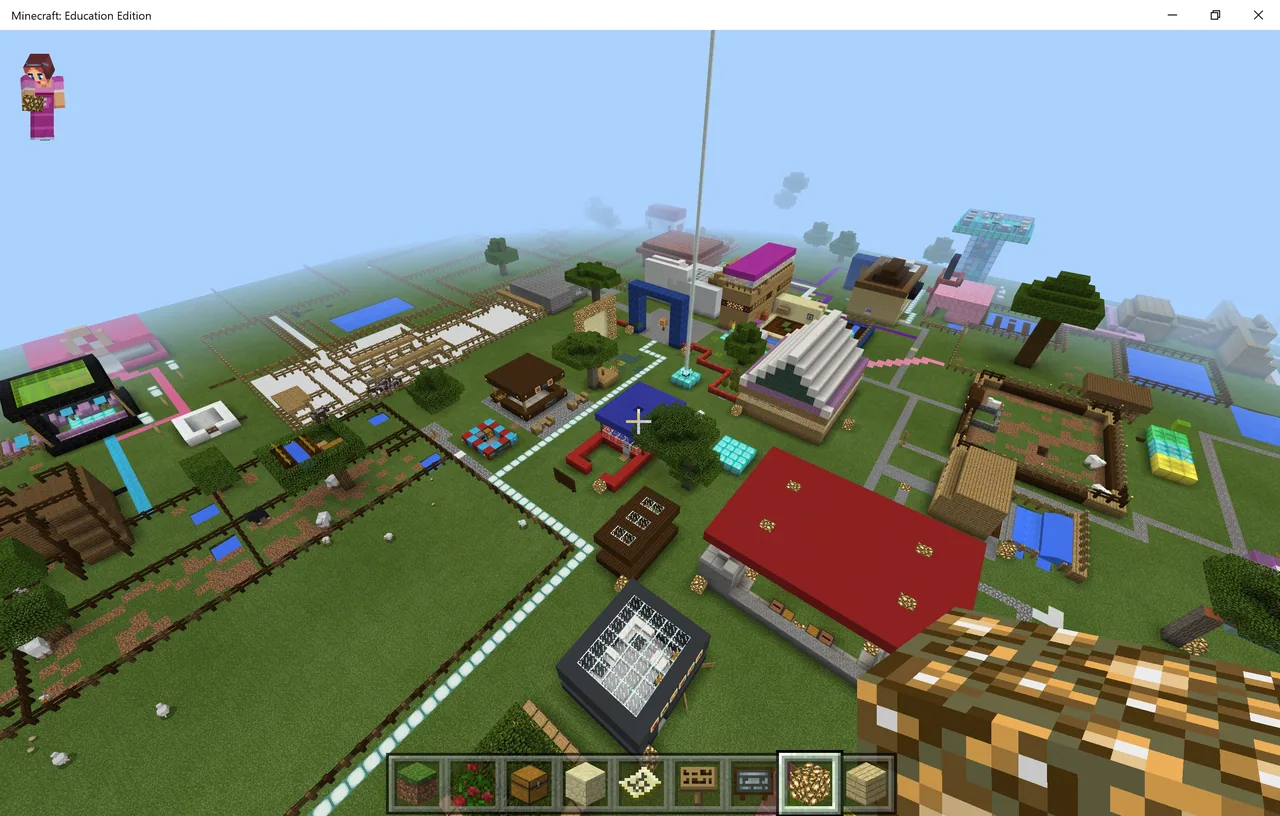
Working collaboratively in Minecraft, learners translate this dietary knowledge into a shared village layout. Teams plan, review, and construct farms and food-production spaces that encourage balanced eating, documenting their work through photos and peer feedback.
Learning objectives
By the end of this lesson students will be able to:
- Categorize common foods into nutritional groups such as proteins, carbohydrates, and fats.
- Identify where everyday healthy foods originate, including crops and animal farms.
- Plan and construct a functional healthy food village cooperatively in Minecraft.
- Explain and justify how village features support balanced, healthy eating choices.
Blocks and items used in this lesson


Key vocabulary
- Proteins
- Nutrients that help our bodies grow and repair, found in foods like eggs and lean meats.
- Carbohydrates
- Nutrients that provide our bodies with energy to move and learn.
- Everyday Foods
- Nutritious foods that our bodies need regularly to grow strong and stay healthy.
- Occasional Foods
- Foods that should be eaten only sometimes because they do not supply the regular nutrients needed for growth.
Before class
Lesson sequence
- Warm-up: Food Groups and Sources
Lead a class discussion where students brainstorm healthy foods and categorize them into groups such as proteins, carbohydrates, fats, and sugars. Ask learners where these foods come from, such as free-range chicken farms providing eggs and lean protein, and discuss the balance between everyday and occasional foods.
- Group Village Planning
Organize students into small collaborative teams to design an aspect of a healthy food village. Groups plan what to build, determine how large their structures will be, and record their ideas using paper sketches or in-game signs.
- Peer Feedback and Critique
Gather all groups together to share their village proposals. Students think critically about each team's ideas, offer constructive feedback, and decide together which elements best promote healthy eating before construction begins.
- Minecraft Construction
Teams enter Minecraft to construct their planned farms, crop fields, and village infrastructure. Throughout the build, students practice digital citizenship, communicate to solve problems, and take photographs documenting their building process.
- Presentation and Justification
Groups present their finished village sections to the class. Students explain and justify their design choices, showing how their village supports healthy choices and personal growth.
Assessment: success criteria
- Student accurately sorts foods into nutritional groups and identifies their production origins.
- Group produces a clear planning document on paper or with in-game signs before building.
- Student demonstrates constructive feedback and positive digital citizenship during group work.
- Photographic records show distinct stages of the village construction process.
- Student provides a clear justification for how their build supports healthy eating habits.
Differentiation
Provide a reference sheet illustrating key food groups and basic farm examples to guide planning.
Ask learners to incorporate a wider variety of specialized food sources and clearly explain the balance between everyday and occasional items in their village.
Knowledge check
5 questions to check understanding after the lesson. Tap an answer to see if it is right; the score appears at the end.
1Which nutrient helps our bodies grow and repair, and can come from sources like free-range eggs?
Answer: B. Proteins provide essential building blocks for body growth and repair, found in foods like eggs and lean meats.
2Why do student groups share their village plans with the class before building?
Answer: A. Presenting plans enables classmates to examine concepts critically and offer helpful feedback.
3What should students do during construction to document their progress?
Answer: C. Taking photographs allows students to record and demonstrate their planning and building process.
4What type of food production should the village focus on to promote good health?
Answer: D. The purpose of the village is to provide everyday nutritious foods that help students grow and stay healthy.
5How can students demonstrate their planning process before building in Minecraft?
Answer: B. Learners can demonstrate their planning in a medium of their choice, such as on paper or using signs in the world.
Frequently Asked Questions
Is a pre-made downloadable world required for this lesson?
No special world download is needed; students can build their village in any standard Minecraft world.
How can students capture evidence of their build?
Students can take photographs during the building process using in-game cameras or standard device screenshot tools.
How do students show their planning before building?
Teams can choose how to show their plan, such as sketching on paper or placing labeled signs directly in the Minecraft build area.
Adapted from Healthy Food Village by Adele Warburton on Minecraft Education, last updated Dec 27, 2017. This classroom version, the timings and the quiz were written by 9Minecraft Education.