- Type
- Lesson plan
- Subject
- Science
- Grade
- Primary (Grades 3-5)
- Ages
- Ages 8-10
- Duration
- 45 min
- Level
- Beginner
How do plants and animals depend on one another and their environment to survive in a balanced ecosystem?
Overview
Ecosystems rely on dynamic relationships where plants and animals meet their survival needs. Plants take in materials from their surroundings to grow, while animals depend on plants and other living things for nourishment, connecting organisms into interrelated food webs.
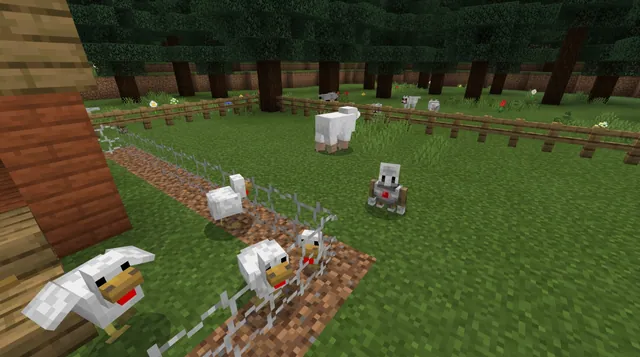
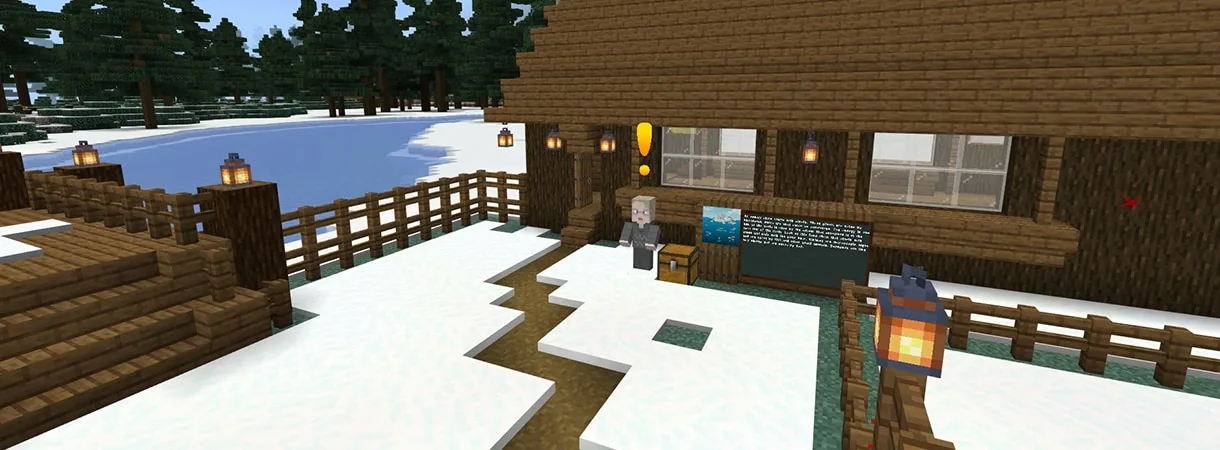
Using the downloadable Habitats world, students observe diverse organisms within their environments. By exploring these virtual spaces, learners investigate how living things rely on each other and trace the flow of energy from sunlight and plant life through an entire ecosystem.
Learning objectives
By the end of this lesson students will be able to:
- Explain how plants gain materials to live and grow.
- Describe how energy transfers between organisms across food webs.
- Trace the original source of food web energy back to the sun and plants.
- Explain why organisms inhabit environments where their survival needs are met.
Blocks and items used in this lesson


Key vocabulary
- Ecosystem
- A community of living organisms interacting with one another and their physical environment.
- Food Web
- A network of interconnected feeding relationships showing how energy moves among organisms.
- Habitat
- The natural environment where a plant or animal finds what it needs to live.
- Energy
- The power that organisms need to grow, survive, and move, originating from sunlight.
Before class
Lesson sequence
Suggested timing: about 45 minutes in total.
- Warm-up and Discussion10 min
Introduce the concept of ecosystems. Discuss what living things require to survive, prompting students to consider where plants obtain growth materials and where animals get their energy.
- Habitat Exploration20 min
Direct students into the downloadable Habitats Minecraft world. Have them explore different regions to identify various plants and animals, noting where each organism lives and what resources surround it.
- Food Web Mapping10 min
Reconvene as a class to chart how energy travels through the observed habitats. Trace feeding relationships step by step, connecting animals back to plants and ultimately to the sun.
- Reflect and Wrap-up5 min
Lead a closing conversation summarizing how organisms depend on balanced ecosystems to meet their daily needs and thrive.
Assessment: success criteria
- Student correctly traces the path of energy in a food web back to the sun and plant life.
- Student explains why animals require energy from food sources to survive.
- Student identifies relationships that help keep an ecosystem balanced.
- Student describes why specific organisms live in environments that suit their needs.
Differentiation
Provide a simple three-step chain organizer to help students sketch basic feeding relationships before analyzing complex food webs.
Ask students to predict and describe the impact on an ecosystem if a key plant or animal species were removed.
Knowledge check
5 questions to check understanding after the lesson. Tap an answer to see if it is right; the score appears at the end.
1Where does the energy in a typical food web originally come from?
Answer: C. Energy in food webs traces back to sunlight, which plants capture to produce food and pass on to other organisms.
2Why do animals need to eat food in an ecosystem?
Answer: A. Animals cannot produce their own energy and must consume plants or other animals to meet their energy needs.
3What is an ecosystem?
Answer: D. An ecosystem includes living organisms and the interactions they share with each other and their surroundings.
4Why do organisms live in particular habitats?
Answer: B. Living things live where they can find the food, water, and conditions necessary to survive.
5How is energy passed between organisms in a food web?
Answer: C. Energy moves through food webs when consumers feed on producers or other consumers.
Resources
- Habitats Teaching GuideUse this guide in conjunction with the Habitats world in Minecraft.
- Lesson worldOpens the world page in Minecraft Education (sign-in with a school account may be needed).
Frequently Asked Questions
Do students need advanced Minecraft building skills for this lesson?
No, this lesson is beginner-friendly and focuses primarily on exploration and scientific observation rather than complex construction.
Where can teachers find extra support materials for this lesson?
Teachers can refer to the Habitats Teaching Guide mentioned in the lesson source for additional instructional guidance.
Adapted from Habitats by K12 Inc. on Minecraft Education, last updated Jul 21, 2025. This classroom version, the timings and the quiz were written by 9Minecraft Education.