- Type
- Lesson plan
- Subject
- Math
- Topics
- Math & Economics
- Ages
- Ages 11-13
- Duration
- 1 hour
- Level
- Beginner
How do my personal values guide my financial decisions, and how will the habits I build today impact my future?
Overview
In this culminating lesson, students pause to evaluate the economic choices they made across their gameplay journey. By examining how they earned money, managed bank accounts, prioritized spending, and purchased their bicycle, learners link economic concepts to their own identities and long-term habits.
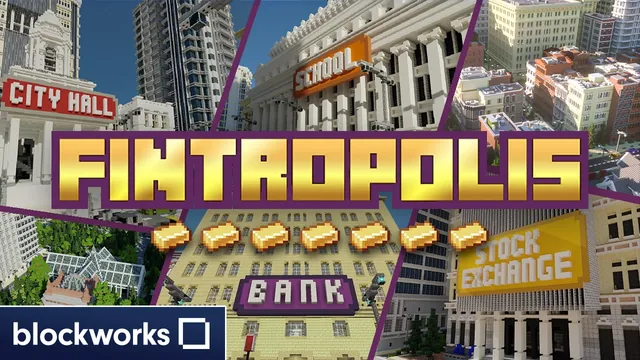
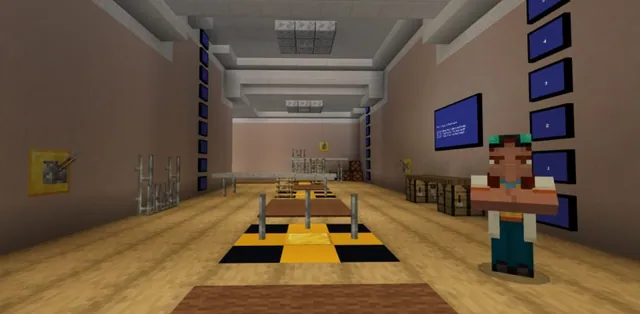
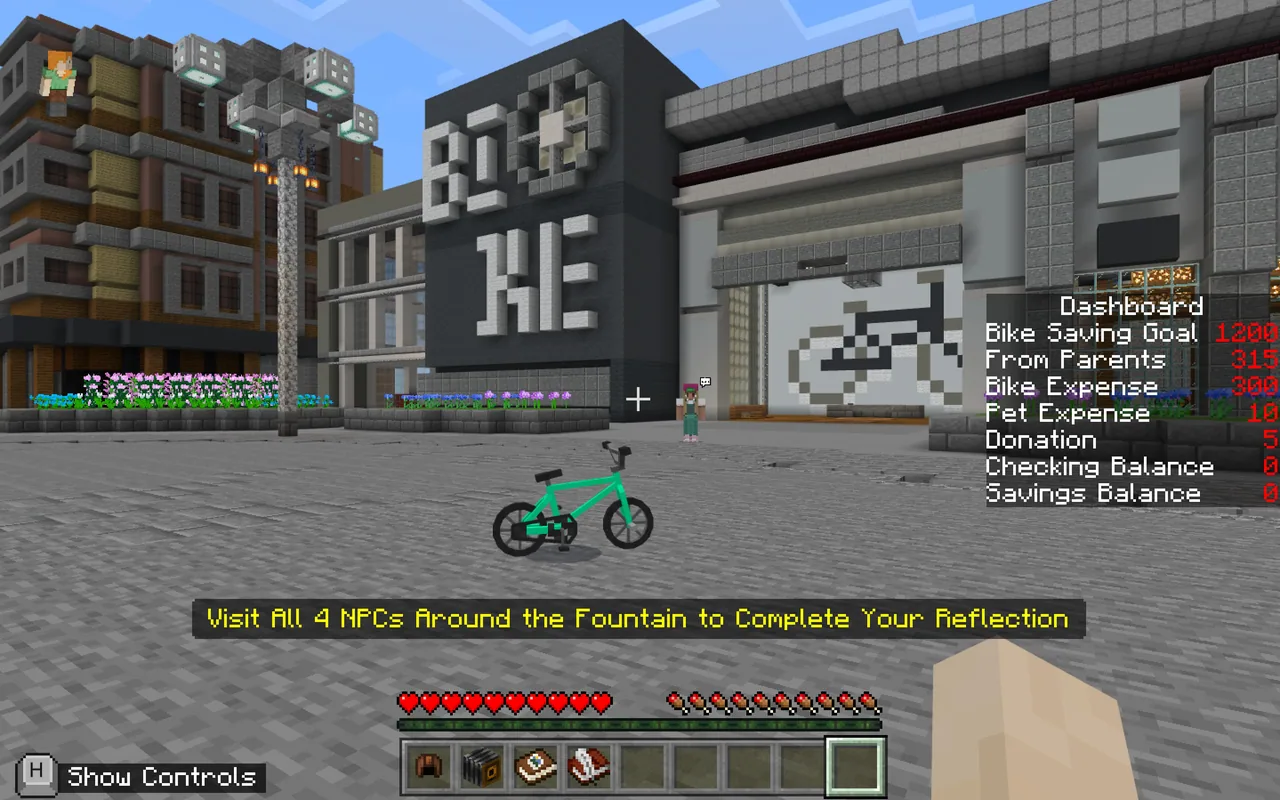
Students return to key locations in the Minecraft world, including the job arena, bank, shopping mall, and bike shop. Interacting with non-player characters at each site, they capture screenshots or record walkthrough reflections to analyze their decisions and assess how early financial habits shape future outcomes.
Learning objectives
By the end of this lesson students will be able to:
- Identify five to ten personal values and discuss how they influence spending and saving habits.
- Retrace in-game decisions at four key locations to evaluate past financial behaviors.
- Create a digital or print portfolio answering core reflection questions using captured gameplay images or video.
- Explain how financial choices made in middle school can have lasting effects in adulthood.
Blocks and items used in this lesson


Key vocabulary
- Personal Values
- Core beliefs and priorities that guide how an individual chooses to spend time, energy, and money.
- Checking Account
- A bank account designed for regular deposits, withdrawals, and everyday purchases.
- Savings Account
- A bank account intended to set aside money for short-term or long-term future goals.
- Needs and Wants
- Needs are items essential for survival and daily functioning, while wants are non-essential items that provide comfort or entertainment.
Before class
Lesson sequence
Suggested timing: about 60 minutes in total.
- Values Brainstorm10 min
Introduce the lesson by asking students to research personal values and list five to ten principles that reflect their priorities. Have them partner up to discuss how these identified values influence saving and spending choices in everyday life.
- In-World Site Visits15 min
Direct learners to load into the world and head to the city center or their in-game home. Students locate the four non-player characters stationed outside the job arena, bank, shopping mall, and bike shop to review the reflection prompts assigned to each location.
- Documenting Decisions20 min
Students capture evidence of their financial journey using the in-game camera or a screen-recording tool. They record responses to each station prompt, linking their original in-game actions back to their personal values.
- Option A: Record a screencast explaining answers aloud.
- Option B: Import camera photos into a digital notebook to write out responses.
- Option C: Print photos and write journal reflections by hand.
- Synthesis and Sharing15 min
Learners answer the final reflection questions regarding how middle school habits influence adulthood and what actions they would change. Collect projects through a class sharing wall or digital platform for peer review.
Assessment: success criteria
- The student lists personal values and demonstrates how they relate to in-game financial decisions.
- The portfolio includes visual or video documentation from all key city locations: job arena, bank, shopping mall, and bike shop.
- The final reflection clearly articulates how current habits can influence future adult goals.
Differentiation
Allow students to record verbal responses via screencasting tools instead of writing lengthy text entries.
Have students build an adult vision board time-capsule with an aspirational letter to their future selves or interview an adult about their financial journey.
Knowledge check
5 questions to check understanding after the lesson. Tap an answer to see if it is right; the score appears at the end.
1What should students research and identify before beginning their in-game reflections?
Answer: B. Students research and compile a list of 5 to 10 personal values before visiting the reflection NPCs.
2Which four locations do learners revisit to reflect on their financial journey?
Answer: C. The four reflection NPCs are stationed at the job arena, bank, shopping mall, and bike shop.
3Why might an individual deposit more money into savings than the exact price of an intended purchase?
Answer: A. Saving beyond the base cost of an item builds security for unexpected costs and fosters long-term financial health.
4How can students document their reflections according to the lesson activities?
Answer: C. The lesson permits verbal screencasting, digital notebook entries, or printed hands-on journals with in-game photos.
5What is one extension activity suggested for assessing student performance beyond class?
Answer: A. The assessment ideas suggest interviewing adult family members or friends regarding their financial decisions over time.
Resources
- Lesson package (.zip)Everything the author attached to this lesson in one download.
- Printable version of lesson 5: It's PersonalPDF
Frequently Asked Questions
Do students need to present their projects live in front of the whole class?
Not necessarily. Presentations can be delivered aloud, shared digitally via collection tools like Wakelet, or submitted as physical portfolios to accommodate different learning preferences and time constraints.
What if a student did not complete the earlier financial literacy lessons?
Students should ideally complete lessons 1 through 4 first. If that is not possible, partner them with a peer who completed the sequence so they can analyze the simulated choices and answer the reflection prompts collaboratively.
Adapted from Financial Literacy 5: It's Personal by Phygital Labs on Minecraft Education, last updated Feb 28, 2025. This classroom version, the timings and the quiz were written by 9Minecraft Education.