- Type
- Lesson plan
- Grade
- Early years (Pre-K to Grade 2)Primary (Grades 3-5)Middle school (Grades 6-8)High school (Grades 9-12)
- Ages
- All ages
- Duration
- More than 3 hours
- Level
- Intermediate
- Skills
- CharacterCitizenshipCollaborationCommunicationCreativityCritical thinkingProject Based Learning
- Includes
- Quiz: 5 questions
How can the themes of Mobility, Opportunity, and Sustainability inspire creative solutions to global challenges?
Overview
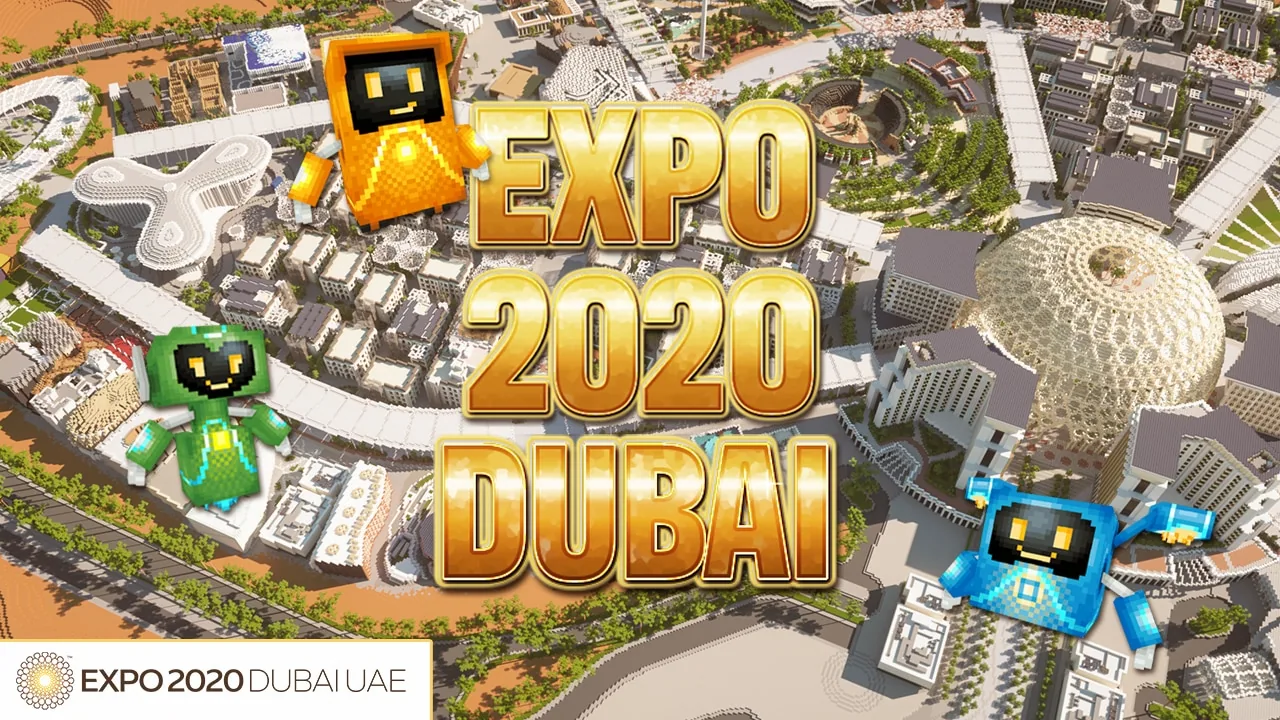
The Expo 2020 Dubai educational program introduces students to real-world global challenges and innovations organized under three primary themes: Mobility, Opportunity, and Sustainability. Spanning disciplines across technology, mathematics, economics, and art, the curriculum addresses topics ranging from basic coding and habitat preservation to human migration, artificial intelligence, and circular economic systems.
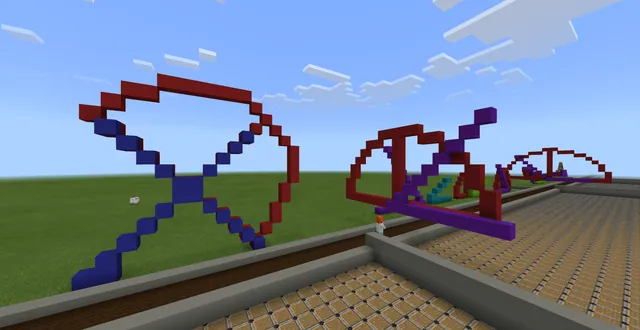
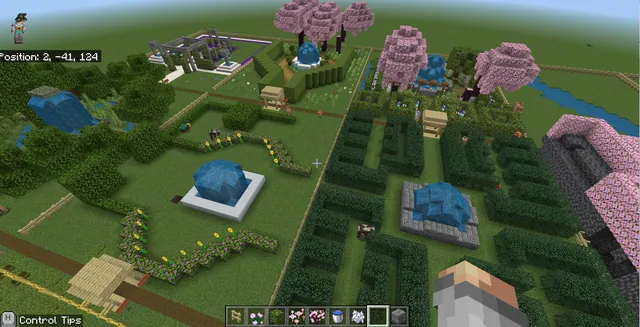
Using a recreation of the Expo 2020 Dubai site, learners examine existing architectural structures and thematic exhibits to conduct investigations. Working through four structured pedagogical stages, students investigate key concepts, record observations, consolidate their insights, and complete custom creative builds directly inside the virtual environment.
Learning objectives
By the end of this lesson students will be able to:
- Investigate core concepts within the three Expo themes of Mobility, Opportunity, and Sustainability.
- Examine existing exhibits and structures across the Expo 2020 site to gather and interpret topic data.
- Compare human and technological systems, such as communication styles, artificial intelligence, and building materials.
- Construct original builds or exhibitions that reflect personal culture, design needs, or sustainable practices.
Blocks and items used in this lesson


Key vocabulary
- Opportunity Cost
- The potential benefits or alternatives an individual gives up when choosing one course of action over another.
- Circular Economy
- An economic pattern designed to minimize waste by reusing, recycling, and continually using resources.
- Data Visualisation
- The graphic representation of data and information to make patterns easier to see and interpret.
- Machine Learning
- A branch of artificial intelligence where computers learn to think, react, and process tasks using data.
Before class
Lesson sequence
Suggested timing: about 210 minutes in total.
- Engage45 min
Introduce learners to the core topic and essential vocabulary for the chosen lesson. Present guiding questions related to the overarching Expo theme—Mobility, Opportunity, or Sustainability—to establish baseline understanding.
- Explore60 min
Direct students into the Expo 2020 environment to tour relevant pavilions and architectural exhibits. Learners investigate structural details, gather research notes, and document observations tied to their designated topic.
- Learn45 min
Students step back to synthesize their findings and reflect on guiding prompts. Through class discussion or written responses, learners evaluate concepts such as habitat preservation, opportunity costs, communication types, or economic models.
- Create60 min
Learners apply their conceptual understanding by designing and building a focused project within the environment. Projects range from coding an Agent or visualising data to constructing an art exhibit, ideal classroom, or circular sustainability model.
Assessment: success criteria
- Student accurately identifies key principles of the chosen theme (Mobility, Opportunity, or Sustainability).
- Student completes observations and research based on the Expo 2020 site exhibits.
- Student constructs a purposeful build or computational solution that addresses the specific lesson criteria.
- Student articulates the social, environmental, or economic implications of their project.
Differentiation
Focus learners on a single, concrete objective such as identifying communication forms or recording basic visual data from an exhibit.
Challenge students to evaluate complex trade-offs, such as analyzing the life-cycle impacts of linear versus circular economic models.
Knowledge check
5 questions to check understanding after the lesson. Tap an answer to see if it is right; the score appears at the end.
1Which three core themes organize the Expo 2020 Dubai curriculum?
Answer: B. The source identifies the three Expo themes as Mobility, Opportunity, and Sustainability.
2What tool do students aged 6-10 use to learn basic coding skills in the Agent Action lesson?
Answer: A. Lesson 1 specifies learning basic coding skills using Microsoft MakeCode.
3What is the primary topic of Lesson 6 for learners aged 11-15?
Answer: D. Lesson 6 focuses on understanding opportunity cost and examining daily life decisions.
4Which four stages form the instructional structure for every Expo 2020 lesson?
Answer: C. The teacher prep notes divide every lesson into four clear stages: Engage, Explore, Learn, and Create.
5In Lesson 9 (Ages 16-18), what concept do students compare with linear economic models?
Answer: B. Lesson 9 teaches circular sustainability and asks students to consider circular versus linear economic patterns.
Frequently Asked Questions
What age groups are covered across the nine Expo 2020 lessons?
The curriculum provides tailored lessons for three distinct age bands: ages 6-10, ages 11-15, and ages 16-18, offering one lesson per theme for each band.
Do students need prior coding experience before starting these lessons?
The program is marked at an intermediate experience level overall, but early lessons such as Agent Action introduce foundational coding concepts using Microsoft MakeCode.
How does student work connect directly to the Expo 2020 site?
Each lesson links back to the site by having students investigate existing Expo pavilions and exhibits or construct new structures and models within the virtual world.
Adapted from Expo 2020 Dubai by BlockWorks on Minecraft Education, last updated Oct 12, 2021. This classroom version, the timings and the quiz were written by 9Minecraft Education.