How can historical heraldic symbols and colors be used to represent our unique personal identity and values?
Overview
In this cross-curricular project, students explore personal identity and family heritage through the lens of ancient heraldry. After researching the historical significance of traditional colors and symbols, learners design a personal Coat of Arms that expresses their character, values, and interests.
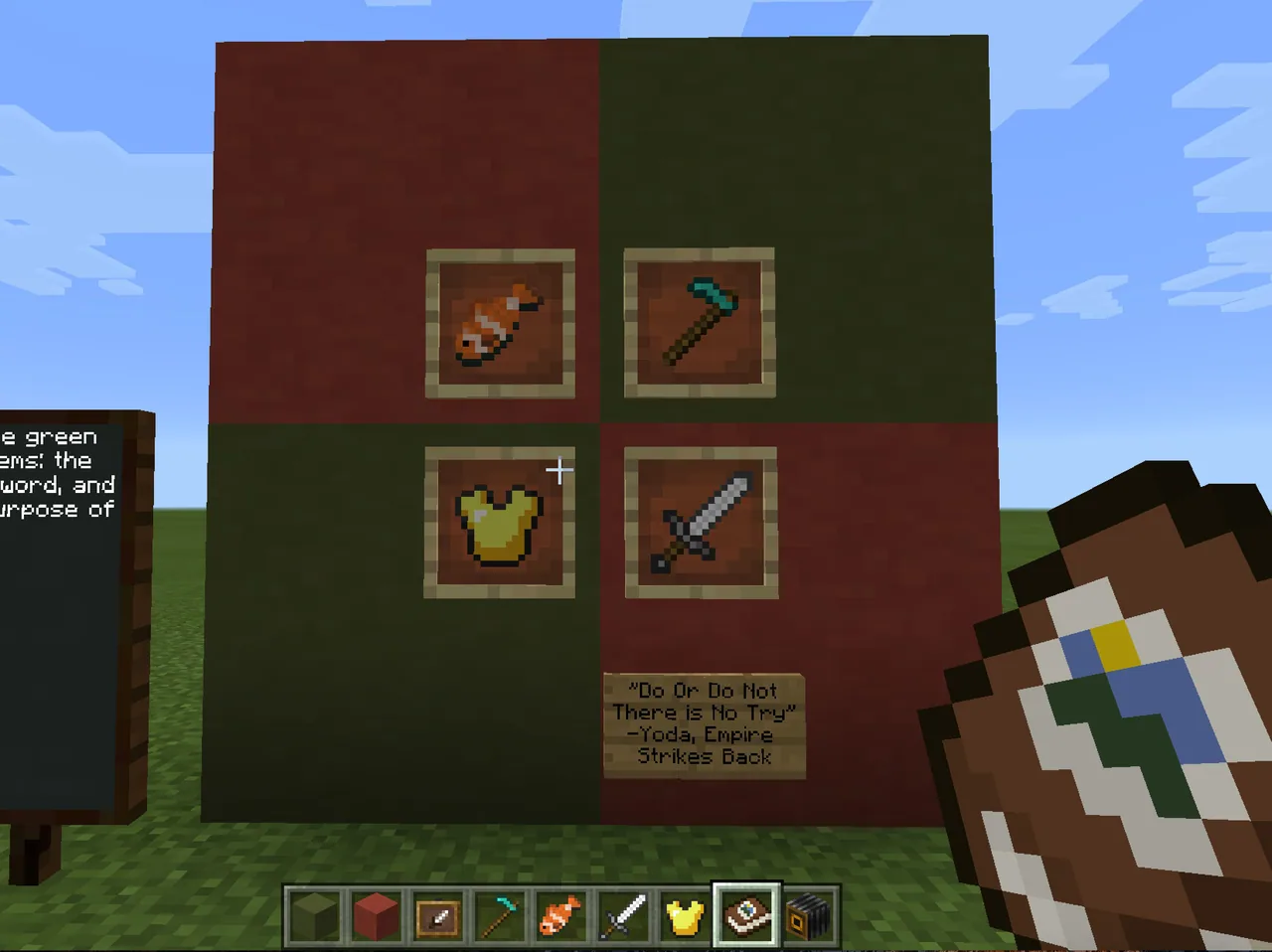
Using Minecraft Education in a creative superflat world, students translate their sketches into a segmented 4x4 wall made from stained clay or dyed wool. They mount framed symbolic items, establish a personal or family motto, document their creative reasoning using the camera and portfolio, and provide structured feedback to classmates.
Learning objectives
By the end of this lesson students will be able to:
- Research historical heraldic symbols and traditional color meanings.
- Design and construct a personal Coat of Arms wall in Minecraft featuring quadrants and framed items.
- Document and explain the reasoning behind chosen colors, symbols, and mottos through written text.
- Provide constructive feedback on classmates' heraldic creations.
Blocks and items used in this lesson


Key vocabulary
- Coat of Arms
- A traditional heraldic visual design unique to an individual, family, or organization.
- Heraldry
- The historical system and practice of designing, granting, and recording coats of arms.
- Quadrant
- One of four equal sections that make up a divided heraldic shield or wall.
- Motto
- A short phrase or sentence chosen to express the core beliefs or guiding values of an individual or family.
Before class
Lesson sequence
- Heraldry Research and Paper Planning
Students review research resources on historical heraldry to understand the meanings behind specific colors and imagery. On a sheet of paper, each student drafts a Coat of Arms, selecting symbols, colors, and a personal or family motto while recording the reasons for every choice.
- Base Wall Construction
Students enter a creative, superflat world. Using either dyed wool or stained clay, learners construct a 4x4 wall partitioned into four 2x2 quadrants. The teacher demonstrates where to find these materials in the inventory as needed.
- Item Framing and Documentation
Students place an item frame in each of the four center-most blocks of the wall and insert items that reflect their personal traits or interests. Learners use the camera to photograph their build at different stages and record reflections in their portfolio.
- Adding Mottos and Written Rationales
Students place a sign on or directly in front of the wall displaying their personal or family motto. Next, using an in-game slate, board, poster, or physical paper, students write an extended explanation justifying each chosen color and item.
- Peer Review and Gallery Walk
The teacher reviews guidelines for offering constructive criticism. Students then examine their peers' work and leave feedback on signs in shared worlds, or physically circulate around the room to view each other's devices.
Assessment: success criteria
- Preliminary paper plan completed with selected heraldic colors, symbols, and written justifications.
- A completed 4x4 Coat of Arms wall built in Minecraft using stained clay or dyed wool with four framed items.
- In-game portfolio or written text thoroughly explaining the symbolic meaning of each color, item, and motto.
- Constructive and respectful feedback provided to peers via signs or class review.
Differentiation
Allow students who struggle with in-game typing to record their extended explanations on paper instead of using slates or boards.
Challenge students to justify subtle design decisions in their writing, such as explaining why a diamond sword was selected over an iron or gold variant.
Knowledge check
5 questions to check understanding after the lesson. Tap an answer to see if it is right; the score appears at the end.
1What are the recommended dimensions for the Coat of Arms wall in Minecraft?
Answer: B. The lesson recommends building a 4x4 wall divided into four 2x2 quadrants.
2Which blocks are specifically recommended for constructing the wall quadrants?
Answer: A. The source specifies building the wall using either stained clay or dyed wool.
3What object must students place in the center blocks of their wall quadrants?
Answer: C. Students place four item frames in the center-most blocks to hold items representing their interests.
4Which tool does the lesson instruct students to use to capture pictures during the build?
Answer: D. Students take pictures of their progress and record notes using the camera and portfolio.
5How do students leave constructive feedback when building together in a shared world?
Answer: A. The lesson directs students to view each other's creations and leave signs commenting on their work.
Frequently Asked Questions
Can this lesson be taught if students cannot join a multiplayer world?
Yes. Students can build in their own individual superflat worlds. During the peer review phase, students physically walk around the room to inspect each other's devices and creations.
What options are available for students who find typing in Minecraft difficult?
While students can write on in-game slates, boards, or posters, the lesson explicitly allows students to complete their extended written explanations on paper instead.
Adapted from Heraldry/Coat of Arms by Mark Grundel on Minecraft Education, last updated Oct 31, 2016. This classroom version, the timings and the quiz were written by 9Minecraft Education.