- Type
- Lesson plan
- Subject
- Science
- Topics
- Science
- Grade
- Primary (Grades 3-5)
- Ages
- Ages 8-10
- Duration
- about 3 hours (suggested)
How does energy move through organisms within an ecosystem, and how do living things depend on one another to survive?
Overview
In this unit, students examine how living communities function by investigating predator-prey connections and energy flow. By contrasting typical sun-driven habitats with extreme environments like deep ocean trenches, learners broaden their understanding of producers, consumers, and decomposers across diverse biological systems.
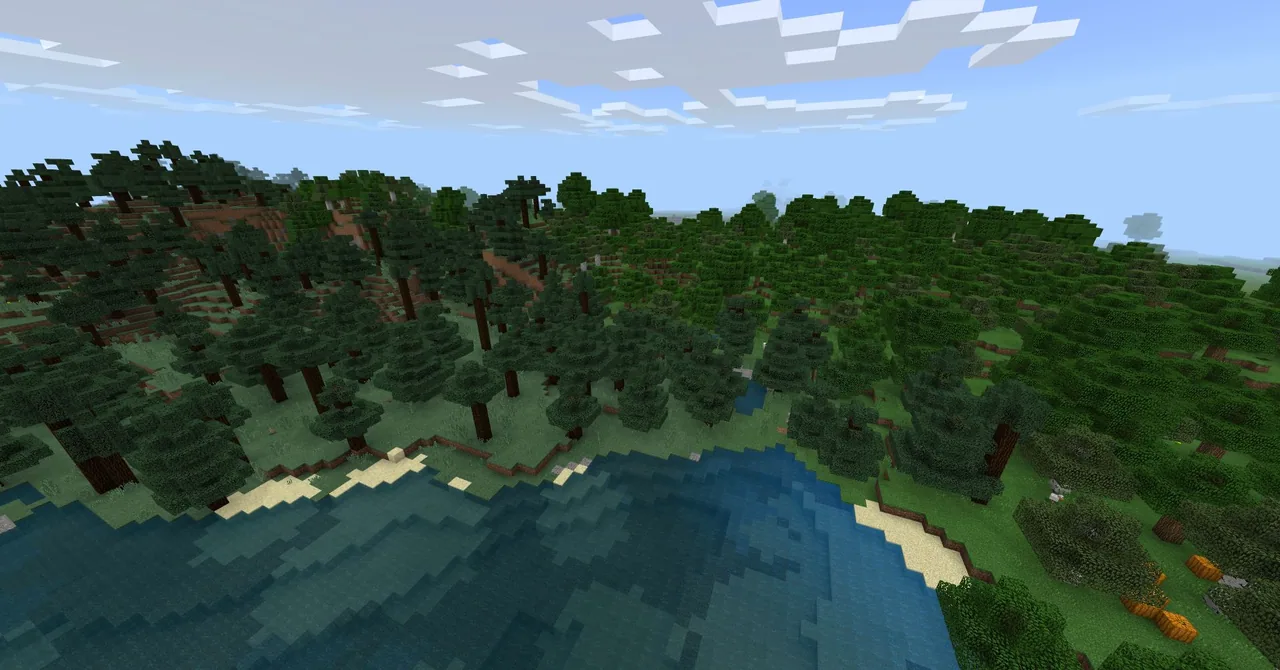
Working collaboratively in Minecraft, student pairs populate an unfamiliar biome with custom plant and animal life to model working food chains. Each learner documents their findings with in-game photography and writes an individual field report inside a Book and Quill to explain the transfer of energy throughout their habitat.
Learning objectives
By the end of this lesson students will be able to:
- Develop models that demonstrate the roles of producers, consumers, and decomposers within an ecosystem.
- Construct at least two distinct food chains featuring a minimum of four energy transfers.
- Record scientific observations and photographs of organisms using the in-game Camera and Book and Quill.
- Explain how shifts in plant or animal populations alter the flow of energy across a biological community.
Blocks and items used in this lesson


Key vocabulary
- Ecosystem
- A community of living organisms interacting with each other and their physical environment.
- Producer
- An organism that produces its own food and energy rather than eating other life.
- Consumer
- An organism that obtains energy by feeding on other living organisms.
- Decomposer
- An organism that breaks down dead organic material and returns nutrients to the habitat.
- Food Chain
- A sequence showing how energy passes from one organism to another through feeding relationships.
Before class
Lesson sequence
Suggested timing: about 180 minutes in total.
- Ecosystem Concepts and Planning45 min
Introduce the challenge by framing learners as field scientists entering an unknown biome. Screen a brief teaser clip alongside a video of deep ocean trenches to challenge the assumption that all ecosystems rely on solar energy.
Facilitate a class discussion on energy flow and predator-prey dynamics. Review the grading rubric, assign partner pairs, and have teams complete their initial biome planning guide outlining shared duties and organism choices.
- In-Game Skill Review and World Setup45 min
Distribute feedback slips evaluating each team's completed planning guides. Model required in-game mechanics: spawning animals, planting flora, framing shots with the Camera, writing in the Book and Quill, and exporting files for Canvas submission.
Have the oldest partner open a world as host so the second student can join. Partners explore their chosen biome, practice technical tools, and adjust their planning sheets based on teacher feedback.
- Biome Construction and Scientific Documentation90 min
Student pairs populate their ecosystem with vegetation and wildlife, ensuring the habitat demonstrates at least two food chains with a minimum of four energy transfers.
Working as field researchers, partners examine predator and prey interactions, capture photos of key species, and compose individual Book and Quill journals detailing how energy circulates through their community before submitting the file on Canvas.
Assessment: success criteria
- The world contains at least two functional food chains demonstrating at least four energy transfers.
- The student submitted an individual Book and Quill containing photos and explanatory text written from a scientist's perspective.
- The journal accurately describes the roles of producers, consumers, and decomposers in maintaining community balance.
Differentiation
Provide a pre-formatted checklist of four specific organisms that form a straightforward food chain so the team can focus on spawning and labeling.
Challenge students to model a disruption scenario in their journal, describing what happens to energy distribution if a key species becomes extinct or overabundant.
Knowledge check
5 questions to check understanding after the lesson. Tap an answer to see if it is right; the score appears at the end.
1What is the minimum number of energy transfers required across the two food chains in the biome project?
Answer: C. The project checklist specifies that student teams must incorporate at least two food chains with a minimum of four energy transfers.
2Which student serves as the host world owner when entering the game?
Answer: A. The lesson procedures specify that the oldest partner acts as the world owner for the other student to join.
3Why does the class watch a video about deep ocean trenches during the planning stage?
Answer: D. Viewing deep ocean trenches challenges the standard assumption that ecosystems must rely directly on sunlight.
4Which tool must each student use to assemble their scientific report and photos?
Answer: B. Students are instructed to take pictures with the Camera and assemble a Book and Quill as their individual science journal.
5How must completed scientific journals be turned in for grading?
Answer: C. Although teams build collaboratively, each student is required to submit an individual Book and Quill via Canvas.
Resources
- Lesson package (.zip)Everything the author attached to this lesson in one download.
- Ecosystems Rubric
- 4th Grade Planning Guide
- Feedback Slip
Frequently Asked Questions
Does the student biome need to look like an existing Earth environment?
No. The environment does not have to resemble Earth, provided the biological relationships and energy exchanges between organisms are clearly explained and logically structured.
Do partners submit one joint Book and Quill journal?
No. While partners build and populate the biome together in a shared world, each learner must compile and submit their own Book and Quill journal to Canvas.
Adapted from Ecosystem Design Task by Minecraft Education on Minecraft Education, last updated Dec 19, 2022. This classroom version, the timings and the quiz were written by 9Minecraft Education.