- Type
- Lesson plan
- Subject
- Math
- Topics
- Math & Economics
- Ages
- Ages 14-18
- Duration
- about 80 min (suggested)
How do different economic sectors interact, set prices, and organize production to maximize profit and efficiency?
Overview
In this economics lesson, students investigate how goods move through an economy by examining the primary, secondary, and tertiary sectors. By applying Weber's model of industrial location, learners examine the impact of transportation costs, resource extraction, and manufacturing on pricing and profitability.
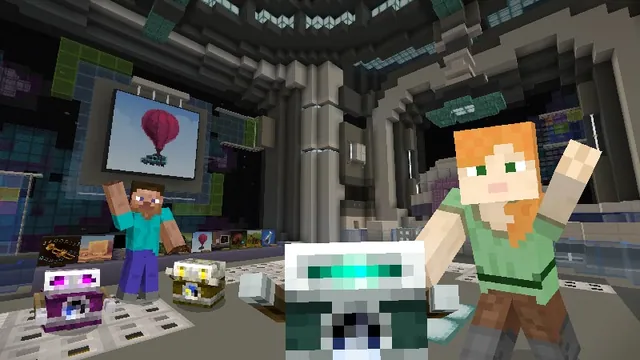
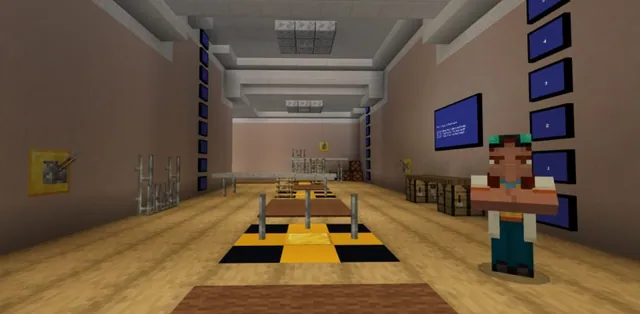
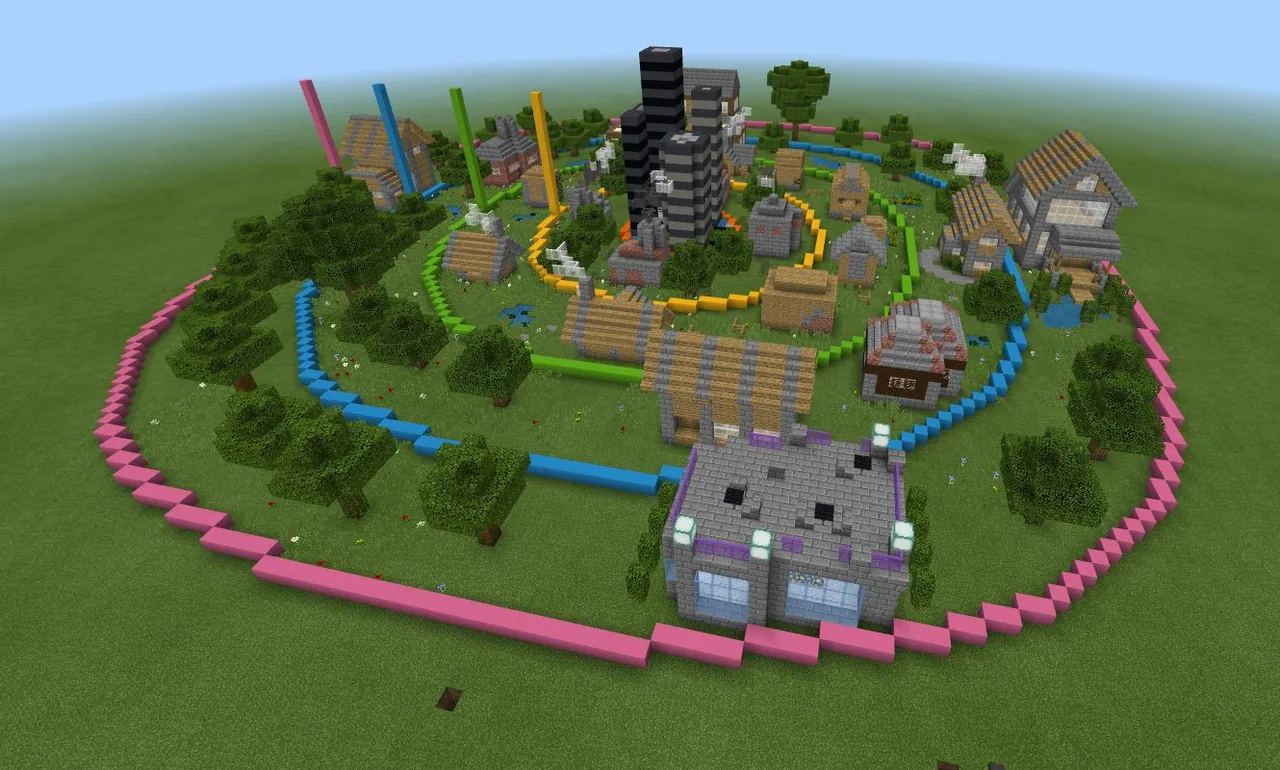
Students enter a Minecraft world divided into specialized sector teams where only miners can extract raw materials, manufacturers craft finished goods, and distributors trade products using currency. Over three timed simulation rounds, groups negotiate, adjust transport charges, and merge operations to discover the benefits of economies of scale.
Learning objectives
By the end of this lesson students will be able to:
- Identify the distinct functions of the primary, secondary, and tertiary economic sectors.
- Apply Weber's model of industrial location to explain how transportation and production costs influence trade.
- Collaborate within assigned economic roles to generate profit and establish functional supply chains.
- Evaluate business performance across multiple rounds to negotiate mergers and improve economies of scale.
Blocks and items used in this lesson


Key vocabulary
- Primary Sector
- The part of the economy focused on extracting natural resources and raw materials.
- Secondary Sector
- The economic sector responsible for manufacturing and processing raw materials into finished goods.
- Tertiary Sector
- The commercial sector that provides services, distribution, and the buying and selling of goods.
- Weber's Model
- An economic theory of industrial location that determines the best place for an industry based on transportation costs and raw material access.
- Economy of Scale
- A proportionate saving in costs gained by an increased level of production or collaborative merging.
Before class
Lesson sequence
Suggested timing: about 80 minutes in total.
- Role Assignment and Pre-Game Planning15 min
Divide the class into three sector groups: Primary (sole group permitted to mine raw materials), Secondary (in charge of manufacturing items), and Tertiary (equipped with initial currency to buy and distribute products). Allow teams fifteen minutes to strategize their trading methods and workflow.
- Simulation Round 120 min
Students join the Minecraft world to explore, mine, craft, and trade strictly according to their assigned sector rules with the aim of earning profit. Remind tertiary distributors that they may charge variable rates for transporting goods across distances.
- Round 1 Debrief and Regrouping5 min
Pause gameplay so students can calculate and record their profits. Encourage teams to discuss potential company mergers, new trade agreements, or supply adjustments to improve their overall output and achieve economies of scale.
- Simulation Round 220 min
Teams resume gameplay to test their refined strategies and updated partnerships. At the close of the round, students stop to record their earnings and reflect on what market adjustments improved their efficiency.
- Simulation Round 3 and Final Reflection20 min
Run a final round where groups execute their most efficient production and distribution chains. Conclude with a class reflection analyzing how Weber's location model, transportation costs, and sectoral interdependencies shaped their final profits.
Assessment: success criteria
- Students accurately describe the core function of each economic sector during class discussions.
- Groups adhere strictly to their assigned operational roles during Minecraft gameplay.
- Teams accurately track and calculate financial profit after each simulation round.
- Learners use Weber's model to justify location choices and transport pricing during the final debrief.
Differentiation
Provide role-specific cheat sheets detailing exactly what actions each sector can take and how to record transactions.
Challenge advanced students to calculate transport distance surcharges based on Weber's model to determine optimal factory placement.
Knowledge check
5 questions to check understanding after the lesson. Tap an answer to see if it is right; the score appears at the end.
1Which sector in the simulation is exclusively permitted to extract raw materials through mining?
Answer: B. The primary sector is specifically tasked with extracting raw materials, making them the only team allowed to mine.
2What unique resource is given to the tertiary sector at the start of the simulation?
Answer: A. Tertiary sector students receive initial currency so they can purchase products and distribute them among groups.
3Which geographical concept is introduced to explain industrial location and variable transportation prices?
Answer: D. Weber's model of industrial location is used to examine transportation costs and industrial positioning.
4What is the primary responsibility of the secondary sector during the activity?
Answer: C. The secondary sector is designated to take raw resources and manufacture items.
5What collaborative action are students encouraged to take between rounds to improve their efficiency?
Answer: B. Between rounds, students are prompted to form companies and merge to boost economies of scale and market competitiveness.
Resources
- Lesson package (.zip)Everything the author attached to this lesson in one download.
- Minecraft World File
Frequently Asked Questions
Can secondary or tertiary sector students mine their own resources if they run out?
No. Strict role division is essential to the simulation, meaning only primary sector students may extract raw materials.
What items can be used as in-game currency for the tertiary group?
Teachers can designate any uniform item such as emeralds, gold nuggets, or paper notes to serve as trade currency for distributors.
Adapted from Economic Sectors by Minecraft Education on Minecraft Education, last updated May 15, 2025. This classroom version, the timings and the quiz were written by 9Minecraft Education.