- Type
- Lesson plan
- Subject
- History & Social Studies
- Grade
- Early years (Pre-K to Grade 2)Primary (Grades 3-5)Middle school (Grades 6-8)High school (Grades 9-12)
- Ages
- All ages
- Duration
- More than 3 hours
- Level
- Beginner
How can historical surveys and maps help us understand urban living conditions and the need for social reform?
Overview
Charles Booth's Inquiry into the Life and Labour of the People in London represents a foundational milestone in modern social and economic research. By studying late 19th and early 20th-century poverty maps, notebooks, and police surveys, students examine the socioeconomic structures and lived realities of Victorian urban life.
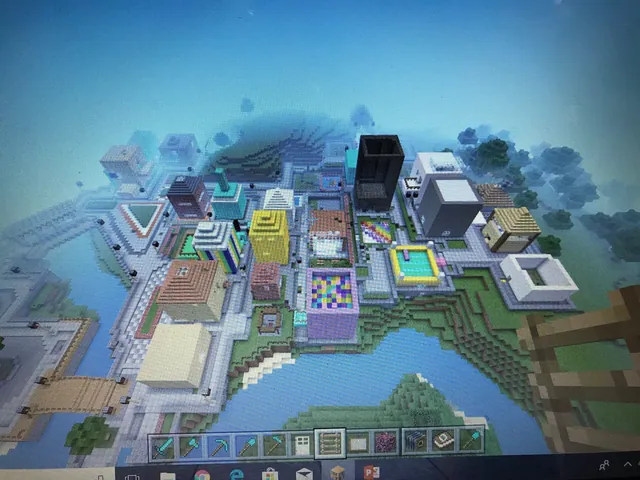
Through a Minecraft world created in partnership with LSE, Litcraft, and Lancaster University, learners navigate six interactive routes based on historical Police Walks. Students investigate digitized historical spaces, transcribe primary archive evidence, and complete in-game tasks that bring documentary history to life.
Learning objectives
By the end of this lesson students will be able to:
- Analyze historical documents, notebooks, and poverty maps from the Charles Booth Archive.
- Navigate six interactive in-game police walks to explore late Victorian and early Edwardian London.
- Complete structured building and investigation tasks that reconstruct historical environments from primary texts.
- Evaluate the impact of Booth's research on social reform movements and modern social inquiry.
Blocks and items used in this lesson


Key vocabulary
- Poverty Maps
- Color-coded street maps created by Charles Booth to classify the socioeconomic conditions of London residents.
- Police Walks
- Observational routes conducted by Booth's investigators alongside local police officers to survey neighborhood conditions.
- Archival Research
- The study and interpretation of original historical evidence, such as notebooks, surveys, and letters.
- Social Reform
- Policy changes and organized actions intended to improve living standards, public health, and civil welfare.
Before class
Lesson sequence
Suggested timing: about 190 minutes in total.
- Context and Archival Introduction45 min
Introduce Charles Booth's social investigation into Victorian London. Guide students through out-of-game warm-up exercises examining Booth's original color-coded poverty maps and handwritten research notebooks.
- On the Beat: In-Game Police Walks60 min
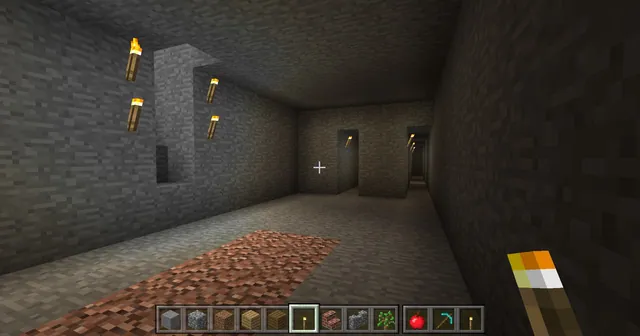
Students enter the Minecraft world to embark on structured routes derived from the archive's Police Walks. Learners observe environmental details, street layout, and housing conditions that align with recorded historical observations.
- Archival Mapping and Reconstruction50 min
Working in pairs or small groups, students complete in-game tasks corresponding to primary source materials. They transcribe notebook records, match locations to map keys, and recreate historical settings to represent text-based evidence visually.
- Analysis and Reform Discussion35 min
Convene for a follow-up discussion evaluating Booth's research methods. Students reflect on the influence of his findings on historic social legislation and discuss how these issues connect to contemporary community challenges.
Assessment: success criteria
- Students accurately extract and interpret socioeconomic data from Booth's original maps and notebooks.
- Students successfully complete in-game tasks across the assigned police walks.
- Students explain how Booth's research methods contributed to historical social reform and policy debates.
Differentiation
Provide pre-transcribed excerpts of difficult handwriting and pair students during the in-game exploration phases.
Have students compare Booth's classification categories with modern demographic methods and write a brief critique of his data collection.
Knowledge check
5 questions to check understanding after the lesson. Tap an answer to see if it is right; the score appears at the end.
1What historical source material forms the foundation of this Minecraft world?
Answer: A. The world is based directly on Charles Booth's landmark social inquiry and poverty maps of Victorian London.
2Which groups collaborated to build this educational Minecraft world?
Answer: B. The source explicitly states the world was built in collaboration with LSE, Litcraft, and Lancaster University.
3What specific archival format provides the basis for the in-game routes?
Answer: C. The world features six interactive walks based on the Police Walks found in the Booth Archive.
4What primary research skill do students practice when working with Booth's materials?
Answer: D. Students develop research skills by examining and transcribing historical documents, maps, and notebooks.
5What is a key topic of reflection after exploring Booth's findings?
Answer: A. Students reflect on the implications of Booth's findings regarding social reforms and improving living conditions.
Resources
- Lesson package (.zip)Everything the author attached to this lesson in one download.
- Charles Booth's London - Teaching BookletTeaching Booklet for Charles Booth's London
Frequently Asked Questions
How long does this learning module take to complete?
The module is designed for more than three hours of instructional time, making it suitable for multi-day units or extended project-based study.
What supporting material is provided for lesson delivery?
The lesson includes a dedicated Charles Booth's London Teaching Booklet that outlines the structured tasks and walk connections.
Do students need advanced Minecraft building skills to participate?
No, the experience level is rated for beginners, focusing on historical exploration, transcription, and guided tasks.
Adapted from Charles Booth's London by BlockWorks on Minecraft Education, last updated Oct 8, 2025. This classroom version, the timings and the quiz were written by 9Minecraft Education.