- Type
- Lesson plan
- Subject
- Computer Science & Coding
- Topics
- Computer Science
- Ages
- Ages 8-13
- Duration
- about 75 min (suggested)
- Includes
- Quiz: 5 questions
How do electronic devices use combinations of zeros and ones to represent numbers and information?
Overview
Computers process and store all data using binary code, representing information through combinations of ones and zeros. In this lesson, students explore the fundamentals of the binary number system, learning how four bits can represent decimal values from 0 to 15 and how binary values can encode instructions and characters.
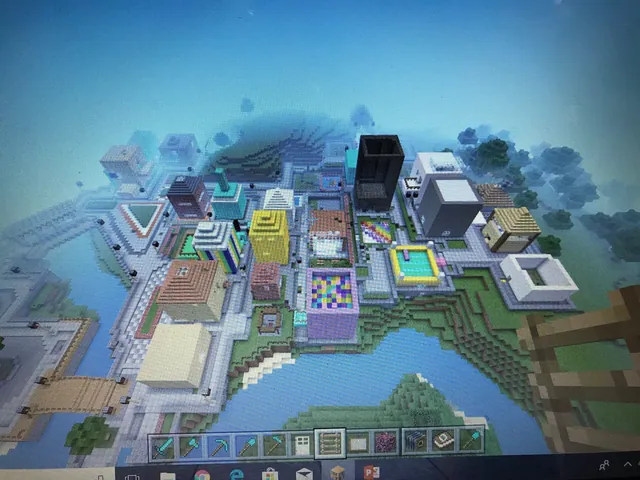
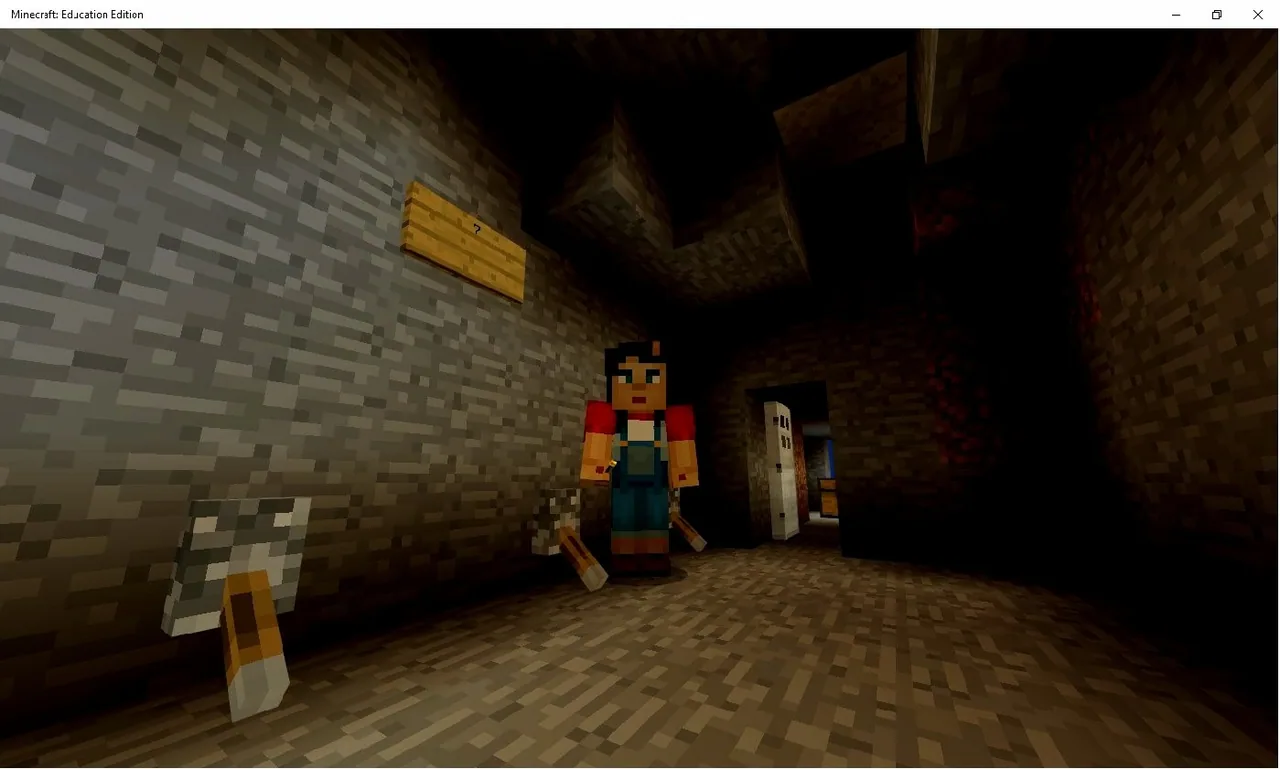
Inside Minecraft, students work in teams to locate sixteen numbered rooms secured by lever mechanisms. By converting decimal room numbers into 4-bit binary patterns on levers, teams unlock doors, collect diamonds, and venture into the Nether to solve challenges through real-time communication and coordination.
Learning objectives
By the end of this lesson students will be able to:
- Explain the concept of a bit and how binary sequences represent numbers.
- Convert decimal values from 0 through 15 into 4-bit binary representations.
- Coordinate with teammates using in-game text chat to navigate rooms and gather items.
- Identify binary values corresponding to specific decimal numbers using tables or calculations.
Blocks and items used in this lesson


Key vocabulary
- Bit
- The smallest unit of data in computing, represented by either a 0 or a 1.
- Byte
- A standard unit of digital data, typically composed of eight bits.
- Binary Code
- A base-2 numbering system that uses only two digits, 0 and 1, to represent data.
- Decimal System
- The standard base-10 numbering system that uses digits from 0 to 9.
Before class
Lesson sequence
Suggested timing: about 75 minutes in total.
- Direct Instruction and Binary Foundations15 min
Introduce the binary system, bits, bytes, and digital storage concepts to the class. Guide students through building all possible four-digit combinations of zeros and ones to generate values from 0 to 15, optionally using a tree diagram or an MS Excel conversion sheet.
- Team Strategy and Role Assignment10 min
Students form small groups, select a team leader, and review their binary reference chart. The leader helps organize a strategy for navigating the map, managing diamond drop-offs, and communicating via the Minecraft chat window.
- Minecraft Binary Diamond Rush25 min
Teams enter the world to locate numbered rooms from 0 to 15. Students set the levers on each door to match the room's number in 4-bit binary code to unlock it and collect diamonds. Inside room 2, students retrieve a flint and steel, ignite the Nether portal, and discover Nether room 1 to collect four additional diamonds.
- Consolidation and Diamond Collection10 min
Team members rendezvous at an agreed in-game location or periodically transfer all collected diamonds into their team leader's hotbar before the activity time runs out.
- Written Reflection and Discussion15 min
Gather the class to review team totals and check whether all sixteen rooms were cleared. Students complete written reflection prompts covering the definition of a bit, how characters and numbers are stored, and binary-to-decimal conversions.
Assessment: success criteria
- Total count of diamonds collected in the team leader's hotbar versus leftover diamonds in team members' inventories.
- Successful unlocking of all 16 numbered rooms in the Minecraft world.
- Accuracy of the binary conversion tables created on paper or in MS Excel.
- Student answers on the written reflection addressing bits, 4-bit limits, and conversions for 12 and 1001.
Differentiation
Provide younger or struggling learners with a pre-printed lookup table showing decimal numbers 0 through 15 paired with their 4-bit binary equivalents.
Have advanced learners use mathematical functions in MS Excel to design an automated binary conversion table without looking at a pre-made key.
Knowledge check
5 questions to check understanding after the lesson. Tap an answer to see if it is right; the score appears at the end.
1What is the smallest unit of information in a computer?
Answer: B. The source identifies a bit as the basic binary unit that can represent a 0 or 1.
2How many total numbers can be represented using 4 bits?
Answer: C. A 4-bit system encodes sixteen numbers, spanning decimal values 0 to 15.
3Which binary sequence represents the decimal number 12?
Answer: A. In 4-bit binary, 12 is calculated as 8 + 4, which is written as 1100.
4Which decimal value corresponds to the binary number 1001?
Answer: D. Binary 1001 represents 8 + 0 + 0 + 1, which equals decimal 9.
5What special item is hidden inside room number 2 to allow access to the Nether?
Answer: B. Room 2 contains a flint and steel, which students use to ignite the Nether portal.
Frequently Asked Questions
How many diamonds can students find in total during the activity?
There are 19 diamonds hidden across the map, including 4 diamonds located inside room number 1 in the Nether.
How do students communicate during the game?
Students coordinate their movements, door codes, and meeting spots using the built-in Minecraft in-game chat.
Adapted from BINARY DIAMOND RUSH by Terézia Vargov?íková on Minecraft Education, last updated Apr 9, 2018. This classroom version, the timings and the quiz were written by 9Minecraft Education.