- Type
- Lesson plan
- Ages
- Ages 8-18
- Duration
- 3 hours
- Level
- Intermediate
- Includes
- Quiz: 5 questions
How can a municipal aquarium educate the public and support the conservation of marine species?
Overview
Marine ecosystems face growing pressures from pollution, poor waste disposal, and climate change. By studying how marine species survive and protect themselves, learners explore the critical connections between human habits and ocean health, while recognizing how community facilities promote conservation.
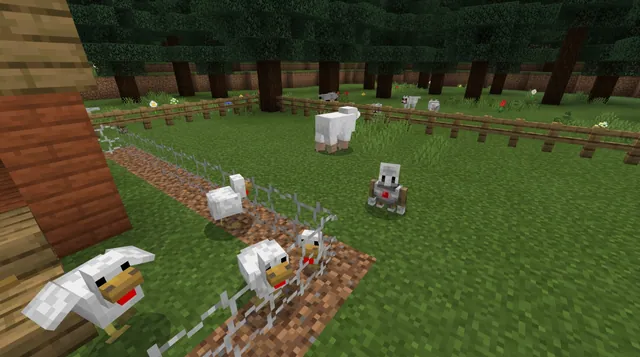
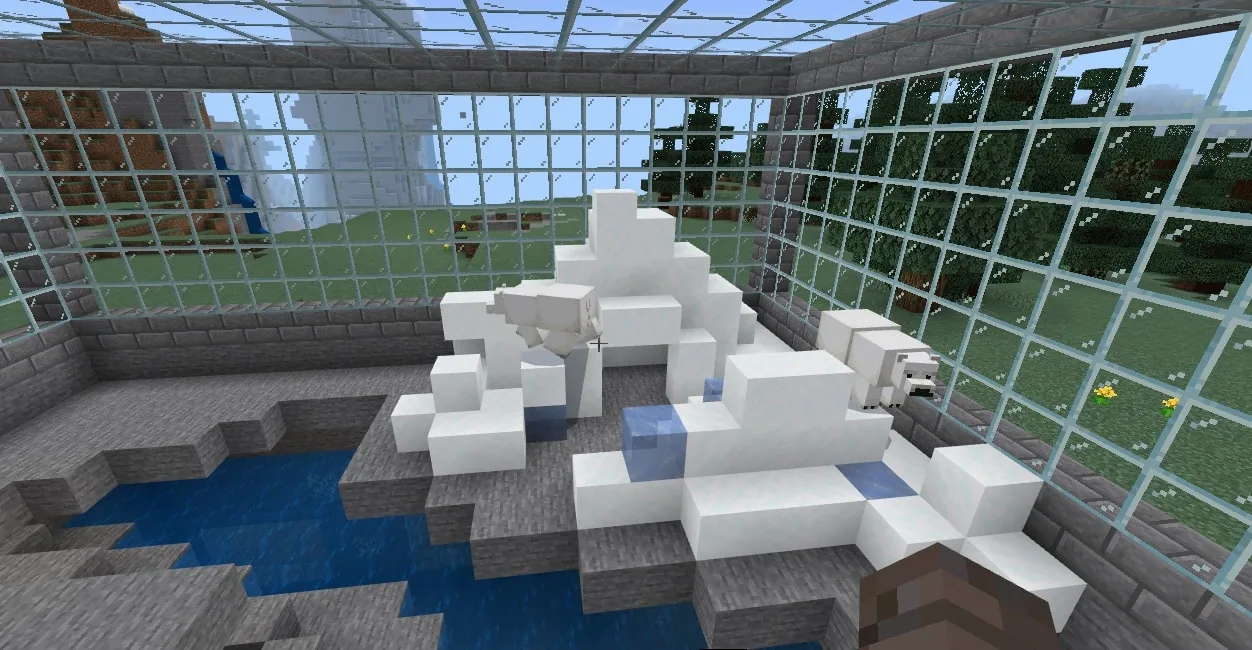
In Minecraft, students work in pairs or collaborative groups to construct a functioning municipal aquarium. They design habitats for multiple species, ensure suitable living conditions for their animals, and post scientific informational boards to educate visitors.
Learning objectives
By the end of this lesson students will be able to:
- Analyze the effects of waste disposal, plastic pollution, and climate change on marine wildlife.
- Investigate the natural habitats, diets, and survival traits of various sea creatures.
- Construct spacious aquarium enclosures that meet the needs of at least four animal species.
- Create informational signs displaying scientific names, origins, habitats, and diets for each exhibit.
- Document and present the finished aquarium exhibits using in-game photography tools.
Blocks and items used in this lesson


Key vocabulary
- Conservation
- The planned protection and management of natural resources and wild species to prevent extinction.
- Marine Ecosystem
- An aquatic environment characterized by saltwater and the diverse living organisms interacting within it.
- Oceanographer
- A scientist who studies the physical, chemical, and biological conditions of the ocean.
- Specimen
- An individual animal or sample used to represent a particular species in scientific study or display.
Before class
Lesson sequence
Suggested timing: about 180 minutes in total.
- Marine Conservation Discussion30 min
Lead an introductory discussion on marine life, predator defense mechanisms, and human impacts such as ocean garbage dumping and climate change. Explore what visitors encounter at an aquarium and review how oceanographers, veterinarians, biologists, and environmental managers maintain animal health.
- Species and Habitat Research35 min
Organize students into pairs to select at least four marine species suitable for a municipal aquarium. Students research each animal's natural habitat, origin, diet, and scientific name to plan realistic enclosures.
- Aquarium Construction65 min
Pairs or whole-class teams build their municipal aquarium. They must construct ample enclosures for each chosen species and populate every exhibit with at least four animal specimens to ensure proper living space.
- Exhibit Signage and Curation25 min
Students place banners or informational boards outside each habitat. Each board must present key facts for city visitors, including the species' scientific name, native geographic origin, natural habitat, and dietary needs.
- Documentation and Presentation25 min
Learners use the in-game camera and portfolio to document their completed aquarium exhibits. Pairs present their designs to their peers, explaining their conservation features and the roles of staff members who would manage them.
Assessment: success criteria
- The aquarium includes spacious enclosures for at least four distinct marine species.
- Each exhibit houses a minimum of four animal specimens.
- Educational boards accurately state each species' scientific name, habitat, origin, and diet.
- The student portfolio clearly captures the completed exhibits and reflects an understanding of marine preservation.
Differentiation
Provide a pre-selected list of marine species with simplified research notes so learners can focus directly on enclosure design.
Have students research and build dedicated back-of-house medical and care facilities for veterinarians and environmental managers.
Knowledge check
5 questions to check understanding after the lesson. Tap an answer to see if it is right; the score appears at the end.
1Which team of professionals is directly mentioned as contributing to animal welfare in an aquarium?
Answer: C. The source specifically highlights oceanographers, veterinarians, biologists, and environmental managers as key aquarium professionals.
2How many distinct animal species must students include in their municipal aquarium?
Answer: B. The activity instructions state that students must create an aquarium with at least four different species of animals.
3What is the minimum number of animal specimens required inside each enclosure?
Answer: D. The lesson guidelines require learners to place at least four specimens of animals into each enclosure.
4Which information must be included on the exhibit informational boards?
Answer: A. The source specifies informational boards or banners detailing the scientific name, place of origin, habitat, and food.
5Which specific ocean waste material is emphasized for discussion during teacher preparation?
Answer: B. The teacher prep notes highlight the correct disposal of garbage, especially plastic found in oceans.
Frequently Asked Questions
Can students work individually instead of in pairs?
Yes. While the source suggests pair work or a single collaborative class build, individual students can construct their own exhibits if classroom device arrangements require it.
What tools should students use to document their aquarium build?
Students should use the in-game camera and portfolio to photograph their enclosures and informational signage, creating a record to share with classmates.
What should be done if an in-person field trip to an aquarium is not possible?
Teachers can substitute the trip with virtual aquarium tours available on the web to help students observe exhibit structures and marine life displays.
Adapted from Aquarium by Talita Destro on Minecraft Education, last updated Sep 20, 2022. This classroom version, the timings and the quiz were written by 9Minecraft Education.