How did the arrival of the first farmers transform the Irish landscape, daily village life, and attitudes toward ancestors?
Overview
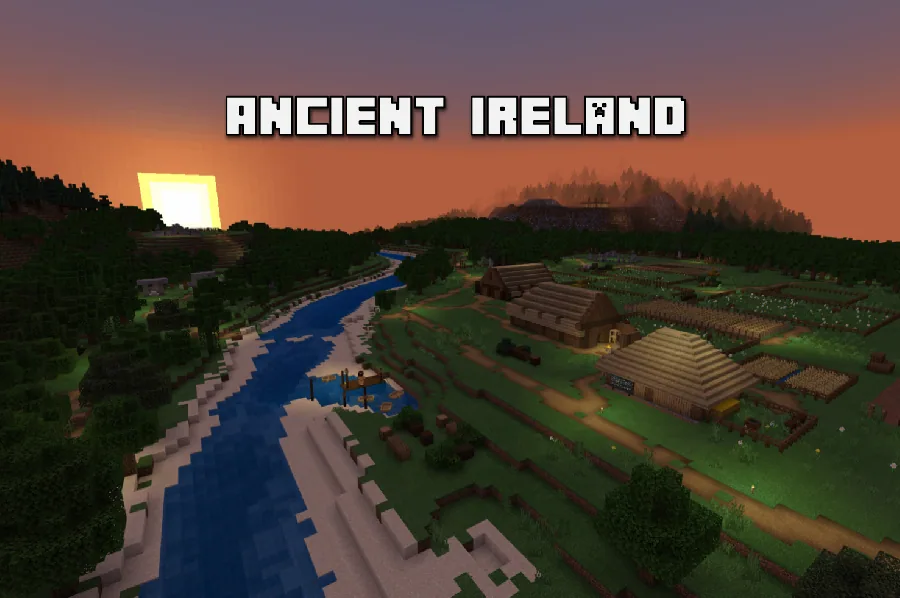
Six thousand years ago, the arrival of farming communities dramatically changed Ireland. Moving away from nomadic hunting and gathering, Neolithic settlers established permanent timber settlements, cleared dense native forests to plant crops, domesticated animals, and erected large megalithic tombs to honor their ancestors.
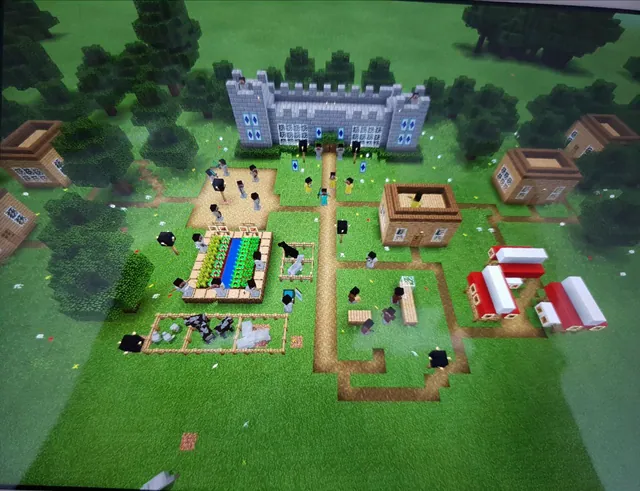
In this Minecraft world, students explore these historical developments through a central hub. They enter interactive zones where they assist non-player characters with daily farming tasks, perform a layer-by-layer archaeological excavation down to bedrock, investigate artifacts in a virtual museum, and construct authentic prehistoric sites in Creative Mode.
Learning objectives
By the end of this lesson students will be able to:
- Explain how the introduction of farming and animal domestication led to permanent settlements in Neolithic Ireland.
- Describe how human activity, particularly forest clearing, altered the natural landscape.
- Demonstrate careful archaeological excavation methods, feature recording, and artifact interpretation.
- Build a historically inspired Neolithic structure or megalithic tomb using evidence observed in-game.
Blocks and items used in this lesson


Key vocabulary
- Neolithic
- The New Stone Age period when people first began farming, domesticating animals, and living in settled villages.
- Megalithic tomb
- A large stone burial structure built by prehistoric communities for their ancestors.
- Excavation
- The systematic, layer-by-layer digging of an archaeological site to uncover buried evidence.
- Radiocarbon dating
- A scientific method used to determine the age of ancient organic materials like seeds, wood, and charcoal.
- Flint
- A hard stone that ancient people quarried and chipped into sharp tools and weapons.
Before class
Lesson sequence
- Hub Orientation and Exploration
Students spawn in the World Hub and step through the portal into the Neolithic Adventure area. They interact with non-player characters to learn about everyday life six thousand years ago and identify tasks where villagers need help.
- Settlement and Farming Tasks
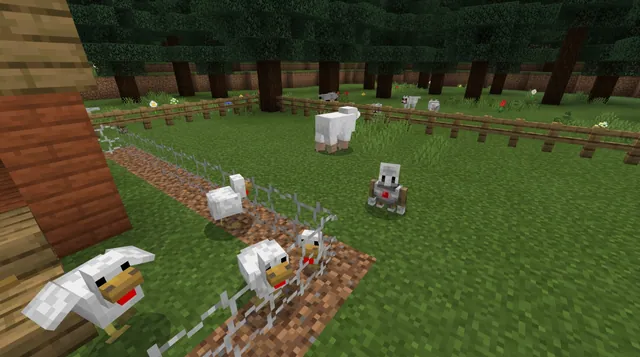
Students complete hands-on survival tasks around the village: clearing trees to construct a timber house, preparing soil to plant and harvest crops, corralling wild animals into pens, quarrying flint, and digging clay for pottery.
- Archaeological Excavation
Learners travel to the Excavation zone to dig through soil carefully, layer by layer, until reaching bedrock. They map uncovered features onto grid paper, then bring pottery, stone tools, and organic samples to the Finds Expert and Radiocarbon Scientist for analysis.
- Museum Study and Free Build
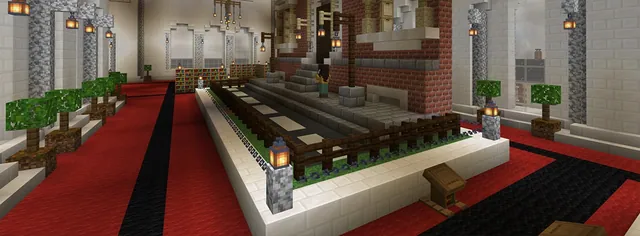
Students tour the in-game Museum to inspect Neolithic tools and discuss raw materials, durability, and modern equivalents. Afterward, they visit the Free Build zone in Creative Mode to reconstruct their own ancient houses, monuments, or fields.
- Reflection and Documentation
Using the camera along with the book and quill, students capture screenshots of their work and write personal reflections comparing the realities of Neolithic farming with life in the modern world.
Assessment: success criteria
- Student accurately distinguishes between nomadic hunter-gatherer habits and Neolithic farming settlement.
- Student explains why clearing forests was necessary for farming and village expansion.
- Student maps archaeological features methodically and correctly identifies the role of radiocarbon dating for organic materials.
- Student documents observations thoughtfully in their in-game book and quill.
Differentiation
Pair students together to share navigation across the hub portals and collaborate on recording finds during the excavation.
Have advanced learners design an elaborate megalithic tomb in the Free Build zone that incorporates authentic features studied in the Museum.
Knowledge check
5 questions to check understanding after the lesson. Tap an answer to see if it is right; the score appears at the end.
1What major change marked the beginning of the Neolithic period in Ireland?
Answer: A. Neolithic settlers brought farming and livestock to Ireland, creating permanent settlements instead of relying solely on hunting, fishing, and gathering wild resources.
2What had to happen to the Irish landscape before early farmers could plant crops and build homes?
Answer: B. The Neolithic landscape was heavily forested, requiring farmers to clear timber to establish fields and villages.
3What type of evidence does the Radiocarbon Scientist analyze during the excavation?
Answer: D. Radiocarbon dating is used specifically on organic evidence, such as charcoal, seeds, and wood, to determine its age.
4What large structures did Neolithic people build to honor their ancestors?
Answer: A. Neolithic communities built large megalithic tombs, reflecting their beliefs and attitudes toward death and ancestors.
5How must students uncover artifacts in the archaeological excavation zone?
Answer: B. Archaeological excavation requires careful, layer-by-layer soil removal down to bedrock so structures and objects can be accurately recorded.
Resources
- Lesson package (.zip)Everything the author attached to this lesson in one download.
- Teaching GuideThese files will help you install the Ancient Ireland world and packs. They also provide instructions for some of the activities and a world map.
- Minecraft WorldDownload the Ancient Ireland world file here and open with Minecraft: Education Edition.
Frequently Asked Questions
Do students need background knowledge of Irish archaeology before playing?
No prior knowledge is necessary. Non-player characters, guided tasks, and the in-game museum provide the historical context students need as they play.
How does the excavation activity teach archaeological practice?
Students remove ground layer by layer, record structural outlines on grid paper, and consult specialized scientists to interpret artifacts rather than treating the site like a treasure hunt.
Are the artifacts in the lesson based on real historical finds?
Yes, the objects shown in the Minecraft museum correspond to real Neolithic artifacts, some of which are displayed in the Early Peoples galleries at the Ulster Museum in Belfast.
Adapted from Ancient Ireland by Jonathan Small on Minecraft Education, last updated Apr 12, 2021. This classroom version, the timings and the quiz were written by 9Minecraft Education.