How do municipal zoning laws and multi-community governance help citizens balance shared resources and essential public services?
Overview
Urban planning requires balancing municipal functions, public services, and limited shared resources across distinct neighborhoods. In this lesson, students explore the fundamentals of town zoning by dividing a settlement into industrial, commercial, and residential sectors, learning how municipal rules shape the daily lives of citizens.
Using Minecraft biomes such as mesa, desert, and forest to represent three interdependent settlements, students establish their assigned communities under strict zoning rules. They practice collaborative governance by negotiating trade agreements, planning essential public works like waste collection, and electing zone representatives to advocate for civic improvements.
Learning objectives
By the end of this lesson students will be able to:
- Define the functions of industrial, commercial, and residential zones within a municipality.
- Construct community buildings and services strictly compliant with assigned zoning restrictions.
- Negotiate trade agreements between biomes to ensure equitable resource sharing.
- Elect and participate in a tri-community council to plan shared services like trash collection and power provision.
Blocks and items used in this lesson


Key vocabulary
- Zoning
- Local government regulations that dictate how land and property in specific areas can be used.
- Residential Zone
- An area designated primarily for housing and living spaces rather than businesses or factories.
- Commercial Zone
- A district designated for businesses, shops, and retail services.
- Industrial Zone
- An area reserved for manufacturing, power generation, and heavy production activities.
- Governance
- The system, rules, and actions used by leaders and citizens to manage a community.
Before class
Lesson sequence
- Zoning Introduction
Introduce the concepts of town zoning and municipal management. Discuss how cities separate heavy industry, shopping districts, and homes, and present guiding questions about how communities share services like waste disposal.
- Zone and Biome Assignment
Divide the class into three biome-based communities: mesa for industrial activities, desert for commercial shops, and forest for residential living. Clarify the building restrictions each group must follow.
- Zone Construction
Students enter the world and construct facilities permitted within their designated zone. Learners focus on creating specialized infrastructure needed by their community while honoring zoning boundaries.
- Inter-Community Governance & Trade
Communities elect a representative to join a tri-community council. Representatives and citizens negotiate resource trades and develop joint plans for critical municipal infrastructure, such as trash collection and power provision.
- Council Review & Reflection
Convene as a whole class to assess how well each zone respected its boundaries and served the wider settlement. Reflect on the compromises required to govern three distinct communities cooperatively.
Assessment: success criteria
- Structures built in each biome strictly adhere to assigned industrial, commercial, or residential zoning rules.
- Students successfully engage in trade negotiations to exchange specialized biome resources.
- Elected representatives clearly articulate their community's needs during council discussions.
- Students propose practical planning solutions for shared municipal services like power and trash collection.
Differentiation
Provide visual checklists illustrating acceptable building types for each designated zone to keep construction focused.
Challenge advanced students to draft a formal inter-community charter establishing shared municipal taxation or emergency response protocols.
Knowledge check
5 questions to check understanding after the lesson. Tap an answer to see if it is right; the score appears at the end.
1Which three zone types are focused on in this town planning lesson?
Answer: A. The lesson explicitly structures town planning around industrial, commercial, and residential zones.
2What rule must students follow when constructing buildings in their assigned biome?
Answer: B. Students are assigned a zone and are restricted to building services that meet specific zoning rules.
3How are the three biome communities intended to handle scarce or uneven resources?
Answer: C. The lesson directs students living in the three biomes to negotiate for resources and engage in inter-community trade.
4What leadership action do students take to advocate for their neighborhood's needs?
Answer: D. Students elect a government representative from each zone to advocate for improvements and secure needed resources.
5Which municipal service plan is explicitly mentioned in the lesson as an area for tri-community cooperation?
Answer: B. The introduction and activities highlight developing plans for trash collection alongside power provision.
Resources
- Lesson package (.zip)Everything the author attached to this lesson in one download.
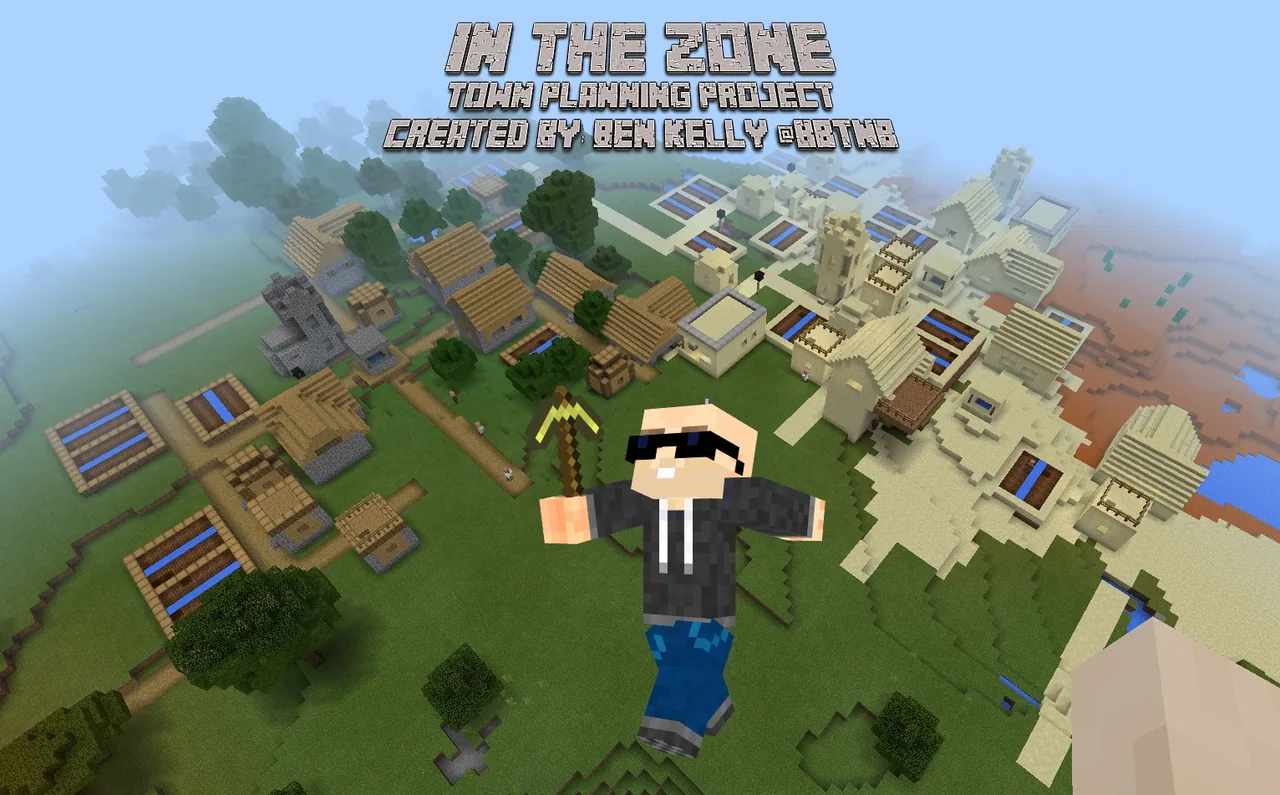
- Project title cardTitle card
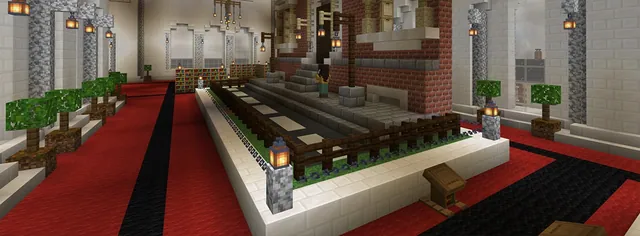
- Town well board screen shotscreen shot
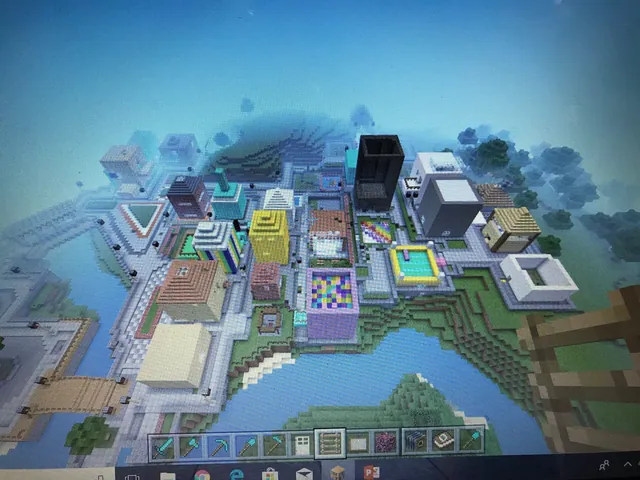
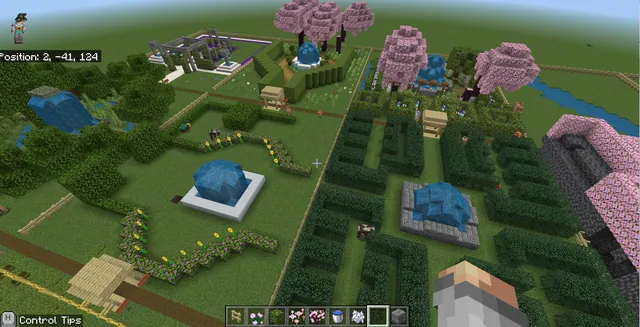
- Town overviewimage of the town from above for planning
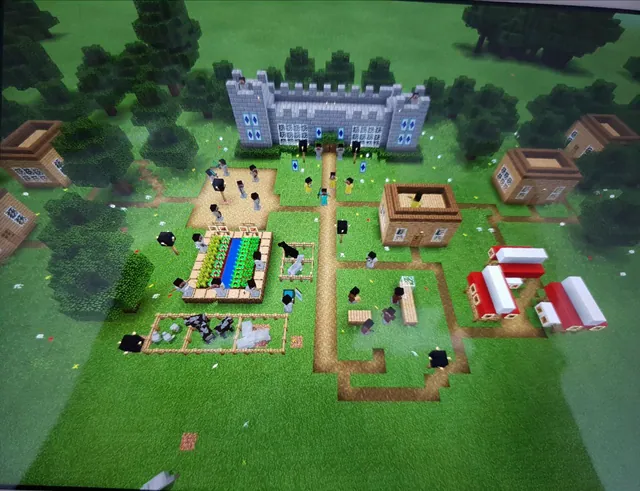
- Town angle 2town above angle 2
Frequently Asked Questions
Do I need a pre-built world download to run this lesson?
No, this lesson does not require a downloadable template. You can generate a standard Minecraft world that features neighboring biomes like a desert, mesa, and forest to serve as your three zones.
What subject areas does this lesson connect with most closely?
It fits directly into Government and Politics, Service Learning and Social Good, and Careers and Management, focusing on municipal planning, civic negotiation, and resource management.
Adapted from In The Zone - Town Zoning by Benjamin Kelly on Minecraft Education, last updated Jan 17, 2017. This classroom version, the timings and the quiz were written by 9Minecraft Education.