How can we design a carbon-neutral city that meets the daily needs of citizens while protecting the environment?
Overview
Rapid urban growth around the globe makes sustainable city planning essential. Anchored in United Nations Sustainable Development Goal 11, this lesson challenges students to design an eco-friendly, carbon-neutral municipality capable of meeting human needs for food, clean water, and shelter while safeguarding the surrounding natural environment.
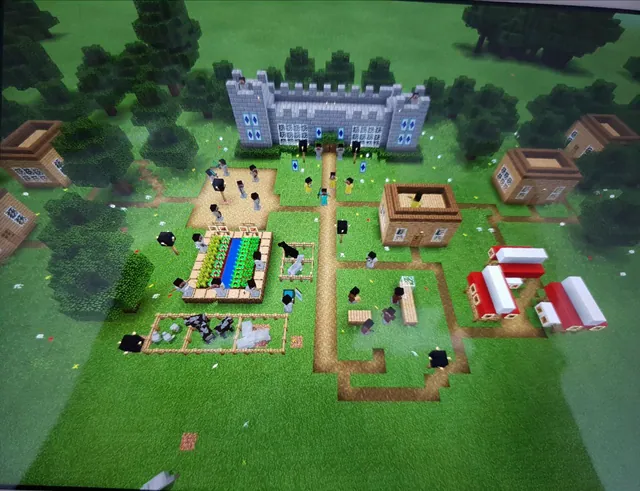
Working in Creative mode, students translate ecological principles into Minecraft infrastructure. They construct solar- and wind-powered buildings, map clean transit routes using minerails and boats, manage waste through recycling plants, designate protected zones using deny blocks, and integrate local agriculture to build a complete self-sustaining community.
Learning objectives
By the end of this lesson students will be able to:
- Identify key components that make a city self-sustaining and carbon neutral.
- Construct renewable energy networks using wind power and solar panels on homes and streetlights.
- Design zero-emission public transit systems using minerails and waterways in Minecraft.
- Implement food production, animal husbandry, and recycling infrastructure to maintain sustainable resource cycles.
- Use deny blocks to designate protected or restricted zones across the urban layout.
Blocks and items used in this lesson


Key vocabulary
- Carbon neutral
- Achieving a state where net greenhouse gas emissions are balanced or eliminated through clean energy and sustainable practices.
- Renewable energy
- Power generated from naturally replenishing resources, such as sunlight and wind.
- Deny block
- A Minecraft block that prevents non-builder players from placing or destroying blocks in the space above it.
- Animal husbandry
- The agricultural branch focused on raising, breeding, and caring for farm animals.
Before class
Lesson sequence
- Introduction and City Planning
Introduce UN Sustainable Development Goal 11 and discuss what makes an urban area carbon neutral. Have students work in teams to plan distinct city sectors, ensuring provisions for clean power, green spaces, safe housing, farmlands, and recycling.
- Global Exchange
Conduct a Skype session with peers in other locations to compare sustainable city features, brainstorm novel solutions for growing urban centers, and gather ideas for their digital builds.
- Infrastructure and Clean Transit Construction
Students enter Creative mode to build the city's power grid and transportation network. Key builds include solar-topped streetlights, wind turbines, residential solar panels, minerail networks, and boat docks.
- Resource and Waste Systems
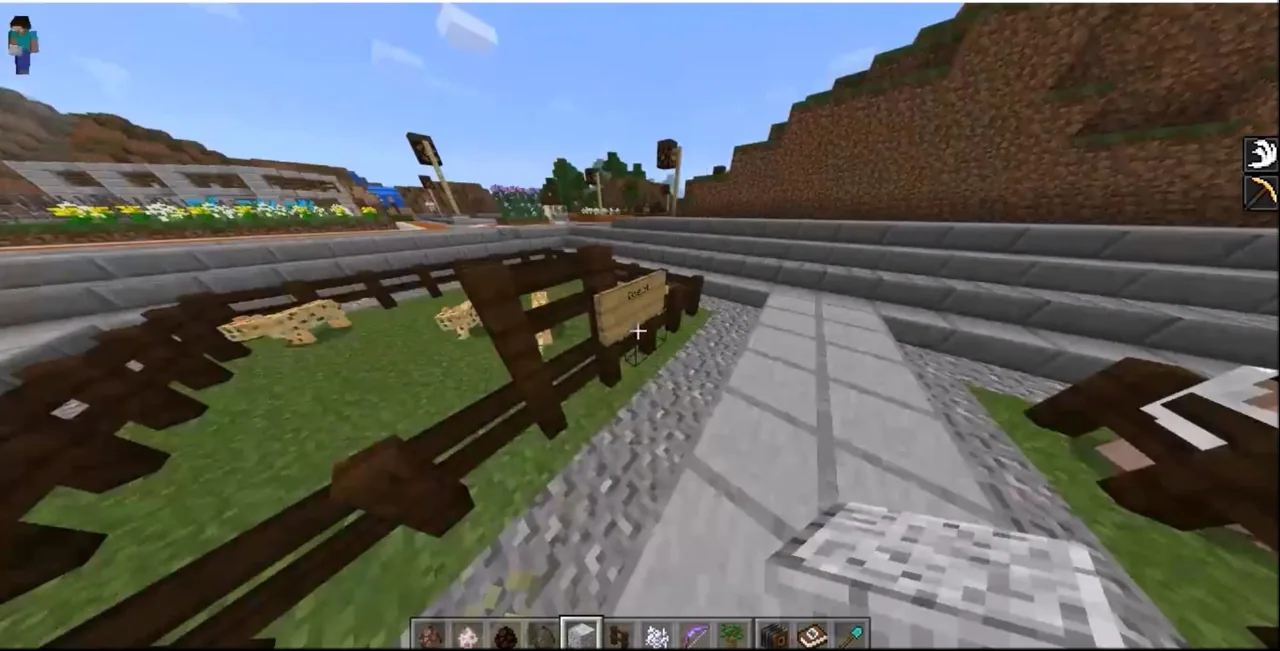
Learners construct agricultural zones for crops and animal husbandry to ensure food security. Teams also build a central recycling plant for municipal waste and set up protected zones using deny blocks.
- City Showcase and Reflection
Groups tour each other's municipal districts, observing how each team integrated environmental care into their urban architecture. Conclude with a class reflection on real-world urban challenges and sustainable design.
Assessment: success criteria
- Student city integrates renewable power sources such as wind energy and solar panels on homes and streetlights.
- Public transportation routes rely on non-polluting methods, specifically minerails or watercraft.
- The build features necessary civic support systems, including farmlands, animal husbandry, safe housing, and a recycling plant.
- Restricted or protected areas are correctly designated using deny blocks.
Differentiation
Provide a simple checklist of mandatory infrastructure components, such as solar streetlights, a minerail loop, and a recycling center.
Challenge students to integrate extensive multi-tiered public transit that connects water ferries directly with overland minerail terminals.
Knowledge check
5 questions to check understanding after the lesson. Tap an answer to see if it is right; the score appears at the end.
1Which United Nations Sustainable Development Goal forms the basis of this lesson?
Answer: A. The lesson plan is explicitly based on UN SDG 11 for a sustainable future.
2Which Minecraft block is used to set up restricted areas within the eco-city?
Answer: B. The source identifies deny blocks as the method to build restricted areas.
3What clean public transport options are students instructed to build?
Answer: C. The lesson directs students to explore non-polluting public transit using minerails, ferries, and boats.
4How should street lights and homes generate their electricity in this build?
Answer: A. The guiding ideas state that street lights and homes will run on solar panels.
5What facility must students construct to handle municipal waste sustainably?
Answer: D. The lesson requires students to build a recycling plant to manage and recycle waste.
Frequently Asked Questions
Is a specific world download required to run this lesson?
No, there is no downloadable world file required. Students can start from scratch in any standard Creative mode world.
How is external collaboration used in this project?
The lesson incorporates an optional Skype call so students can interact with peers living in sustainable cities to learn about eco-friendly design before building.
Adapted from World of Ecocity by Pratibha Kohli on Minecraft Education, last updated Jun 14, 2018. This classroom version, the timings and the quiz were written by 9Minecraft Education.