- Type
- Lesson plan
- Ages
- Ages 8-18
- Includes
- Quiz: 5 questionsLesson files
How do climate, wildlife, and human activities interact within different world biomes?
Overview
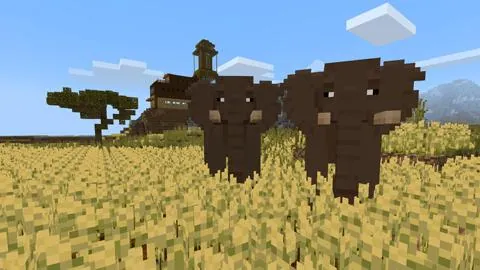
In this lesson, students explore the diverse biomes of the world by investigating climate, regional flora and fauna, adaptation mechanisms, and the impact of human activity. Working in small collaborative groups, learners gather factual research on a chosen biome to understand how living things interact with their natural surroundings.
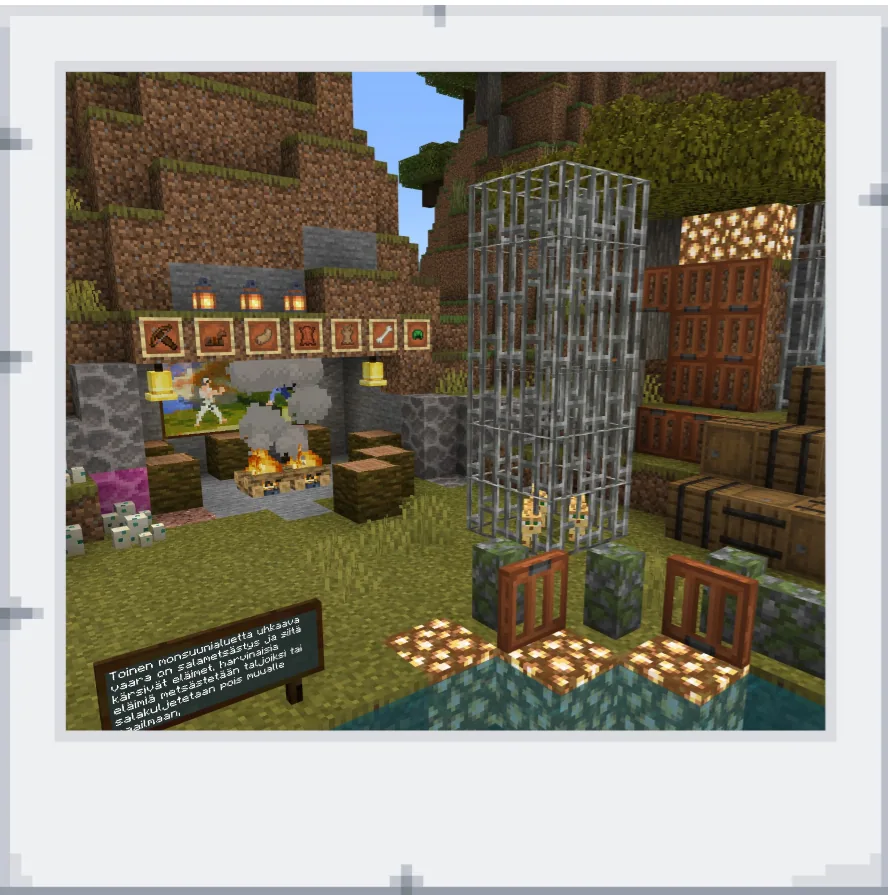
Students then load a matching biome from the library in Minecraft Education and design an educational nature trail. Along the path, they place informative posters or non-player characters (NPCs) to teach visitors about the environment, concluding with peer tours and an optional review activity.
Learning objectives
By the end of this lesson students will be able to:
- Investigate the climate, location, flora, fauna, and human impacts of a chosen world biome.
- Design and build an informative Minecraft nature trail using posters or non-player characters.
- Collaborate within a small group to plan, negotiate, and construct a shared educational environment.
- Evaluate other world biomes by touring peer-created nature trails and answering review questions.
Blocks and items used in this lesson

Key vocabulary
- Biome
- A large community of plants and animals occupying a major habitat defined by its climate.
- Flora
- The plant life characteristic of a specific region or environment.
- Fauna
- The animal life native to a particular habitat or geographic area.
- Adaptation
- A trait or behavior that helps an organism survive in its environment.
- Natural Hazard
- A naturally occurring event, such as a storm or earthquake, that poses a threat to living things.
Before class
Lesson sequence
- Research and Inquiry
Introduce world biomes and divide students into groups of no more than four. Groups select a biome to investigate using textbooks or online sources, gathering information on geographic location, seasonal climate, flora and fauna adaptations, industries, natural hazards, and human damage.
- Trail Layout Planning
Before building, groups sketch their nature path on paper. Students decide how the path follows the terrain, how visitors will navigate it, and whether facts will be displayed via posters or non-player character (NPC) tour guides.
- Minecraft Construction
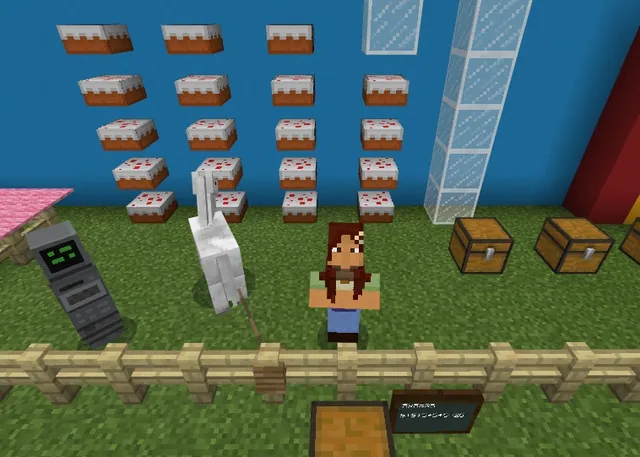
Students select the appropriate biome world from the library and collaborate to build their nature path. Teams place information stations along the trail and may optionally construct a concluding souvenir shop feature.
- Peer Tours and Review
Students tour the nature paths built by other groups to learn about different biomes. If included, visitors complete souvenir shop quiz questions on paper or navigate an exit maze based on correct answers.
Assessment: success criteria
- Researched key biome facts including climate, wildlife adaptations, and human environmental impacts.
- Designed an organized nature path that fits the chosen Minecraft biome landscape.
- Presented accurate scientific information clearly using posters or NPC guides.
- Worked cooperatively with team members to plan, compromise, and build.
Differentiation
Provide a structured research template with the specific questions highlighted so students can record facts systematically before building.
Challenge students to design their concluding souvenir shop as an escape room or maze where correct biome answers open the exit doors.
Knowledge check
5 questions to check understanding after the lesson. Tap an answer to see if it is right; the score appears at the end.
1What is the recommended maximum number of students per group in this lesson?
Answer: C. The lesson instructions specify dividing students into small groups of maximum four students.
2What core project are students tasked with creating inside their chosen Minecraft biome?
Answer: A. The guidelines direct students to create a nature path in their world to present life in the biome.
3Which two methods does the lesson suggest for presenting information along the path?
Answer: C. The source notes that students plan how to present information using posters or NPC characters as guides.
4What optional build can teams add at the end of their nature path?
Answer: B. The lesson lists an optional souvenir shop at the end of the path containing review questions or a maze.
5What activity must student groups complete immediately before building in Minecraft?
Answer: D. The student activities specify that learners first plan their nature path on paper before building.
Resources
Frequently Asked Questions
Where do students find the biomes to build in?
Students select an appropriate biome world template directly from the in-game library that best matches the environment they researched.
How do students present biome research along their path?
Learners can communicate their research by placing in-game posters or by setting up non-player characters (NPCs) to serve as tour guides along the trail.
How does the optional souvenir shop work?
The souvenir shop acts as a review checkpoint where visitors answer questions about the trail on paper or solve an escape room maze by choosing doors corresponding to correct answers.
Adapted from World Biomes by Piia Martikainen on Minecraft Education, last updated May 18, 2020. This classroom version, the timings and the quiz were written by 9Minecraft Education.